
Getting myself back up to speed

I’d used that phrase in my previous post to talk about my ‘little fun personal project’ at the 750 Words site mainly to confirm that I have in fact been doing some writing during vacation this past week. Said project is nothing of major import, just an MU-related exercise where I’m going through the “legacy soundtrack” list as well as my writing chronology list. It’s half putting things in order and half clarifying the dates of events — something I mentioned in a few posts last month.

But the most important reason behind this project is to get myself comfortable with a daily writing regimen again.

Aha! you say. Don’t you already have one? Well, not really. I have a schedule, and a very loose one at that. It’s more of a daily reminder of ‘as long as I do something today’ and that’s it. And right now it’s this ‘little fun personal project’ with a vague reminder to work on the Trilogy Remaster. It’s just phase one of a much more detailed plan going on here.

Over the years, I’ve tried to force myself into a daily writing regimen, and every single time I fail for one reason or another. It’s happened so many times I now call them Best Laid Plans. So this time out I thought I’d come at it from a different angle: I’ve often described my writing process as similar to a musician’s, so I figured that maybe I should do so once more:

Sometimes your sessions need to focus on practicing scales instead of wracking your brain trying to come up with a new melody every time.

In revisiting the legacy soundtrack and the writing chronology of the Mendaihu Universe, I was able to revisit how I was able to pull it off in the first place without trying to emulate it in the present. That was always the weak point: emulation. Trying to relive the moment with vibes, I suppose. No, I had to look at it a different way. What was going on in my life when I wrote the Bridgetown Trilogy? [Answer found: working at the candle warehouse and turning my personal life around.] When did I quit trying to rewrite The Phoenix Effect and start A Division of Souls? [Answer found: June 2000, in the waning months of my record store job.] Why did it work so well then? [Answer found: a stable schedule, positive life events and a dedicated personal work space.]

So the next question is: how can what I discovered here be used in some way with future writing sessions? That is, without it once again falling into ‘trying to relive the moment with vibes’?

Well, that answer’s yet to come, and it hinges on whatever new writing project I work on next. I won’t know until I get there. But what I do know is how to properly implement what I’ve learned recently, and I think (and hope) that will make all the difference.

A Personal Q&A

Q: So, what have you been up to this week?
A:
Not too much, really. I’ve been on a well-earned vacation and we’ve been taking it day by day. Going for walks, doing a bit of shopping and cleaning, watching a movie (Wildwood, which I highly recommend) or two (we’re going to see Godzilla Minus Zero today), visiting the zoo. And sleeping in, which has definitely helped us relax and rest up.

Q: So…you haven’t been writing, then?
A:
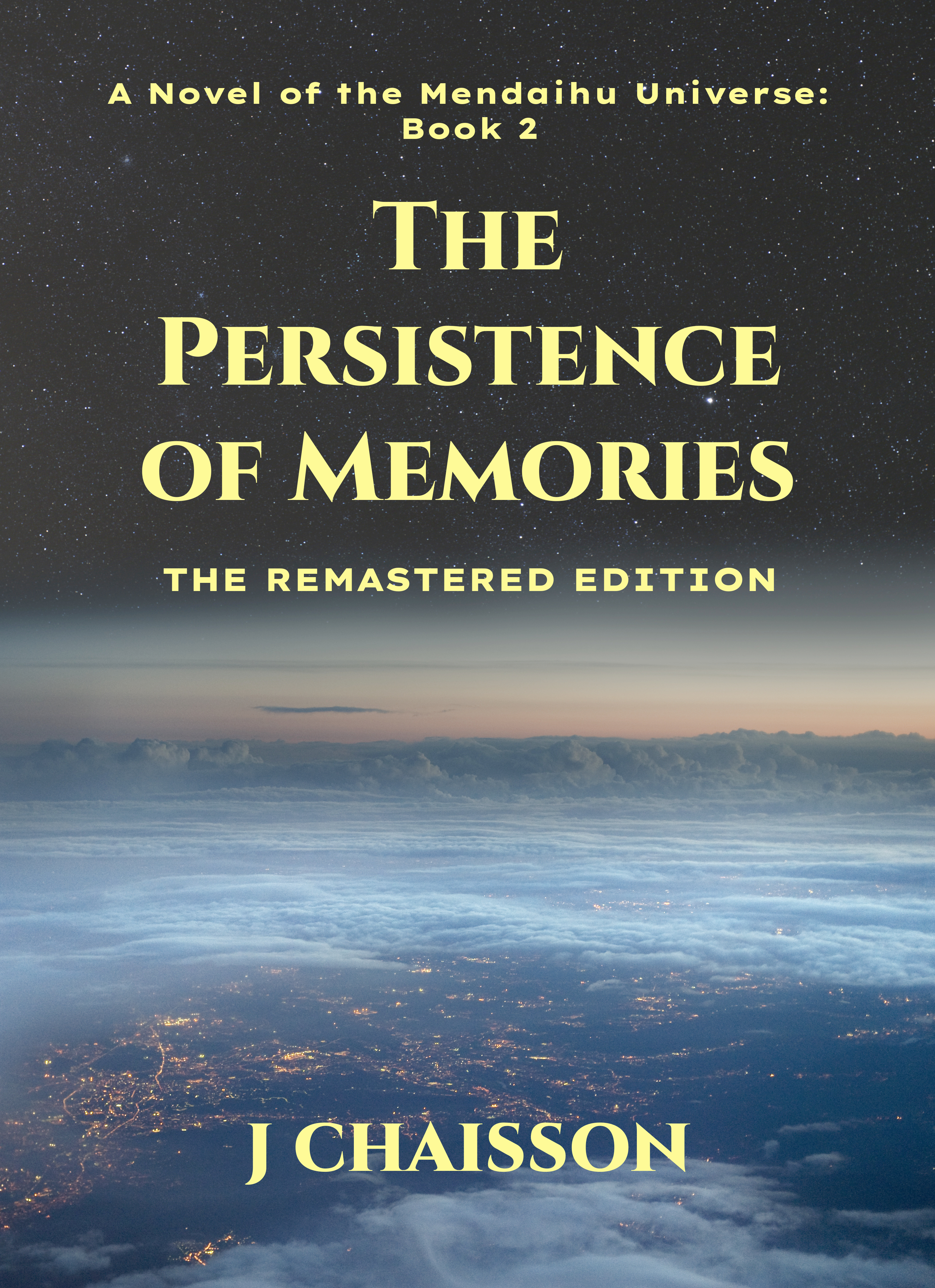
On the contrary, I’ve been keeping up with my daily 750Words. I’m currently doing a little fun personal project on it to get myself back up to speed. As I’ve recently finished up all the work on the Remaster for The Persistence of Memories, the only thing I need to do there is take a little time in the next few days to upload it to Smashwords/Draft2Digital and make sure the layout is up to my standards. (And maybe purchase a few physical author copies just to have them on hand.) The blog entries have been kind of light this week, but that’s by design.

Q: Any idea what you’ll work on next?
A:
Officially, next is the Remaster work for The Balance of Light which is probably going to need a lot of TLC so it might take a while. But on the creative end of things, I’ve got two projects I’m contemplating: a fourth book in the Mendaihu Universe, or a complete rewrite (and I mean complete this time, not a revision like the previous attempts) of Theadia.

Q: Which of course begs the question…what if a new and promising idea surfaces?
A:
As always, it depends. If a standalone idea resonates deeply enough with me that it demands my full attention, it might skip to the front of the line. I don’t see that happening, but I’ll keep my options open.

Q: Obligatory music question: what are you listening to right now during your writing sessions?
A:
In Purgatory by World News is getting some seriously heavy rotation these days. It’s one of my favorite albums of the year right now and I highly recommend it. The new Fontaines DC record Dopamine Chamber is quite excellent as well, as is Mud by Remi Wolf, Common Primitives by Andy Bell (Ride) and Masal, Violins by Blondshell and Ride Lonesome by Beck.

Q: Obligatory cat question: how are the kitties doing?
A:
Jules and Cali are doing just fine, thanks for asking! They’ve been their usual silly selves and have been waking us up at 5am regardless of our sleeping in this week.

Q: Obligatory personal question: how about those election results earlier this week?
A:
WHOOF! Yeah, I’d figured there would be a bit of red-to-blue switching, but I don’t think anyone had any idea there would be this much. I just…kept happening throughout the evening. I’d been in the office working on stuff and A was in the living room constantly keeping me updated. I won’t go into personal detail here, other than that it was a long-awaited and much-needed sea change, and I’m hoping it continues in this positive direction.

Q: Back to writing — what else is on your mind right now?
A:
I keep wanting to get back to journaling but I keep forgetting to because I’ve been distracted by other projects I’ve been working on. It’s not important, but I think it’s something I should get back to, if only just to strengthen the boundaries between my creative work, my personal thoughts and so on. I’m trying to create a stable and workable writing regimen these days, and in the process I remind myself to take it one day at a time. Keep it enjoyable and not worry about what’s not in my control just yet.

Q: Sounds like you’ve been having a good week! Anything else you’d like to add?
A:
Nah, I’m good! I’m back to work next week so I’m thinking I’d better prepare myself for that as well. But I’m not going to stress out over it, though. See you next Monday, then?

Q: Works for me. I’ll bring the tea and apple cider donuts.
A:
Sweet!

MU Chronology: to the warehouse

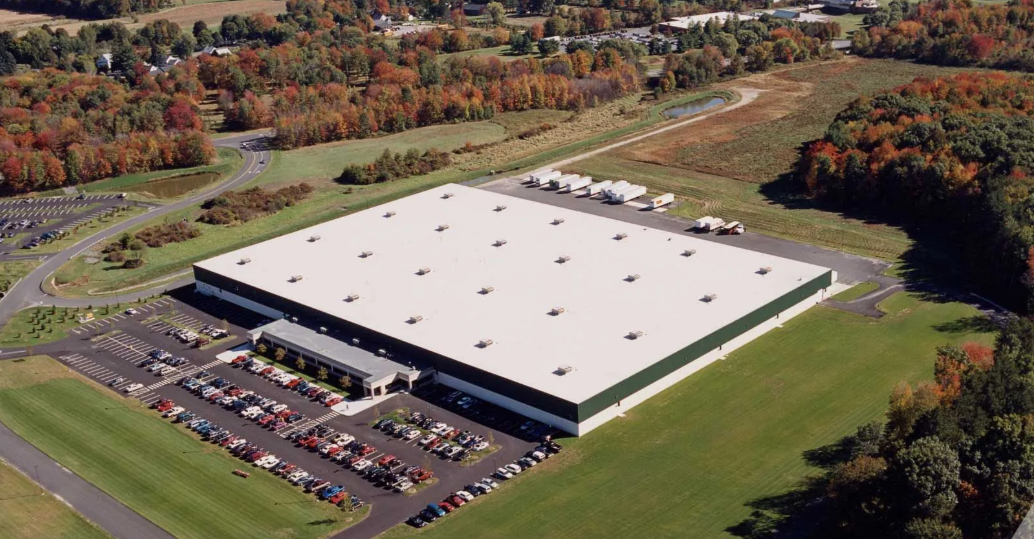
The above is the main Yankee Candle warehouse building, which opened up for business in April of 2001. My friend Bruce and I were some of the first people offering to test out the brand spankin’ new equipment before it all went live. It’s a huge building that was built to centralize the shipping, receiving, order fulfillment and storage departments all under one roof. We worked in shipping, which is in the top left corner of this picture (where all those trailers are parked in back), with eighteen bays if I recall. The entire right side of that building from this view is multi-level pallet storage, with the receiving docks in the rear as well. I worked in this building from April 2001 up until I left in March of 2005.

This is also the main inspiration for Moulding Warehouse in the Bridgetown Trilogy. I’d actually come up with the idea for that warehouse at our older building south of there on an inventory day during my brief second-shift days, but it was here that I’d solidified the idea and expanded upon it. I remember early on that I pulled a few building managers aside and asked about the specs, explaining my idea of turning the storage bays into a sort of multi-level cubicle hotel of sorts. They were rather amused by my creativity but confirmed that it could actually work as the framework was solid and buried deep into the concrete floor. [Note: the building’s name in the trilogy comes from XTC member Colin Moulding, one of my many Tuckerizations in this universe.]

While revisiting the MU chronology recently, I further realized that the date I started working in this building does in fact line up with when I wrote those scenes about the awakened converging upon Moulding Warehouse and Nehalé Usarai worrying about keeping everything under control. I remember taking my time on A Divison of Souls for fear of rushing it like I had with The Phoenix Effect, so while I was definitely working on it nearly every day from this point onwards, I was hitting probably around five hundred words to begin with. I’d slowly expand on that over the course of writing it, and by the time I started The Persistence of Memories I was aiming more towards a thousand. My favorite thing to do during slow moments of my shift was taking a bit of scrap paper and working out the next few scenes (often with one of those many boxes we shifted as a temporary desk), so that when my nightly writing sessions began I could start immediately.

And for a sense of its vastness, below is a shot of my department from the upper level of the shipping/receiving offices (itself an inspiration for the warehouse mezzanine scenes in the trilogy) from a video I found online sometime ago. Our job was to build pallets from the boxes that came down those chutes, wrap them up in plastic (the wrapper machines were underneath the chutes) and get them into the trailers (the bays are at the wall out of shot to the right). This seems to be filmed in the summer when it was relatively light, as this area would be filled to the brim and full of chaos during the Q4 holiday season. It would take us a good couple of minutes to walk from our department to the front of the building when we left for the day. This is why Moulding comes across as an incredibly large warehouse where several characters could either find privacy or gather together in large numbers with room to spare.

It was certainly an exhausting and very noisy job at times, especially during the holiday season, but at the same time it was an enjoyable one that kept me constantly moving instead of sedentary. I was blessed by the fact that it gave me all sorts of time to think about my writing with very little interruption, and a schedule that provided me with a broad length of personal time to work with. It’s an extremely productive benchmark that’s been tough to reach ever since, but these days I’ve been doing pretty good at getting close.

Writing during vacation?

I’m looking forward to next week as we’ll both be on a well-earned week’s vacation just before the hijinks of Q4 really start kicking in at our respective jobs. Neither of us have any real plans other than perhaps a day trip to see the in-laws or gallivant around the city for an afternoon, weather permitting. We just want a bit of downtime where we can sleep in, enjoy ourselves and not have to rush.

Which of course brings up the question: will I get any writing work done then?

I suppose it depends on what we end up doing on any of those days, and whether I decide to set aside an hour or so for it. This week is reserved for some of the last minute prep work for the Remaster release of The Persistence of Memories — adjusting the hyperlinks, any last minute cleanup, uploading the files and ensuring the layout works, and setting a drop date. Stuff that I can easily do in a few days at most.

But do I have anything planned after that? Well, I have been toying with a few ideas for both Theadia and the fourth Mendaihu Universe books, and this would be a great time to spend a bit of time fleshing those ideas out and seeing if they work. I’m not going to force it, but I would like to at least make an effort when I’m already planning on keeping the blogs updated and the daily words going.

I mean, I’ve done it plenty of times before. I worked on the outline for Meet the Lidwells! in a tiny little room in Earls Court during one of our trips to London. I did bit of rereading of my daily words while looking for some project-related stuff while staying overnight in Mendocino. And I’m always up for doing some in-bed reading of my current project as a wind-down from the day’s events. So it’s not as if I don’t have time; like I said, it’s all about making the effort.

More on the MU chronology

As part of this ongoing Trilogy Remastering project, I’ve been trying to nail down some of the start dates of the books. I’ve long had a habit of timestamping my work (especially longhand, though I sometimes forget to do so when it’s straight to Word), so the accuracy is pretty good most of the time. I have the start and end dates of Books 2 and 3 confirmed. However, I was still using MS Write when I started writing A Division of Souls and those files don’t always provide what I need. It always bothered me in later years that I could never quite nail down when that first book was started, other than remembering that it took around a year and a half to write.

Recently, however, I think I got a bit of clarity on it. A rough listing so far:

8/7/1998 — The Phoenix Effect (longhand version) stopped
8/19/1998 — The Phoenix Effect (PC version) completed
8/25/1998 — Keepers of the Wards (first aborted TPE sequel) started
5/5/1999 — Keepers of the Wards stopped
Summer/Autumn 1999 — work on revision for The Phoenix Effect, submission to various agencies
12/9/1999 — The Veil (second aborted TPE sequel) started
2/22/2000 — The Veil stopped
4/23/2000 — The Mihari* (first aborted rewrite of The Phoenix Effect) started
6/??/2000 — A Division of Souls (second rewrite of TPE) started (originally titled The Mihari: The Division of Souls)
8/??/2000 — Plans to leave HMV, start looking for new job (early August)
8/12/2000 — Interview for job at Yankee Candle (Saturday open-house)
9/??/2000 — Official final day at HMV (possibly 1st or 8th)
9/11/2000 — Start job at YC
11/??/2000 — Switch from 2nd to 1st shift at YC (7am-3pm, shifted back one hour by early 2001)

That last entry is important. Because of that early end time, I quickly realized that I could utilize those afternoons to do my comic book and CD runs in the Amherst/Hadley area (a quick twenty minute trip down Route 116 from Deerfield on Wednesdays), come home and relax for a bit, have dinner with the family, then work on Division for a few hours in the evenings. That would become my constant writing schedule for the next few years until I moved out in March of 2005.

The above timeline sounds about right, as I’d had the idea to completely rewrite TPE from scratch during the spring and summer of 2000 during my last months at HMV. I was just loath to actually go through with it until I knew that alternate routes wouldn’t work, and I’d been dealing with a lot of day job stress at the time. I didn’t want to overburden myself if I didn’t have the spoons.

This plan, however, became a long-game plan to fully change how I wrote. I suppose these days you could use the word ‘vibe’ to describe what I’d been doing; I’d come up with interesting ideas but I was still focusing on the mood of the story rather than the prose or even the lyricism of it, and it was painfully obvious that it wasn’t working. I went into ADoS with the idea that my prose should have more heft and personality instead of the Hollywood bombast. I also went in knowing that this might take a while, but I was willing to put in the time and the work.

That obstacle of working second shift at YC did put a damper on things a bit, as I wasn’t always able to get any work done in the morning and early afternoon before work, which frustrated me. But when the offer to switch came up I immediately went for it. And for the next four years I worked on that long-game plan, writing the trilogy and getting better at my craft.

**

[* – Yes, The Mihari was the original title of the trilogy, a word cribbed from a Japanese pocket dictionary back in 1997 that means “to watch over”. It’s the original name of the Mendaihu, with the Shenaihu having the Japanese word misuteru instead, meaning ‘to abandon’. I knew it was shameless appropriation even then, but for now it was just an anime-inspired placeholder until I came up with something better. The terms Mendaihu and Shenaihu are relatively recent, created in 2011 when I started work on the initial revision for its eventual self-publishing.]

What’s next…?

A good question, that. With Theadia on the back burner until further notice, the only other project I have on deck is the remaster of The Balance of Light, thus completing the Trilogy Remaster. After that, I’ve got nothing planned. I’ve been sort of hyping myself into writing another Mendaihu Universe book or two, however. And I’ve also been thinking about reviving Walk in Silence (the book) one more time in hopes that it’ll stick this time.

Truth be told, I’m fine with not worrying too much about it these days. The older I get, the less I feel the need to Do All The Things Right Now Before It’s Too Late, and I think that’s a good and healthy thing. I’ve always had a habit of constantly being in motion until I run out of mental or emotional gas, not to mention having a secondary habit of people-pleasing to a self-defeating extent. I’m at an age where it’s time to listen to what my body and mind are telling me. And right now they’re telling me that now is probably a good time to give these two projects some much-needed and long-delayed attention.

The issue with these two possibilities is that they both have repeatedly suffered from being shifted aside, whether because of writer’s block, personal situations or shifting priorities. I’ve never given up on them, they just remained on the back burner. But these days, I’ve given them both a rethink and realized what I’d been doing wrong all this time: lack of immersion. With WiS it was a lack of a solid direction that kept me from going deeper into the book I wanted to write; I had at least two or three different versions I wanted to try but never decided which one would prove the best. And with MU4, every version felt like I was just trying to emulate the mood and the ambience of the Bridgetown Trilogy without actually going all that deep into the universe.

What’s different this time? Well, time and age have mellowed me out a bit, I suppose, but I think it’s also that I’ve left both on the backburner for several years at this point, and approaching them now feels different. I think I have a clearer idea on how to each of them need to be handled. With MU4, it has to do with remembering how I started writing The Phoenix Effect in the first place: a new story with a new goal, and let it all evolve and expand organically instead of shoehorning it into place. With WiS, a recent conversation with a coworker about alternative rock inspired me to follow a new direction that had been floating around my brain for the last couple of months. And most importantly, I realized that the best way to do all of this is the same way I came back to these blogs and returning to my daily 750Words a few months ago: just do the damn thing already and stop overthinking it.

I still have no idea if any of it will pan out, but I’d like to think these projects are still worth the try.

Falling into place

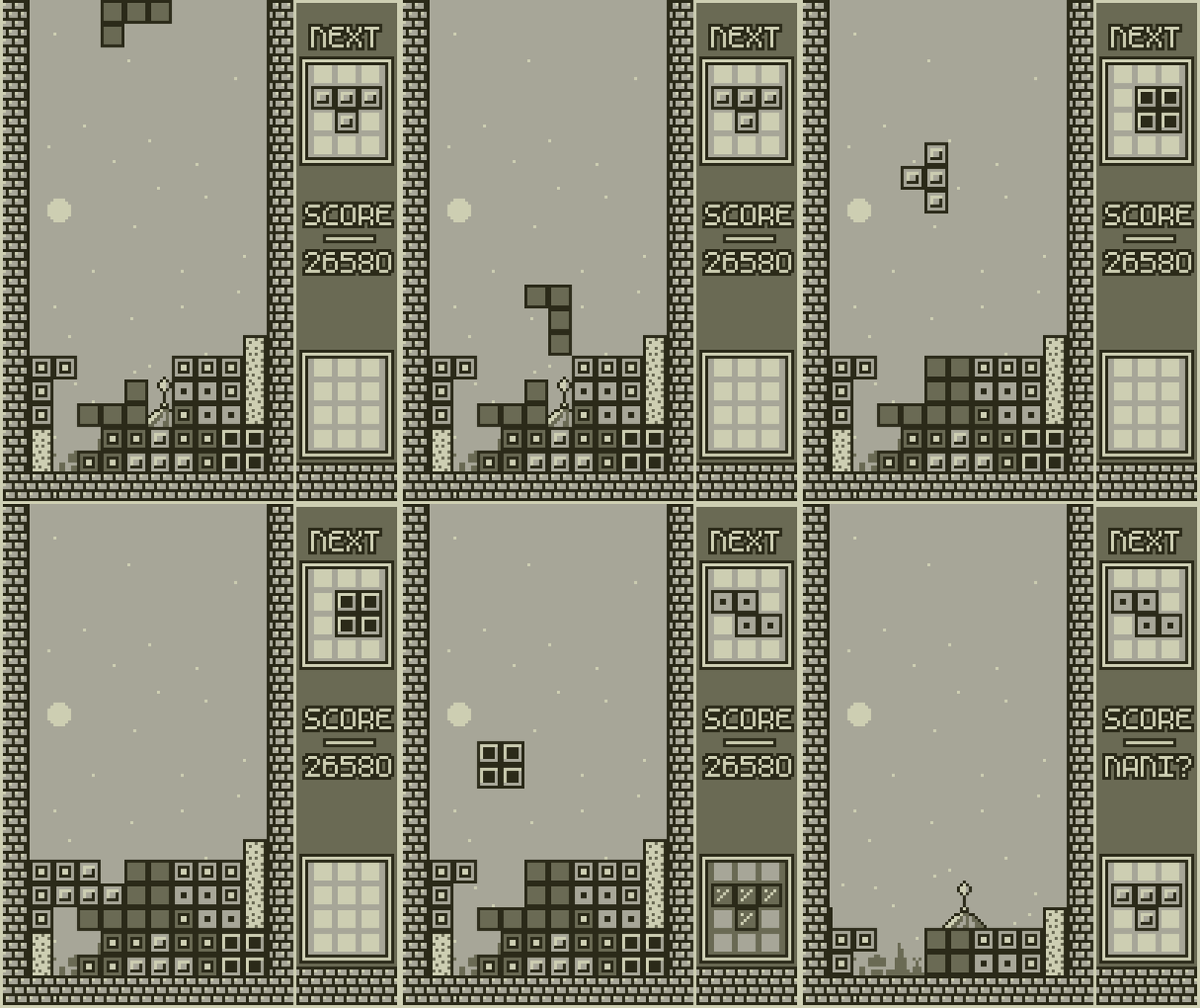
“I didn’t play all Tetris all those years for nothing.” It’s something I’ve said to my customers at my shop when they marvel at how I manage to completely fill their shopping bags and yet still keep them reasonably light. You’ll notice that I’m looking at the items on the belt, scribbles of algebra floating around my head just like in the meme, working out what can go where before I even pick it up. It keeps me entertained and makes the shift go by quicker.

But it’s just how I’ve trained my brain to think when I have to do a task (or in some cases, write a novel) that has numerous moving parts. It’s one of my favorite things to do, actually — thinking a few steps ahead, looking at what I’ve been given and how I can make it work a few steps further on. And in terms of writing, it really comes in handy when I have to think through an idea and debate how it might affect the story or the characters in the future. That, in turn, helps me plan out more of the plot direction. It’s how I worked out the Bridgetown Trilogy with its several plot threads and expanded cast!

But yeah, sometimes it just works really well for me in Real Life, whether it’s planning out an errand or a project, or simply bagging things for my customers.

Thirty Years On: Life Changes

While I’ve been finishing up the current revision of The Persistence of Memories, I started looking at the list of what I call the Mendaihu Universe Legacy Soundtracks. Out of the thousands of albums I’d listened to over the years I wrote what would become the Bridgetown Trilogy, these are the titles I equate to my writing sessions, whether they were in the family basement, the Shoebox apartment in Back Bay, or the sweltering summer in Allston. It’s been a fun reminiscence looking at this list and revisiting some of my favorites over the years.

And while I was at it, I pulled out a spreadsheet I’d made some time ago of a writing chronology. I’d gone through my poetry chapbooks, personal journals, trunked ideas and outtakes, pretty much every creative thing I knew I still had on hand. I entered it all in and sorted it by date just to see what I was working on when. It’s an interesting read on a personal level, as it reminds me when certain life events happened, what moods I was in, when I came up with certain ideas, and so on.

What I found while going through all this is how much my life changed in September of 1996.

I’d had a handful of ‘here until further notice so I can save up/pay bills/get out of debt’ jobs since moving home a year earlier. I left the radio station that June and started a temp job at my mom’s place of work soon after. I’m pretty sure it was late August when she pointed out the ad for HMV, and by mid-September I had the job, starting on the 23rd.

Two things happened that month, one right after the other. One, I really needed to get my own car at that point. I couldn’t continue to borrow someone else’s, so I managed to score a 1992 sky-blue Chevy Cavalier for two grand and only a few thousand miles on it. It pretty much looked like the one below, and I’d drive it into the ground over the next four years on all those commutes and road trips around New England. I called it the Mach 5, of course. I knew that any job I tried out for would not be in the immediate area, and this gave me so much more freedom. I’d buy a few local road atlases to stuff behind the front seats to get me where I needed to go. I used to park it in the grove out front, back when we had multiple cars in the driveway.

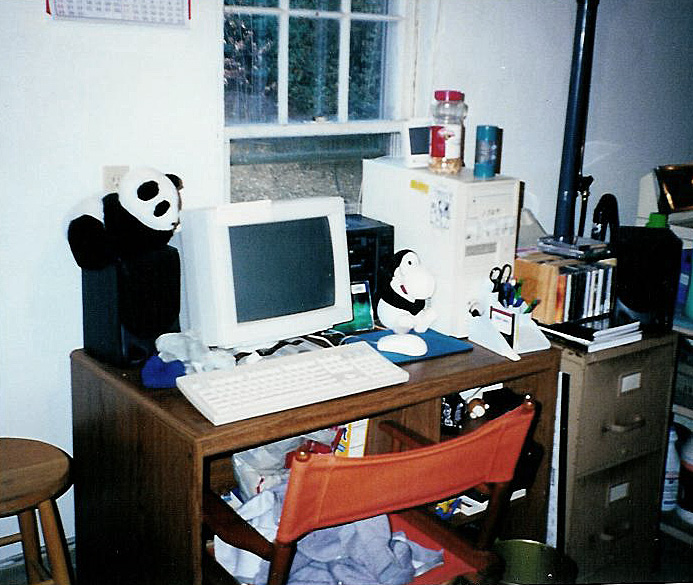
And two, I’d finally decided that it was time for me to move my PC down to the basement. I knew it was sometime in late summer that I’d decided on it, and I’d chosen to do it for a few reasons. The thing was a good few years old and had a rather loud fan, and given my penchant for staying up later than the others in the house, I didn’t want to keep them awake. I also wanted what would essentially be a work area with minimal distraction, and a place I could specifically label as my own personal space.

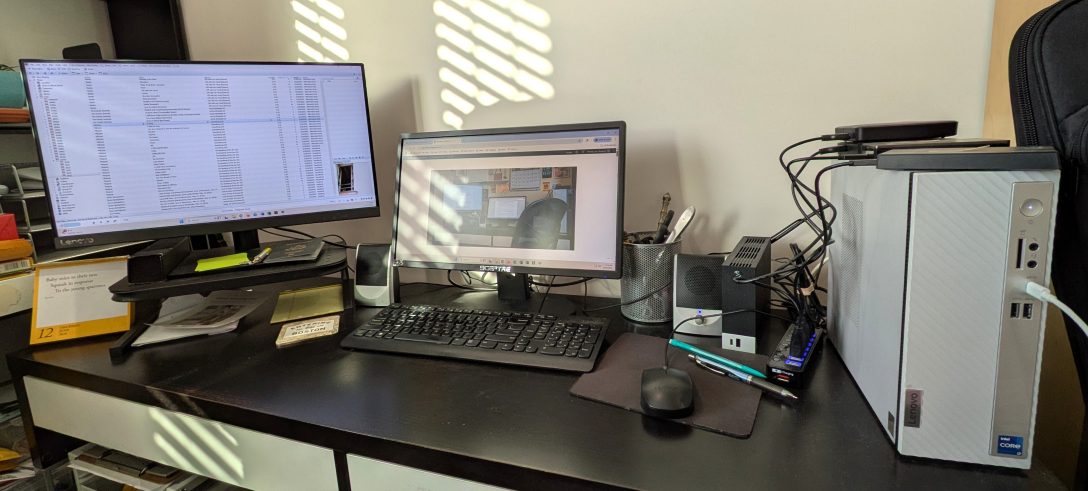
And we certainly had the room down there, the spot in the top picture formerly only housing a few chairs among other things near the wall phone. I utilized a desk (and a boombox, the one you see there) that had been my uncle’s, a director’s chair I’d had during my Boston years, and my dad provided the short filing cabinet. Made a few trips over to Walmart to pick up various desk organizers, 3″ disks and other stationery. My trusty milk crates from my college years got a new life underneath in the footwell area where I stashed three-ring binders of printouts. Snacks were hidden away in those open shelves, and 12-can boxes of Mountain Dew would soon make an appearance as well.

Mind you, I wasn’t down there with any sense of frequency, at least not yet. I think that wouldn’t happen until summer of 1997 when I chose to start transcribing the longhand work I’d started with The Phoenix Effect. That novel project had started in March of that year and by the summer I’d realized that it would make a lot more sense if I revised as I transcribed in order to make it better instead of completing each draft one after the other. And it probably wasn’t until summer 1998 that I finally did start going down there on a frequent basis, once I finished TPE and started in on the major revision work, multiple trunked attempts at sequels and related stories, and eventually what would become A Division of Souls.

But it all started there, thirty years ago in September of 1996, when I made those two life changing decisions.

[Side note: It wasn’t always called the Belfry, even though I refer to it as such these days. I don’t recall the exact date at the moment (surprisingly, it’s not on that chronology spreadsheet), but I’m pretty sure it was the summer of either 2000 or 2001 when two bats entered the basement through an open door and hilarity ensued. Thus the reason why my writing nook in the cellar of my family’s house was nicknamed The Belfry thereafter.]

Writing Soundtracks: Duncan Sheik (RIP)

I heard this morning that Duncan Sheik sadly passed away yesterday at the early age of 56 (one year older than me). He’s been a mainstay in my writing soundtracks for years, ever since his 1996 self-titled debut album. You will most likely know him from the hit that gets played the most, “Barely Breathing”.

I loved hearing that song on the radio when I was commuting to and from work. I actually taught myself proper breathing by singing along to it; the extended lines in that chorus (and its ending in a long “anyway…” that jumps a full octave) are not for the weak! That first album, however, is full of stellar songwriting that goes well beyond what some might see as a one hit wonder. Take the lovely opener “She Runs Away”…

…and the hauntingly delicate ballad “In the Absence of Sun”.

And that’s just the first three tracks. The whole album is full of lovely songs and sounds that prove his strengths as a songwriter so early in his career.

I listened to this first album quite frequently during those early years writing in my parents’ basement. It took me away from the distractions of real life and set me somewhere not quite meditative yet not quite dislocated either. I could get lost in this music, and often did.

He even managed to sneak in yet another banger of a single, “Wishful Thinking” from the Great Expectations album in 1998.

A few years later in 2001 he dropped an interesting album called Phantom Moon, an album that is a bit of a tribute to Nick Drake (and specifically his album Pink Moon, which would only get its due with a wide audience many years later due to its title track featured on a car commercial), full of quiet and poetic folk songs like the wonderful “Mr. Chess” which was one of my favorite tracks of that year. [Side note: Sheik would name his 2006 greatest hits album Brighter/Later as a nod to Drake’s other great album Bryter Layter.]

He’d follow that up just a year later with another wonderful up-tempo record, 2002’s Daylight, which features another of my favorites, “Such Reveries”.

Duncan Sheik’s musical path would take an interesting side trip from here on in, only occasionally recording and releasing a few albums here and there. He would instead focus on writing the music for several stage musicals such as Spring Awakening, Whisper House, Alice By Heart, and yes, American Psycho. He would also write the music for multiple Shakespeare productions.

And in 2011 he released a wonderful acoustic record aimed at us Gen-Xers called Covers 80s, featuring his own takes on our favorites from Depeche Mode, New Order, Tears for Fears, Japan, The Smiths, and Talk Talk.

He’d only release two more albums after that, 2015’s Legerdemain and 2022’s Claptrap, though he’d continue to work on his stage musicals up until his passing. The latest, Memoirs of Amorous Gentlemen, is scheduled to pay off-Broadway next month.

*

Duncan Sheik was always one of those musicians on my I will buy anything they put out even if I haven’t heard anything yet list, thanks to that first album. Whenever I was working on the Mendaihu Universe, eventually those first couple of albums would receive a return spin. His music might be tagged as Adult Alternative, considering it works so well on Listen At Work stations, but it was far from banal or lacking emotion. He told stories in his songs, took the melodies in interesting directions, and treated his music as full compositions. And I think that’s partly why I loved listening to his work during my writing sessions: it was just that perfect level of light yet intriguing and fit the mood perfectly every single time.