
Getting myself back up to speed

I’d used that phrase in my previous post to talk about my ‘little fun personal project’ at the 750 Words site mainly to confirm that I have in fact been doing some writing during vacation this past week. Said project is nothing of major import, just an MU-related exercise where I’m going through the “legacy soundtrack” list as well as my writing chronology list. It’s half putting things in order and half clarifying the dates of events — something I mentioned in a few posts last month.

But the most important reason behind this project is to get myself comfortable with a daily writing regimen again.

Aha! you say. Don’t you already have one? Well, not really. I have a schedule, and a very loose one at that. It’s more of a daily reminder of ‘as long as I do something today’ and that’s it. And right now it’s this ‘little fun personal project’ with a vague reminder to work on the Trilogy Remaster. It’s just phase one of a much more detailed plan going on here.

Over the years, I’ve tried to force myself into a daily writing regimen, and every single time I fail for one reason or another. It’s happened so many times I now call them Best Laid Plans. So this time out I thought I’d come at it from a different angle: I’ve often described my writing process as similar to a musician’s, so I figured that maybe I should do so once more:

Sometimes your sessions need to focus on practicing scales instead of wracking your brain trying to come up with a new melody every time.

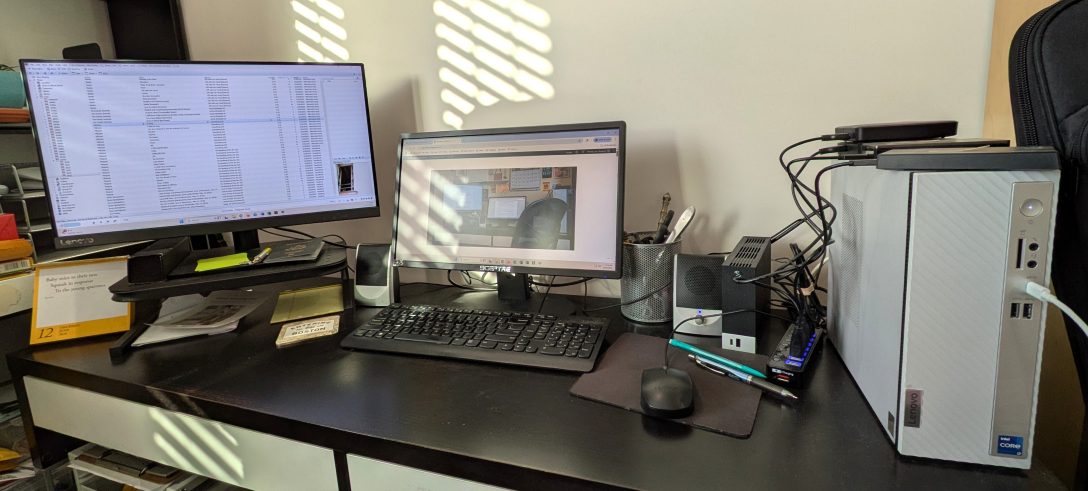
In revisiting the legacy soundtrack and the writing chronology of the Mendaihu Universe, I was able to revisit how I was able to pull it off in the first place without trying to emulate it in the present. That was always the weak point: emulation. Trying to relive the moment with vibes, I suppose. No, I had to look at it a different way. What was going on in my life when I wrote the Bridgetown Trilogy? [Answer found: working at the candle warehouse and turning my personal life around.] When did I quit trying to rewrite The Phoenix Effect and start A Division of Souls? [Answer found: June 2000, in the waning months of my record store job.] Why did it work so well then? [Answer found: a stable schedule, positive life events and a dedicated personal work space.]

So the next question is: how can what I discovered here be used in some way with future writing sessions? That is, without it once again falling into ‘trying to relive the moment with vibes’?

Well, that answer’s yet to come, and it hinges on whatever new writing project I work on next. I won’t know until I get there. But what I do know is how to properly implement what I’ve learned recently, and I think (and hope) that will make all the difference.


MU Chronology: to the warehouse

The above is the main Yankee Candle warehouse building, which opened up for business in April of 2001. My friend Bruce and I were some of the first people offering to test out the brand spankin’ new equipment before it all went live. It’s a huge building that was built to centralize the shipping, receiving, order fulfillment and storage departments all under one roof. We worked in shipping, which is in the top left corner of this picture (where all those trailers are parked in back), with eighteen bays if I recall. The entire right side of that building from this view is multi-level pallet storage, with the receiving docks in the rear as well. I worked in this building from April 2001 up until I left in March of 2005.

This is also the main inspiration for Moulding Warehouse in the Bridgetown Trilogy. I’d actually come up with the idea for that warehouse at our older building south of there on an inventory day during my brief second-shift days, but it was here that I’d solidified the idea and expanded upon it. I remember early on that I pulled a few building managers aside and asked about the specs, explaining my idea of turning the storage bays into a sort of multi-level cubicle hotel of sorts. They were rather amused by my creativity but confirmed that it could actually work as the framework was solid and buried deep into the concrete floor. [Note: the building’s name in the trilogy comes from XTC member Colin Moulding, one of my many Tuckerizations in this universe.]

While revisiting the MU chronology recently, I further realized that the date I started working in this building does in fact line up with when I wrote those scenes about the awakened converging upon Moulding Warehouse and Nehalé Usarai worrying about keeping everything under control. I remember taking my time on A Divison of Souls for fear of rushing it like I had with The Phoenix Effect, so while I was definitely working on it nearly every day from this point onwards, I was hitting probably around five hundred words to begin with. I’d slowly expand on that over the course of writing it, and by the time I started The Persistence of Memories I was aiming more towards a thousand. My favorite thing to do during slow moments of my shift was taking a bit of scrap paper and working out the next few scenes (often with one of those many boxes we shifted as a temporary desk), so that when my nightly writing sessions began I could start immediately.

And for a sense of its vastness, below is a shot of my department from the upper level of the shipping/receiving offices (itself an inspiration for the warehouse mezzanine scenes in the trilogy) from a video I found online sometime ago. Our job was to build pallets from the boxes that came down those chutes, wrap them up in plastic (the wrapper machines were underneath the chutes) and get them into the trailers (the bays are at the wall out of shot to the right). This seems to be filmed in the summer when it was relatively light, as this area would be filled to the brim and full of chaos during the Q4 holiday season. It would take us a good couple of minutes to walk from our department to the front of the building when we left for the day. This is why Moulding comes across as an incredibly large warehouse where several characters could either find privacy or gather together in large numbers with room to spare.

It was certainly an exhausting and very noisy job at times, especially during the holiday season, but at the same time it was an enjoyable one that kept me constantly moving instead of sedentary. I was blessed by the fact that it gave me all sorts of time to think about my writing with very little interruption, and a schedule that provided me with a broad length of personal time to work with. It’s an extremely productive benchmark that’s been tough to reach ever since, but these days I’ve been doing pretty good at getting close.

More on the MU chronology

As part of this ongoing Trilogy Remastering project, I’ve been trying to nail down some of the start dates of the books. I’ve long had a habit of timestamping my work (especially longhand, though I sometimes forget to do so when it’s straight to Word), so the accuracy is pretty good most of the time. I have the start and end dates of Books 2 and 3 confirmed. However, I was still using MS Write when I started writing A Division of Souls and those files don’t always provide what I need. It always bothered me in later years that I could never quite nail down when that first book was started, other than remembering that it took around a year and a half to write.

Recently, however, I think I got a bit of clarity on it. A rough listing so far:

8/7/1998 — The Phoenix Effect (longhand version) stopped
8/19/1998 — The Phoenix Effect (PC version) completed
8/25/1998 — Keepers of the Wards (first aborted TPE sequel) started
5/5/1999 — Keepers of the Wards stopped
Summer/Autumn 1999 — work on revision for The Phoenix Effect, submission to various agencies
12/9/1999 — The Veil (second aborted TPE sequel) started
2/22/2000 — The Veil stopped
4/23/2000 — The Mihari* (first aborted rewrite of The Phoenix Effect) started
6/??/2000 — A Division of Souls (second rewrite of TPE) started (originally titled The Mihari: The Division of Souls)
8/??/2000 — Plans to leave HMV, start looking for new job (early August)
8/12/2000 — Interview for job at Yankee Candle (Saturday open-house)
9/??/2000 — Official final day at HMV (possibly 1st or 8th)
9/11/2000 — Start job at YC
11/??/2000 — Switch from 2nd to 1st shift at YC (7am-3pm, shifted back one hour by early 2001)

That last entry is important. Because of that early end time, I quickly realized that I could utilize those afternoons to do my comic book and CD runs in the Amherst/Hadley area (a quick twenty minute trip down Route 116 from Deerfield on Wednesdays), come home and relax for a bit, have dinner with the family, then work on Division for a few hours in the evenings. That would become my constant writing schedule for the next few years until I moved out in March of 2005.

The above timeline sounds about right, as I’d had the idea to completely rewrite TPE from scratch during the spring and summer of 2000 during my last months at HMV. I was just loath to actually go through with it until I knew that alternate routes wouldn’t work, and I’d been dealing with a lot of day job stress at the time. I didn’t want to overburden myself if I didn’t have the spoons.

This plan, however, became a long-game plan to fully change how I wrote. I suppose these days you could use the word ‘vibe’ to describe what I’d been doing; I’d come up with interesting ideas but I was still focusing on the mood of the story rather than the prose or even the lyricism of it, and it was painfully obvious that it wasn’t working. I went into ADoS with the idea that my prose should have more heft and personality instead of the Hollywood bombast. I also went in knowing that this might take a while, but I was willing to put in the time and the work.

That obstacle of working second shift at YC did put a damper on things a bit, as I wasn’t always able to get any work done in the morning and early afternoon before work, which frustrated me. But when the offer to switch came up I immediately went for it. And for the next four years I worked on that long-game plan, writing the trilogy and getting better at my craft.

**

[* – Yes, The Mihari was the original title of the trilogy, a word cribbed from a Japanese pocket dictionary back in 1997 that means “to watch over”. It’s the original name of the Mendaihu, with the Shenaihu having the Japanese word misuteru instead, meaning ‘to abandon’. I knew it was shameless appropriation even then, but for now it was just an anime-inspired placeholder until I came up with something better. The terms Mendaihu and Shenaihu are relatively recent, created in 2011 when I started work on the initial revision for its eventual self-publishing.]

Just a few words on AI

Something I posted on Threads a short time ago…

I’ll only say this once because I don’t have the patience to repeat myself: My writing has never used and never will use AI. The closest I will ever get is the grammar and spellcheck in MS Word, and even then I make the final decision on it. Your not believing that is not my problem.
And why the fuck would I want to have a computer do the all the parts I love doing the most?

That said, if I’m going to provide you with any ‘process’, it’s going to be in the form of behind-the-scenes commentary just like those old school dvds. Like nerdy explanations about Tuckerizations, how I came up with the conlang, and what song inspired a particular scene. Because that’s fun too!

*

So while I’d like to pride myself on being open to learning how to use new technologies and software — to the point that I’ll even write easy-to-understand How-To’s and FAQs for others to use at my day jobs — there are just some platforms that are not built for me. I’m sure I could figure it out easily, I just don’t want to.

All those “AI” systems (and I use both terms loosely) fall into that description. I have no use for them because they’re built to do things I personally like doing myself. I haven’t even bothered to find out where they’re located other than the somewhat intrusive Copilot here on my PC. [And I turned that off as soon as it was installed.]

To me, creating something via prompts just seems so counterintuitive to any kind of creativity I’ve ever had since I was a preteen. There’s something about having to work longer than a few minutes on a text box describing what I want in excruciating detail in the vague hope that it will blorp out what’s currently swirling around my head that sounds so wrong to me. It feels like homework. I’m sure I can do it, and probably even nail it after a while, but it wouldn’t be fun.

Why? Simple: the best part of being creative is the work I put into it. It’s the most fun, the most challenging, and the part I’m most proud of. I still look at A Division of Souls, my first self-published book that came out eleven years ago and the end result of a project that started nearly twenty years before that, and I’m gobsmacked that it’s now in print, that I wrote, edited and published it myself, and even did the layout of its cover. Sure, it took time, but I’m proud of the end result, and that I’ve learned how to do it repeatedly. And each writing project demands an all-new set of rules and outlines to work on in order to give it strength and structure.

The mere idea of sitting down and writing “blorp me out a 200,000-word novel in which two aliens meet, fall in love and fight the evil demons from the neighboring planet who are trying to take over” and then spending four more hours revising and expanding and crafting that description in hopes that something cohesive and entertaining blorps out, just seems so… boring as hell.

The same goes for other avenues of the arts: I’d rather learn something new on my guitar than type a prompt saying “write me a three-minute hit song that sounds like Failure covering Death Cab for Cutie”. I’d rather keep making mistakes in my artwork and learn along the way than type a prompt saying “draw me an anime in the style of Caravaggio.”

Like I said above: why the fuck would I want to have a computer do all the parts I love doing the most?

Now, if these platforms instead created a workable and successful system of promotion work for me, considering most of us writers absolutely hate that part of the gig, then maybe I’d think twice about it.

But yeah, for now, I’m just gonna keep hammering away the old school way while listening to music created by real humans.

Songs from the Eden Cycle 1: Annotated

Recently I’ve been visiting the early days of the Mendaihu Universe project, specifically when I’d started writing it mid-March of 1997. I’ve talked about the background of this story quite often here, but I’ve sometimes commented about its influences only in a passive way. When I started The Phoenix Effect, it was going to be more dark and intense than its previous incarnation as True Faith. And I can safely say that the primary influences of this version were the movies/series Bladerunner, Gall Force, Bubblegum Crisis, and Johnny Mnemonic, and the Masamune Shirow mangas The Ghost in the Shell, Dominion and Appleseed.

Then of course there’s the music. Nearly all of my writing projects have dedicated mixtapes and/or playlists — yes, even the juvenilia and the trunked ideas — and Phoenix was no different. At the time, this new story was still considered part of a much larger extended universe I then called the Eden Cycle, with vague outlines for several books spanning multiple storylines and eras. [That in itself was inspired by the Star Wars expanded universe.] Mind you, I was still nowhere near the write every day goal I was aiming towards, so by June I was only a few longhand chapters in, sessions squeezed in before my shift at HMV or in the evening after dinner.

The first volume of Songs from the Eden Cycle was created for two reasons. One, I needed all the inspiration I could get, and ‘soundtrack’ mixtapes always worked for me; and two, I was heading out on a weeklong multi-state road trip to visit a good friend of mine, and what better way to think about my project than while I’m on the road? I may have only gotten one writing session in during that trip, but I’m sure I gave that mix a few repeat plays at the time.

Songs from the Eden Cycle Vol 1, created June 1997 (likely later in the month).

SIDE 1

  1. Poe, “Hello [Band Version]”. When I first started making the mixtape in the back room of the store, I knew this was going to be the first track because it had inspired the new direction for the Vigil project. Plus, it’s a banger! I liked that the lyrics were an obvious nod to cyberpunk, and to my ears a nod specifically to Johnny Mnemonic and Neuromancer. At the time, Phoenix‘s plot contained the idea of spirits with the ability to switch bodies, including cybernetic clones. The “phoenix” part of the title then was meant to evoke an idea of being reborn, specifically in a violent way. The opening of Phoenix is almost exactly the same as it is in A Division of Souls, only that the Awakening ritual was originally a catastrophic ‘ring of fire’ explosion at the Tower. [Note: Spotify doesn’t have this version available, so the original album version took its place.]
  2. Failure, “Heliotropic”. There’s no specific scene or idea for this song, only that I was listening to Fantastic Planet quite a bit by this time and this was added more as a vibe than anything else. The heavy and distorted bass and the thundering drums to me evoked a grimy night city scene a la Bladerunner. B-Town was never planned to be all grime and grimness, mind you; just certain parts of it to make sure there’s a visible line between the haves and the have-nots.
  3. U2, “Mofo”. I was also listening to Pop a lot at this time too; I loved the album even despite the critics hating it. I loved the almost non-human sound coming from this song, which hinted at that ‘phoenix’ idea; the story at the time had these newly awakened spirits hiding inside cybernetic bodies just this side of the uncanny valley (another Bladerunner influence).
  4. David Bowie, “Dead Man Walking”. Another “phoenix” idea I played around with: what happens to the original bodies once the spirit leaves and enters a new one? What remains? They were a husk at most, and a possible target for a different and malevolent spirit at worst. [I hint at this in The Persistence of Memories when Caren and Poe meet Saisshalé for the first time.] I was also listening to Earthling quite a bit, pleasantly surprised that I’d finally found a non-greatest hits Bowie record that I really liked.
  5. Psykosonik, “Need to Die”. This CD was given to me by a coworker at the record store who was really into the whole electronica and darkwave thing. He liked it all, even though he was not a clubgoer. This darkwave band was similar to bands like VNV Nation and Front Line Assembly, which I also gravitated towards. I liked this laid back groove and thought this song fit the mix. [Note: I would only find out years later that one of the band’s members, Ted Beale, would end up being the infamous Vox Day. I keep the two as separate as I possibly can.]
  6. Live, “Lakini’s Juice”. Secret Samadhi was their weird album, I think. It was the follow up to the hugely successful Throwing Copper, and while there are elements of their heart-on-sleeve earnestness they’ve always had, it’s a much darker affair. This was the first single and definitely a left turn for them: grimy and gritty and unsettling. I thought it fit the flow and mood of the mix nicely.
  7. Elysian Fields, “Lady in the Lake”. Bleeding Cedar was one of the early promo CDs I’d gotten from the store, and I was taken in by the band’s sultry goth sound. It was like listening to a much darker version of Mazzy Star in a way, feeling like the aural equivalent of a ghost story. While “Jack in the Box” was the single, this was the track that appealed to me. Lyrically it doesn’t quite fit but the vibe is perfect.
  8. Moby, “That’s When I Reach for My Revolver”. Despite my wondering why he decided to cover Mission of Burma for his non-electronic ‘punk’ album Animal Rights, I kind of liked this take on one of my favorite Boston-centric songs, as he manages to retain the meaning and energy of the track. Why here? I think partly because WFNX was playing it a lot at the time and I needed to fill out the last part of Side 1. It does sort of fit the mood of Vigil’s take on the situation: if someone has to take the reins and get shit done, it’s definitely going to be them.
  9. The Verve Pipe, “Veneer”. I’d loved the Villains album and had seen them live at Avalon in Boston in May, where I learned the story behind this dreamlike track — driving alone on a deserted Michigan highway while high as a kite. Hearing it in its proper context made me absolutely love the track. In the context of Phoenix, I think this was how I thought a newly ‘awakened’ spirit would feel: completely out of sorts and confused, maybe akin to being high.

SIDE 2

  1. Richard Einhorn & Anonymous 4, “Exlamavit (from Voices of Light)”. I was obsessed with this album in the latter half of 1996, having heard it on an NPR station as I was driving into Boston one night. Einhorn wrote it as a soundtrack to the 1928 silent film The Passion of Joan of Arc. It intrigued me because it was the first modern orchestral piece that caught my interest, and reminded me of my favorite Dead Can Dance moments. This intro piece fit perfectly with the “ring of fire” moment in Phoenix.
  2. Pulp, “Common People”. This was a good year or two old and I was passingly familiar with it but it hadn’t resonated with me until around this time when I finally got what the band was about. I’d been listening to the store copy off and on and knew this was the big hit. It might not completely fit in with the story idea, but the vibe of distrusting those who mock or hate you fit in perfectly. It kind of fits Vigil’s vibe as well.
  3. Sponge, “Isolation”. I’d also been listening to the Working Class Hero John Lennon tribute album quite a bit at the time. It’s a song about Lennon dealing with the darker side of fame and feeling isolated despite being constantly surrounded. While the original from the Plastic Ono Band album is more plaintive and laid bare, this version is more pissed off, and it works alongside the above song with that feeling of social disconnection. [The tribute album is not on Spotify and is thus not on the playlist above.]
  4. The Offspring, “Gone Away”. This song was super popular on WFNX (does anyone remember the first single off this album?), and it sort of continues the whole feeling of social disconnect, this time from a deeply emotional point of view. It inspired a possible idea of a recently awakened character who felt this deeply yet didn’t quite understand where it was coming from yet.
  5. Filter, “Hey Man, Nice Shot”. There were actually a good couple of songs I thought fit the opening ‘ring of fire’ scene, and this was the more ‘violent’ one I came up with, fitting perfectly with my still-occasional use of Miami Vice style of writing. And I can never pass up a song that perfectly uses the quiet –> LOUD dynamic.
  6. Failure, “Daylight”. Even then I’m pretty sure I saw this song as an “ending credits scene” track, because it has such an epic coda that just builds and builds and leaves you breathless at the end. I’m also sure even then I pictured a hard cut to black when the drums and guitars kick in after the last verse. This is the first of many mixtapes where this song makes an appearance.
  7. U2, “Wake Up Dead Man”. Could this be a denouement scene song after all that? Perhaps? It’s near the end of Pop, after all the louder and bigger songs, and it evokes a feeling of exhaustion after all the pomp and noise. It also fits pretty well after “Daylight” — while the former song is the moment where something life-altering happens in the story, this song is the moment right after when one suddenly realizes what its consequences are.
  8. Jamiroquai, “Virtual Insanity”. I’ll be honest, this was more of an “I need one more song to finish this mix off” song, but it also fits the theme and the flow as another ‘end credits’ track. In my mind it does somehow fit in with the feeling of something life-altering happening, and now here we are having to deal with the fallout.

Not bad for a first volume, and it got a ton of play over the next several years. I’d be making two more volumes by the end of the year, with a fourth and then-final one made late in 1998 when I was working on the transcription and revision. Several of the tracks on these early volumes have had direct influence on The Phoenix Effect. [I will talk more about these in future entries here.]

A few variations would show up over the next few years, but in 2018 I’d revive the Songs from the Eden Cycle series as a way to keep the universe in mind. The most current one is Volume 10, created in late 2024.

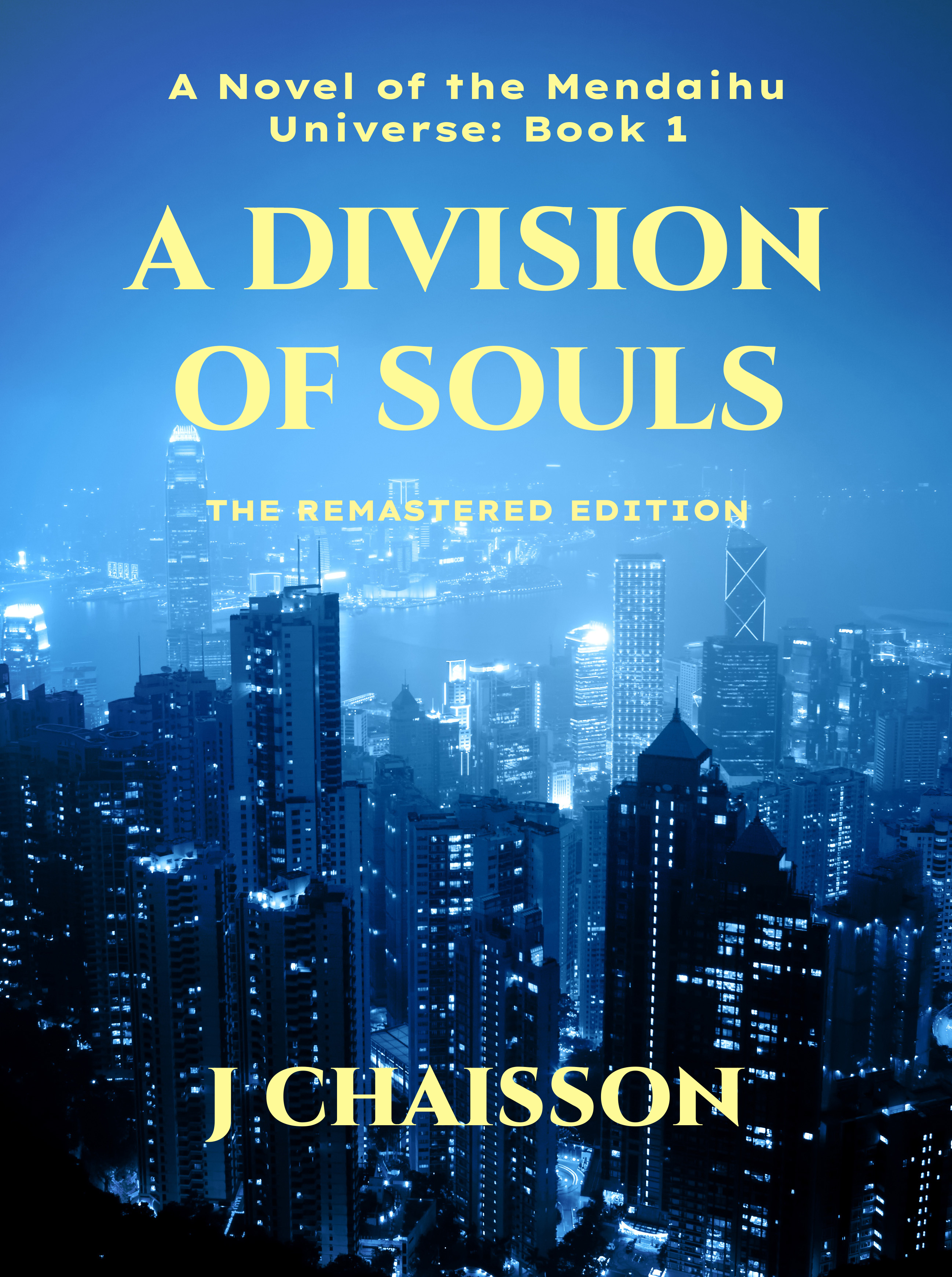
A Division of Souls is returning to POD!

I’ve finally gotten the ARC (or what I’m calling such) of the remastered edition of A Division of Souls and it looks PHENOMENAL. I’m quite happy to say that Draft2Digital does an amazing job of helping authors with the layout, complete with little flourishes like capitalized first lines (and dropped first letters if you so wish), scene break art and other things like that, but unlike Createspace (at least when I used it back in the day), it made acquiring separate ISBNs for each format a lot easier and less confusing.

At this point I’m going to be giving it one final once-over to see if anything needs fixing, then release it out into the world! I’ll let you know as soon as it’s available!

Prepping for (re)release…

Okay, so what I really need to do, now that the trilogy remaster is underway, is to start selling it. I’ll be honest, I’ve been a bit lazy in that respect over the last couple of titles, but it’s clearly obvious that run it up the flagpole and see who salutes follows with but no one ever does.

When I first released A Division of Souls in 2015, I went the extra mile and found myself a few avenues to self-promote, and it did reasonably well for a little while. In this case, I have a few ideas that might work, or at least might push the novel where it needs to go to be seen. Perhaps utilizing Publisher’s Weekly‘s ‘Booklife’ section which focuses on self-published titles, for instance.

I suppose the worry is how much it’ll cost, but if I play my cards right and understand what avenues I’m working with, I can definitely pull of a least a small percentage of wider attention and keep it within a modest budget. Considering I’m doing this all DIY, I’ve always kept in mind that if I can take care of certain parts on my own (such as the cover layout and whatnot), then I’ll do it to save money.

In the meantime, I’m looking forward to seeing who enjoys the new and updated version!

Update: Now available for pre-order!

And it has a cleaner and nicer cover as well! The more I sat with the cover I posted last week, the more I thought I could still do better. While the font I’d used wasn’t all that bad, it didn’t quite sit right with me, so I played around with it for a few days until I came up with something simpler yet classier. I feel this one stands out a lot better, as does the title which stands out a lot more.

So anyway: the new remaster is available for preorder at Barnes & Noble, Kobo, Apple, and of course Smashwords, and will be available elsewhere hopefully very soon, for only $2.99!

BUT WAIT, THERE’S MORE! I will also be making this book available in physical form via POD on Draft2Digital, most likely within the next few weeks! All I’m waiting on is a copy of the proof so I can see how it looks before I sign off on it. [The physical book price will be somewhere in the area of $22.99, I believe.] I’ll keep y’all posted!

Almost there…

I am SO CLOSE to finishing this go-round of the Trilogy Remaster for A Division of Souls! I’m about twenty pages from the last one (this includes the original endnotes and whatnot), so that means I can give it yet one more read-through before prepping it for the planned September release. I’m almost never this ahead of schedule!

Speaking of, I’ve also been thinking of having a bit of fun with the tenth anniversary remaster here at the blog and possibly elsewhere. Sort of like when I celebrated the project’s twentieth anniversary back in March 2017 (for those curious, I started The Phoenix Effect in March 1997 which would become the trilogy a few years later). Posting things like outtakes, maps, drawings, stuff like that. Stay tuned!

But for now, the next step in my plan is to get it all ready to go early, that way I can get back to working on Theadia. That project needs a lot of attention I haven’t been able to give to it lately, so it’ll feel great to have that on the front burner once again. I admit I have a lot of vague plans for it and a few set-in-stone ones that I’d like to focus on. Most of you have read some of the outtakes here, but for the most part it’s a story I haven’t shared with anyone yet. I hope you enjoy it!