A little night reading

I know, I know…I really should be catching up with my To Be Read pile at night. It’s not even that big at the moment. Instead, I’ve been turning on my e-reader and reading a bunch of comics and manga on the Hoopla app. Yay for the SF Public Library for carrying a considerably large collection! And on top of all that, I’m working through all twenty-six volumes of Charles Schulz’s The Complete Peanuts (I’m currently on volume 11, the 1971-72 comics).

I figure what I’m doing here is not actually avoiding the TBR pile, but just allowing myself to purely enjoy reading, which I sometimes forget to do. I think part of this is due to having gone through a phase some years back where I just felt burnt out by reading only genre, or only music bio, or whatever, added to the fact that I was trying to reach a goal I’d set on GoodReads.

During all this pleasure reading, it occurred to me that this was what I did back in the Belfry days. I’d been hooked on comic books at the time and simply had to follow the monthly adventures of whatever titles I’d bought (including slogging through the last third of Dave Sim’s Cerebus, and you really need the fortitude and patience to slog through everything past the Flight trade, and especially after Rick’s Story). A lot of it I enjoyed, and a lot of it helped shape the kind of storytelling I enjoy writing. But I was also pushing myself to read comics and books that I wasn’t entirely enjoying. I bought a lot that I simply never got around to reading.

So I’m not too worried about those few titles gathering dust next to the bed, because I’ll get to them eventually. In the meantime I’m checking out things that capture my interest and are an easy and relaxing read. I’m trying out different genres and styles and soaking in the storytelling and the worldbuilding. Sometimes the comic’s a silly slice of life, sometimes it’s a quirky oddball fantasy, sometimes it’s a romance.

And in the end, I’m hoping some of this light night reading will inspire some new ideas!

Keeping track of the days…or not

I’ve realized that I haven’t been logging my words and creative output in my calendar notebook lately. Not that I got rid of it or don’t have the time for it, simply that I just haven’t thought about it. I’m not all that bothered by it, as I’ve been doing it primarily as a way to see how much I’ve done, and I’m well aware of my own creative output at this point.

But let’s be honest here: over the last couple of years, the entries have been pretty much the same: blog entries written and posted, daily 750Words written, and word count logged when I’ve actually been working on a completely new project. It can be interesting, but it can also be quite distracting and disconcerting, especially whenever I get that time-honored writerly anxiety of feeling like a failure for not getting any work done despite completing multiple things almost every single day.

I started logging those numbers around 2002 when I was writing the trilogy, because I was curious: when I was writing The Phoenix Effect longhand I’d get about five pages done, which would then be transcribed to about two and a half single-space pages typed — basically around five hundred words. By the time I was writing A Division of Souls directly into the PC, I wanted to see how much I could do, and if it was possible for me to write even more words each session. (And to be aware of how often I’d get distracted by various things). Soon I was writing about a thousand words on a nightly basis. I’d finally figured out what was a comfortable word count goal for me.

These days, however, it feels more like a distraction or an assignment than anything fun or helpful. Not that I hate doing it, I just feel as though I don’t need to do it now, at least not until I’m back to working on a completely new project. It’s all a part of my changing creative habits as we continue to settle into the New Digs. In its own way, the continual focus on word count goals and logging project updates had become a distraction itself; my creativity had started feeling more like a chore or an assignment than a joy. I kind of knew somehow that this constant logging was only adding to that stress, but I wasn’t quite sure if I was ready to get rid of it just yet.

Again, moving to our new home was a perfect way to cut those ties once and for all. I feel less chained to the keyboard, less stressed out, less inclined to feel guilty if I don’t get a lot of work done. And that, in itself, is one of the creative goals I’ve been trying to reach for some time now.

Deep dive

That’s what I’ve been calling it lately: the process I used when originally writing the Bridgetown Trilogy. And it all started because I felt I hadn’t gone far enough with The Phoenix Effect.

By the time I was writing True Faith in 1995, I felt I at least had gotten the hang of the science fiction genre, and had gotten even further two years later with TPE, but at the same time I knew there was something wrong. There didn’t seem to be any issue with the universe I was creating, and I definitely felt that writing dialogue was one of my stronger creative traits…but it still felt off.

It didn’t take me long to figure out that it was the prose itself.

The problem was that my novel didn’t sound like one. It sounded more like an extremely detailed outline. And that had always been a problem with my work then…I thought I had some really neat ideas, but I was definitely failing in the execution of them. There was plenty of action, but my novel read more like a descriptive ‘A happens, B reacts, C happens, D causes a shift, etc.’ and less of an actual story. I resonated deeply with this tale about underground hackers, spiritual magic and otherworldly kinship…but none of that resonance was coming through at all.

So by 2001 or so, while working on TPE‘s revision and slogging my way through its sequel and getting nowhere, I realized that I needed to do something about it. I wanted to do better. I needed to do better. So one afternoon I decided I was going to completely rewrite it. I mean, start from scratch. Tell the whole dang story from Nehalé’s awakening ritual to the end, and do it right.

The only way I knew how to do this at the time was to do a deep dive. Instead of writing in that old outline style, I was going to make damn sure that every single scene resonated with me. It was a bit like method acting, to be honest: become the novel. Figure out why Nehalé did what he did. Understand the actions and reactions of Caren and Poe and everyone else. And don’t just be flippant about it; those actions and reactions were also part of the story, because it was who they were, and the consequences of their actions were also part of it.

By the time I’d gotten about five or six chapters in on this new version, I’d realized I’d only gotten through maybe two chapters of The Phoenix Effect, and this was EXACTLY what I’d been aiming for. So I just kept going, and eventually wrote myself an almost complete trilogy by the spring of 2005.

*

I bring this up now for two reasons:

One, after completing and self-publishing the Bridgetown Trilogy, I knew I had more to learn. I could definitely write doorstop epic novels at that point, now I wanted to prove to myself that I could ‘write econo’ (hat tip to The Minutemen, heh), so I started writing much shorter standalones. I’m quite proud of them all, especially Diwa & Kaffi, which I still feel is my best book to date. Even despite the urge to write the fourth book in the Mendaihu Universe, I wanted to stick with shorter works until I felt confident enough.

Two, it was the writing of the still-unfinished Theadia that made me realize that perhaps I was ready to do another one of those deep dives. This is another book I resonate deeply with…and like the trilogy, another book I feel isn’t quite there yet because it too needs a deep dive. Over the course of 2024 I tried the rewrite method, but somehow it still doesn’t feel complete yet. I still haven’t gone deep enough.

Fast forward to January 2025 and I’m focusing on the Trilogy Remaster and also revisiting the several sounds and words that surrounded its original writing, and I’m struck by another resonance that I’d almost forgotten about: this was how deep I’d gone with the trilogy! It had become a part of my life then, socially and creatively, and I loved every minute of it, and that was something that had been missing from my writing life for far too long, even before the revival of the trilogy in 2009.

As I’d mentioned briefly in last week’s blog entry, I feel I’ve come full circle, having learned several things along the way, and now I’m ready to cast the anchor and say this is where I belong. This is the style I love the most, yet it’s a style I haven’t allowed myself to return to. Or more to the point, I’d almost completely forgotten how to get back there in the first place, and it took several things falling perfectly into place for it to return.

Does this mean that my future novels are going to be epic in length? I can’t answer that because other than MU4 and Theadia, I don’t know where my next ideas might come from. But I can safely say that those two projects, at least, will be a return to the deep dive.
It’s Inktober time!

It’s been a few years since I’ve actively joined in the fun with this! I’ve got the time, my plate is relatively well organized (if not always clear), and I’m not in the middle of some sort of major project or personal crisis or whatever has kept me from it in the past.

That’s how I’m going to focus on it this year: have fun with it! I’m not out to prove anything, I really shouldn’t try to aim for perfection with every single prompt. Just draw whatever comes to mind. It could be the first image that pops up in my brain, or it could be a ridiculous pun or a music reference (I mean, #16 just begs to be full of flannel shirts). Don’t think to hard, just have fun.

And that’s something I need to remind myself of more often!

Passing the time

So, how is my little experiment with passing the time at work going?

Well, it could be going better to be honest. I’m still finding too many excuses (and they are excuses) not to pull out my phone and screw around on Threads for the short amount of time I have for breaks. I mean, fine, it’s downtime and there’s nothing inherently wrong with using said time to mindlessly scroll social media…but like I said, I don’t want to do it anymore, and I’m trying my damnedest to get OUT of that habit.

I’m just not trying hard enough, really.

On the plus side, though…I have been doing a damn fine job of maintaining a level of Zen while at work. For a little while there I was letting myself get too frustrated and/or distracted and reactive to situations, just like I would do in the past, but that doesn’t happen nearly as much these days. Sure, I’ll get a bit snippy or grumble to myself in certain situations, but I’ll let it go very soon after and not continue to dwell on it.

And creativity-wise? I’ve scaled back the prep work, so to speak. For a while there I was carrying a small but bulky notebook in my jacket pocket, which did get its use, but I’m back to the old-school ways again, using my trusty back-pocket pad. Why? Because it provides lower expectations. I’m not writing anything big there, but I am starting to write down more lines of lyrics/poetry and the occasional WIP note. And that’s all I really need right now.

A creativity rethink

No, I don’t plan on giving up this writing gig anytime soon. I’m seven books in, one I’m currently working on and a few future ideas on the back burner, and I have no plans on letting them fall by the wayside.

I’ve been thinking — again — about other creative outlets lately. More to the point, how I haven’t allowed myself to give them any proper focus and practice to be anything other than passing hobbies. I’ve often said my other two creative outlets would be art and music, but I’ve spent so long working on writing novels that I rarely ever have time for either of them.

Why is that? Well, part of it has been just not allowing myself the time. Balancing the novel writing and the Day Job (and spending some time IRL with A.) often leaves me with very little time to do anything else. I still have a habit of carrying a notebook with me at all times so I could easily spend a few moments doodling. I have enough time outside of the Day Job that I can pick up my guitar and noodle for a bit. And I’m better at both than I used to be just ten years ago.

What’s stopping me? I think it’s that my creative brain gets stuck on the ‘well, you’re not bad, but there’s at least 9,000 more hours of practice and experience before you’ll be good‘ and I put it aside for a later time. And that later time keeps getting pushed further into the future.

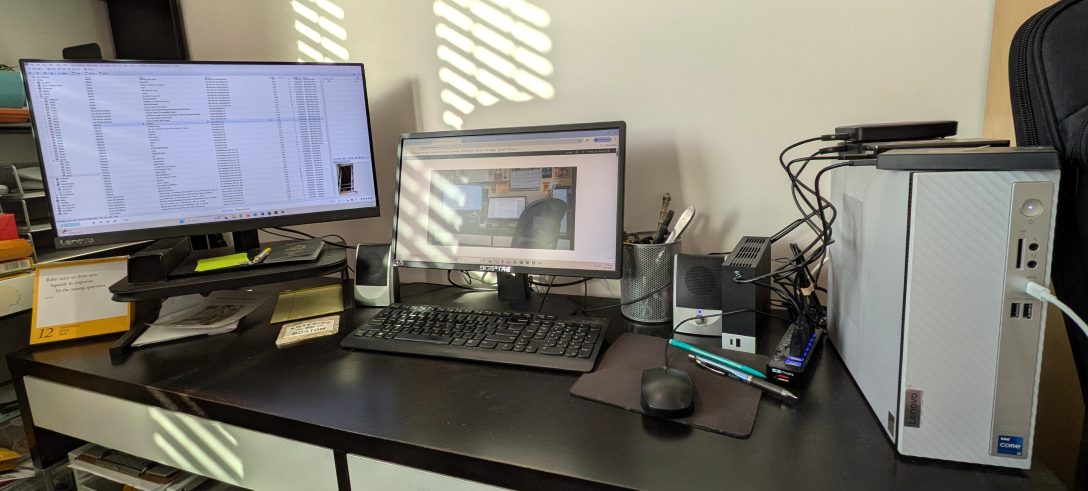
I think I’m perhaps also a little daunted by seeing so many musicians and artists relying on computer software nowadays, and simply I don’t have the money to spend or the PC memory to eat up (or the desk space, for that matter) for it right now. And then I start thinking that maybe my art and music should remain a hobby.

But if I’m going to take either of them more seriously, I realize what I should do is take the same route I did with my writing: Do It Yourself.

I mean, my inspiration for having a DIY writing career is based on music, so I’ve got the knowledge to go that route anytime I want, right? Why should I worry about trying to learn the technology when I have the Beatle-based inspiration of pushing a button, saying ‘oh hey this sounds neat’ and running with it? I’m not a synthpop based performer that needs all the doowackies; Drunken Owl is more something you’d hear on Slumberland Records than a hipster indie label, and would be right at home on Bandcamp.

As for art? Who knows what would come of that. A webcomic? Storyboarding? Something else? And as for photography, I really just need to give myself the time to properly edit the pictures and make them saleable on stock footage sites like Shutterstock.

The net is vast and infinite, as Major Kusanagi says. I just have to make the time to explore it.

On creating new characters midstream

Okay, so Captain Will Dewar in Theadia is definitely not Space Pirate Captain Harlock, but the gif was too good to pass up, heh.

Anyway, I’m kind of stuck on how to write Dewar, as he’s a relatively new character unlike nearly everyone else in the novel. But in the process, I’m reminded that this also happened back when I was writing A Division of Souls; originally Christine Gorecki was merely a name of an old friend that Poe mentioned during a tense moment to ease Caren’s distress. By The Persistence of Memories she’d acquired a major role.

So why Dewar, anyway? Again, he was originally a one-off, someone mentioned in passing during a conversation between a few flight captains, someone known as being gruff and not entirely friendly but someone who could be trusted. As it happens in this particular revision/rewrite, I need to expand his role as someone willing to take extremely dangerous chances in order to help the main characters achieve their goals.

But who is he when he’s not in uniform? What kind of civilian would he be? Well, I kind of see him a bit like Alan Ritchson’s take on the Jack Reacher character: ridiculously well-built, surprisingly intelligent, yet a bit of a quiet loner. He’s not all that easy to rile up, but you don’t want to be in the same area when he is. I wouldn’t say he has a strong sense of justice, but more like a strong drive to ensure the right thing is done, and done correctly the first time. He craves competence.

All this thought and brainstorming, just for a secondary character! Well, this is why I loved writing the Bridgetown trilogy so much: every character in that universe has a backstory and a reason for being there, and that’s exactly the kind of writing work I love doing. [Why yes, I’m definitely anti-AI when it comes to creativity, why do you ask?] While I do have some idea of who Dewar is and what he’s about, I’m still a bit vague on his reasons for being who he is and why he does what he does, and how he relates to the other characters.

Well, that’s something I’ll need to keep plugging away on, isn’t it?

Theadia and…Knitting?

It was supposed to be a one-off joke that most likely wouldn’t have made it into the finished version, but somehow it’s become an all-encompassing theme within this project. And to be honest, I’m totally fine with that because it works perfectly!

Theadia has numerous knitting and crafting references littered throughout. The three main military space ships we see are pins (small one-person fighters that serve as the front lines), needles (two-seaters working as artillery) and stashes (boxy, bulky troop transporters). The main setting is a well-off planet and space station called FairIsle (named after the Shetland island known for its knitting) and the planet’s central capital is Beam City (a weaving tool). And so on.

So why knitting, anyway? Well, originally it was a nod to A’s craft projects — she’s made numerous scarves, fingerless gloves, toys and baby clothes over the years, and that’s her creative outlet while mine has been writing. Something we both enjoy immensely even when we’re doing something else like listening to music or watching TV, or more more recently, even despite the constant and sometimes destructive interruptions of our cats!

The more I leaned on this little in-joke, the more I realized that it was a perfect metaphor for the project itself: every single event is interwoven with something else that happens elsewhere. Whether it’s a character’s refusal to act or another’s fearless action that changes the course of history, their actions are not just about their own world.

Reminding myself that weaving is the main structure of this entire project is what’s helping me in this new revision/rewrite. Whatever new scenes I’m working on have to not just tie in (har har) with the plot in general, but have to, in some way or another, cause or influence a change down the road. So by the time we’re near the end of the story, we have a whole tapestry of events going on about to lead to something unexpected yet extremely important.

Not bad for a one-off joke, yeah?

[EDIT: Yes, I am aware that the header gif I used is actually crocheting and not knitting. It was the one I found online that looked best! Heh.]

On being unconventional

I’ve said this before: Theadia is an unconventional hard-SF story. It’s not entirely about the spaceships or the combat or the high levels of tech intelligence. It’s more about the characters that are put into that world, whether they want to be there or not. I’ve also said this before as well: Theadia is about doing the right thing when no one else is bothering. But what it’s not is completely uber-serious or heavy on the military grimdark and the perils of deep space.

I love writing unconventional stories. They appeal to me and my mindset. I mean, come on: I’ve been listening to indie music since the mid 80s. My favorite stories are the ones that don’t go in the direction you expect. I’m a sucker for books and movies where you can tell the writers did their homework in weaving the plots in all sorts of unexpectedly creative ways. It only makes sense that my own writing leans the same way.

While I’ve been talking about how Theadia‘s sprawl is somewhat similar to the Mendaihu Universe, I’d say characterwise it’s more similar to the Meeks sisters in In My Blue World. There’s certainly a huge world out there (in this case a galaxy) but the story is mainly about these main characters I’m writing. I always love the idea of that dichotomy: a tight focus within a larger landscape. To me it gives the background life, and in the process our leads get to act or react accordingly to it.

I suppose this is partly why I’m still an indie author that’s self-publishing rather than going the pro route. I may have once had rose-tinted dreams about getting my novels released by a big name publisher, but the more I thought about it over the years, the more I realized that avenue felt more restrictive to my own creativity. I don’t know how to write commercial fiction, let alone genre fiction that would sell commercially, and I’m not sure if I’d be able to succeed if I managed to learn.

I just write what I enjoy the most, regardless as to whether it’s highly popular or not. And I’m quite happy with taking that unconventional route.

Artificial…?

(Image courtesy of Ghost in the Shell)

I’ve been reading a few social media or blog posts lately opining how AI has infested many creative fields like invasive critters, taking all the fun and the jobs from those who’ve been in the field for ages doing the actual lo-fi work the hard way.

You can always tell the pro-AI people: they have this weird salesperson optimistic shine to them, telling you how awesome it is to be able to create a novel — a whole freaking novel, even if you’ve never written one before! — just by typing in a few prompts! You can even put in a few more prompts and get a cover! You put in the ideas, the computer does all the hard work! It’s awesome! You’ll have more time for raising more bitcoin!

Oddly enough, they remind me of my worst ever job as a telemarketer at a call center, trying to sell toll-free 800 numbers back in the early 90s. Trying to push something that ninety percent of your targets don’t want, hoping that ten percent will think this is the Best Idea Ever, and you’ve made your sale. [And now you just need to get ten more in the next three hours so you can keep your job.]

It also reminds me of Virtual Reality. Remember that, from the early 90s? It was supposed to be the Next Big Thing then, back with all those crisp images that made the internet under the hood look like an amazing science fictional universe, and we’d all be Johnny Mnemonic with Thompson Eyephones, flying through digital space and opening up files and hacking through firewalls with disembodied computerized hands. Never mind that the real under the hood looked…less so. More 8-bit than CGI, really.

There’s something not entirely real about it all. Not exactly Uncanny Valley unreal, but more like you can definitely tell the difference between the messy and tactile yet endlessly fascinating real world, and the AI world that’s just a tiny bit too shiny and perfect but not quite working to spec in small yet obvious ways.

I’m reasonably sure that this too shall pass, just like VR did, just like those smart glasses and other fiddly bits of hardware that get a huge sales push and vanish a year or so later. They won’t go away, I think…they’ll still have their uses here and there. They just won’t be sold as The Latest Tech Toy You Must Own. The overwhelming reaction of AI art has been a resounding ‘meh’ from most non-tech people anyway, and most artists are pissed off about it for obvious reasons. And as a writer myself? I’m secretly laughing that most AI-created stories are easily spotted, absolutely terrible and lacking any kind of humanity within its pages. We’ll still have a few people trying to make a fast buck by generating a handful of these, but they’re few and far between and they’re not doing as well as they think they are.

Don’t get me wrong, I’ve used a few low scale AI art generator websites now and again, just for the fun of it, just to see what it does and what level it’s at. If it wants to stay, I think it still has a long way to go. It might create an eye-catching picture…but with colors slightly too pastel, the smile a bit too Aphex Twin, minor but crucial details completely missing, or perhaps an extra limb or finger bending in strange ways. Plus, it currently takes up a huge fuckton of processing power that’s not healthy for the environment.

We’re still better off going old-school and doing the hard work, even if it does take a bit longer and sometimes costs money, to be honest. The end results are still much more pleasing and long-lasting.