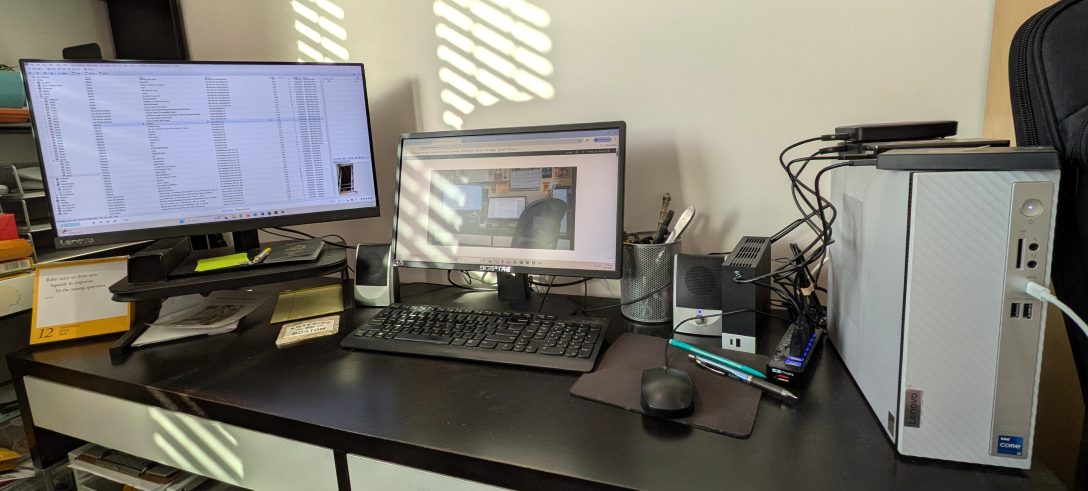

The other day while I was working on Theadia, it occurred to me that though this novel has already hit 130k words, it’s still missing numerous important parts. While it’s strong in some respects, I’d completely ignored other characters and events that need to be there in order to make this work. I kind of did that on purpose, as I’d started this in a very just run with it and see where it goes style, albeit with a vague-ish fourteen-page rough outline. I wanted to focus on just getting the words down instead of fretting about making them perfect right away. Besides, this is my first space opera, and I’ve got a bit of a steep learning curve going on.
But now that I’ve gotten this far — almost to the important climactic moments of the entire story — I feel like I left a hell of a lot out. Passages where I’d just written a three-paragraph ‘this is what happens in the ensuing three months’ to get to another scene…or worse, scenes of character conflict where I barely touched on the antagonist’s reasons for their actions. Again, I did that on purpose in a ‘we’ll fix it in post’ sort of way.
And then there are the multiple minor characters I introduced, had them stick around for a few moments, and then kind of disappear. There’s one I’d created a few days ago — I’d completely forgotten to give a major character a co-pilot, which is important — which made me realize two things. One, that major character hardly has any scenes except a few supporting parts and one important front-stage scene. Two, I hardly gave her that much character development other than being related to one of the primary titular characters, Claudia.
Which made me think: am I stretching this story out far too long and stuffing it with inconsequential chaff…or is this another case of story expansion?
I’ve told you before about how I’d expanded a story in the past, when I started revising The Phoenix Effect and ended up writing a trilogy instead. And though I can’t say for sure just yet, I think the same thing is happening for Theadia. I love the story, but there’s so much missing. And furthermore, it’s the same exact feeling I felt when I started writing A Division of Souls oh so long ago. I knew I had a good story, but I wasn’t giving it nearly as much breathing room as it desperately needed. It needed expansion.
At this point I’m still debating how to handle this. I have a few options here:
–Continue with the story as is and complete it, then reshape it during revision. Pare down any extraneous subplots and tighten up any weak spots.
–Continue with the story as is, just to finish it so I have something to work on when I expand it. Or…
–Start the major revision now with the plan of turning it into a duology or a trilogy.
Option 1 is not what I want to do, however. I don’t want it to be a single self-contained volume because the story would be too cramped and incomplete. Option 2 makes sense to me, but it also feels like I’d be wasting much-needed time, knowing full well that I’d be rewriting it anyway. (And besides, I know exactly how it’s going to end.)
Option 3, to start the major rewrite/revision now, makes the most sense. Just like the trilogy, this process would give me an even deeper immersion in the world, to further understand all of its weblike connections, and give the characters and events the breathing space they truly need.
I mean, sure, part of this is my brain thinking hey, this is a year ending in 2, which means there’s gonna be some awesome writing music coming out, and I’ve always wanted to relive the best parts of writing a trilogy…it’s gonna be great! [Granted, the more sedate adult part of my brain, while it does have those high hopes, knows that it won’t be exactly the same.] I knew I’d be returning to writing plus-sized stories again, sooner or later. I love writing them, and I love everything about the process of writing them.
I had a good run of writing four publishable standalones after the trilogy, just to prove to myself that I could write in that size and style…but I really want to return to the Big Stuff again. The physical world of Theadia is vast, as is its cast. Like the Bridgetown trilogy, it starts of with a single person’s focus and grows to become something affecting everyone. It’s a story about connections, community, and responsibility. Its recurring theme is about the often mundane yet absolutely critical points in any event that need to happen in order for everything else to go right. [I admit there may be a bit of influence from my Former Day Job in there.]
So if this unfolds the way I think it is, this is going to keep me busy for the next several months, no doubt. Not that I’m complaining, just good to know ahead of time.
More as this unfolds, dear reader. And yes, there will most likely be more writing soundtracks involved.