Songs from the Eden Cycle 1: Annotated

Recently I’ve been visiting the early days of the Mendaihu Universe project, specifically when I’d started writing it mid-March of 1997. I’ve talked about the background of this story quite often here, but I’ve sometimes commented about its influences only in a passive way. When I started The Phoenix Effect, it was going to be more dark and intense than its previous incarnation as True Faith. And I can safely say that the primary influences of this version were the movies/series Bladerunner, Gall Force, Bubblegum Crisis, and Johnny Mnemonic, and the Masamune Shirow mangas The Ghost in the Shell, Dominion and Appleseed.

Then of course there’s the music. Nearly all of my writing projects have dedicated mixtapes and/or playlists — yes, even the juvenilia and the trunked ideas — and Phoenix was no different. At the time, this new story was still considered part of a much larger extended universe I then called the Eden Cycle, with vague outlines for several books spanning multiple storylines and eras. [That in itself was inspired by the Star Wars expanded universe.] Mind you, I was still nowhere near the write every day goal I was aiming towards, so by June I was only a few longhand chapters in, sessions squeezed in before my shift at HMV or in the evening after dinner.

The first volume of Songs from the Eden Cycle was created for two reasons. One, I needed all the inspiration I could get, and ‘soundtrack’ mixtapes always worked for me; and two, I was heading out on a weeklong multi-state road trip to visit a good friend of mine, and what better way to think about my project than while I’m on the road? I may have only gotten one writing session in during that trip, but I’m sure I gave that mix a few repeat plays at the time.

Songs from the Eden Cycle Vol 1, created June 1997 (likely later in the month).

SIDE 1

  1. Poe, “Hello [Band Version]”. When I first started making the mixtape in the back room of the store, I knew this was going to be the first track because it had inspired the new direction for the Vigil project. Plus, it’s a banger! I liked that the lyrics were an obvious nod to cyberpunk, and to my ears a nod specifically to Johnny Mnemonic and Neuromancer. At the time, Phoenix‘s plot contained the idea of spirits with the ability to switch bodies, including cybernetic clones. The “phoenix” part of the title then was meant to evoke an idea of being reborn, specifically in a violent way. The opening of Phoenix is almost exactly the same as it is in A Division of Souls, only that the Awakening ritual was originally a catastrophic ‘ring of fire’ explosion at the Tower. [Note: Spotify doesn’t have this version available, so the original album version took its place.]
  2. Failure, “Heliotropic”. There’s no specific scene or idea for this song, only that I was listening to Fantastic Planet quite a bit by this time and this was added more as a vibe than anything else. The heavy and distorted bass and the thundering drums to me evoked a grimy night city scene a la Bladerunner. B-Town was never planned to be all grime and grimness, mind you; just certain parts of it to make sure there’s a visible line between the haves and the have-nots.
  3. U2, “Mofo”. I was also listening to Pop a lot at this time too; I loved the album even despite the critics hating it. I loved the almost non-human sound coming from this song, which hinted at that ‘phoenix’ idea; the story at the time had these newly awakened spirits hiding inside cybernetic bodies just this side of the uncanny valley (another Bladerunner influence).
  4. David Bowie, “Dead Man Walking”. Another “phoenix” idea I played around with: what happens to the original bodies once the spirit leaves and enters a new one? What remains? They were a husk at most, and a possible target for a different and malevolent spirit at worst. [I hint at this in The Persistence of Memories when Caren and Poe meet Saisshalé for the first time.] I was also listening to Earthling quite a bit, pleasantly surprised that I’d finally found a non-greatest hits Bowie record that I really liked.
  5. Psykosonik, “Need to Die”. This CD was given to me by a coworker at the record store who was really into the whole electronica and darkwave thing. He liked it all, even though he was not a clubgoer. This darkwave band was similar to bands like VNV Nation and Front Line Assembly, which I also gravitated towards. I liked this laid back groove and thought this song fit the mix. [Note: I would only find out years later that one of the band’s members, Ted Beale, would end up being the infamous Vox Day. I keep the two as separate as I possibly can.]
  6. Live, “Lakini’s Juice”. Secret Samadhi was their weird album, I think. It was the follow up to the hugely successful Throwing Copper, and while there are elements of their heart-on-sleeve earnestness they’ve always had, it’s a much darker affair. This was the first single and definitely a left turn for them: grimy and gritty and unsettling. I thought it fit the flow and mood of the mix nicely.
  7. Elysian Fields, “Lady in the Lake”. Bleeding Cedar was one of the early promo CDs I’d gotten from the store, and I was taken in by the band’s sultry goth sound. It was like listening to a much darker version of Mazzy Star in a way, feeling like the aural equivalent of a ghost story. While “Jack in the Box” was the single, this was the track that appealed to me. Lyrically it doesn’t quite fit but the vibe is perfect.
  8. Moby, “That’s When I Reach for My Revolver”. Despite my wondering why he decided to cover Mission of Burma for his non-electronic ‘punk’ album Animal Rights, I kind of liked this take on one of my favorite Boston-centric songs, as he manages to retain the meaning and energy of the track. Why here? I think partly because WFNX was playing it a lot at the time and I needed to fill out the last part of Side 1. It does sort of fit the mood of Vigil’s take on the situation: if someone has to take the reins and get shit done, it’s definitely going to be them.
  9. The Verve Pipe, “Veneer”. I’d loved the Villains album and had seen them live at Avalon in Boston in May, where I learned the story behind this dreamlike track — driving alone on a deserted Michigan highway while high as a kite. Hearing it in its proper context made me absolutely love the track. In the context of Phoenix, I think this was how I thought a newly ‘awakened’ spirit would feel: completely out of sorts and confused, maybe akin to being high.

SIDE 2

  1. Richard Einhorn & Anonymous 4, “Exlamavit (from Voices of Light)”. I was obsessed with this album in the latter half of 1996, having heard it on an NPR station as I was driving into Boston one night. Einhorn wrote it as a soundtrack to the 1928 silent film The Passion of Joan of Arc. It intrigued me because it was the first modern orchestral piece that caught my interest, and reminded me of my favorite Dead Can Dance moments. This intro piece fit perfectly with the “ring of fire” moment in Phoenix.
  2. Pulp, “Common People”. This was a good year or two old and I was passingly familiar with it but it hadn’t resonated with me until around this time when I finally got what the band was about. I’d been listening to the store copy off and on and knew this was the big hit. It might not completely fit in with the story idea, but the vibe of distrusting those who mock or hate you fit in perfectly. It kind of fits Vigil’s vibe as well.
  3. Sponge, “Isolation”. I’d also been listening to the Working Class Hero John Lennon tribute album quite a bit at the time. It’s a song about Lennon dealing with the darker side of fame and feeling isolated despite being constantly surrounded. While the original from the Plastic Ono Band album is more plaintive and laid bare, this version is more pissed off, and it works alongside the above song with that feeling of social disconnection. [The tribute album is not on Spotify and is thus not on the playlist above.]
  4. The Offspring, “Gone Away”. This song was super popular on WFNX (does anyone remember the first single off this album?), and it sort of continues the whole feeling of social disconnect, this time from a deeply emotional point of view. It inspired a possible idea of a recently awakened character who felt this deeply yet didn’t quite understand where it was coming from yet.
  5. Filter, “Hey Man, Nice Shot”. There were actually a good couple of songs I thought fit the opening ‘ring of fire’ scene, and this was the more ‘violent’ one I came up with, fitting perfectly with my still-occasional use of Miami Vice style of writing. And I can never pass up a song that perfectly uses the quiet –> LOUD dynamic.
  6. Failure, “Daylight”. Even then I’m pretty sure I saw this song as an “ending credits scene” track, because it has such an epic coda that just builds and builds and leaves you breathless at the end. I’m also sure even then I pictured a hard cut to black when the drums and guitars kick in after the last verse. This is the first of many mixtapes where this song makes an appearance.
  7. U2, “Wake Up Dead Man”. Could this be a denouement scene song after all that? Perhaps? It’s near the end of Pop, after all the louder and bigger songs, and it evokes a feeling of exhaustion after all the pomp and noise. It also fits pretty well after “Daylight” — while the former song is the moment where something life-altering happens in the story, this song is the moment right after when one suddenly realizes what its consequences are.
  8. Jamiroquai, “Virtual Insanity”. I’ll be honest, this was more of an “I need one more song to finish this mix off” song, but it also fits the theme and the flow as another ‘end credits’ track. In my mind it does somehow fit in with the feeling of something life-altering happening, and now here we are having to deal with the fallout.

Not bad for a first volume, and it got a ton of play over the next several years. I’d be making two more volumes by the end of the year, with a fourth and then-final one made late in 1998 when I was working on the transcription and revision. Several of the tracks on these early volumes have had direct influence on The Phoenix Effect. [I will talk more about these in future entries here.]

A few variations would show up over the next few years, but in 2018 I’d revive the Songs from the Eden Cycle series as a way to keep the universe in mind. The most current one is Volume 10, created in late 2024.

Getting through

This past week has been a bit tough.

On the home front, we’ve been dealing with weird weather that’s been stuck in the mid-sixties with 85-95% humidity for a full month without a break, which means high pollen count, and which also means that my sleep patterns have been interrupted by serious sinus and ear congestion waking me up unless I take a few Benadryl before lights out. And on the day job front, I’ve just finished off five 4am starts in a row (filling in for main bookkeeper who took evening shifts to train a few night people to ease our morning workload). Suffice it to say I’ve been feeling exhausted and loopy the entire time.

The good thing is that Sunday’s weather was quite enjoyable, a much more tolerable 65% humidity and yay, the sun finally blessed the Richmond District with its presence! Heh. Windows were opened and rooms were dusted so that perhaps I can breathe a little easier in the next few days. If all else fails, I think we still have the air purifier from our old apartment somewhere in garage storage that I could bring up and run for a bit.

Meanwhile, yes, I have somehow managed to keep plodding on with the Remaster project for The Persistence of Memories! After chilling out after work and getting my second wind, I have managed to get a good few pages done every night, right alongside getting myself reacclimated with my daily 750 Words. Despite my exhaustion this past week, I’m still powering through because this is a project I’m enjoying, and it’s something I really want to do. And that’s a good a reason as any!

Finding a writing process

[NOTE: The below is mostly from my 750Words entry from yesterday, but I felt it worth sharing here.]

We were talking the other day about Your Name — one of my all time favorite movies — and how, when we went to see it in the theater in Japantown awhile back, I was reminded of just how perfect a movie it was. Every part of the story has meaning, is there for a reason, and is woven into a rich tapestry. It’s a perfect example of what I like to call ‘they’ve done their homework’. There are very few movies, books, and music that resonate with me that deeply (The Fragrant Flower Blooms with Dignity is a current one, of course) but as I’d said to A yesterday, I always saw that movie as a benchmark for me to achieve with my own writing. I doubt I’ll ever reach the levels of Makoto Shinkai, but it gives me a firm goal to work towards.

I think that’s close to where I reached with the Bridgetown Trilogy, and especially with The Persistence of Memories. It wasn’t just a perfect storm of positive personal life, great music and a wave of unbridled creativity. Those things of course fueled it, but it wasn’t entirely borne out of it, now that I think about it.

I’d gone into the trilogy with a few things on my mind:
–This would be the end result of a long-simmering project dating back to 1993, so I did not want to do a half-assed job of it.
–I had such a deep well of ideas for this created universe dating back to the same time, and I did not want to waste any of it.
–I was at a day job at a warehouse where I didn’t have to waste much-needed brain power problem solving (the most pressing things I had to think about were building pallets neatly and correctly, where to stage them, and how to get them to fit onto the truck), which meant that I could spend most all of my waking hours focused on my writing.
–I knew that if I stopped and ‘took a few days off’ I’d get lazy and miss even more writing days, which was part of my undiagnosed ADHD issues, so I purposely drove myself to hyperfocus on the writing instead…while also ensuring that I kept it fun for myself. It was a balance between wanting to reach word count and becoming super excited about wanting to keep this story alive.

And to tie in with what I was saying above: this was a story where ‘I did my homework’. The further along I went with it, the deeper and richer it became. And the wild thing is that most of this happened in my head, because I was really not that much of an outliner! Like I’ve said numerous times, the most I ever planned out with the trilogy was maybe three or four scenes ahead, or maybe one or two chapters ahead, and even then it was less an outline than a vague list of beats to hit as I came up with them.

All the while, I was keeping multiple character threads going in my head. Caren and Poe were focusing on two things: balancing their own spiritual awakening while protecting Denni; Anton knew he wasn’t in charge but had to make it look like he was; Natianos believed he was pulling the strings but didn’t expect Denni and Saisshalé to take over; Nehalé was going through a crisis of faith; and so on and so on. This is why the scenes are set up as they are: they focus mostly on the important character in that particular scene, fully and with deep immersion. The other characters might have been in the scene as well, yet I would only focus on their reaction (or non-reaction) in a later scene. Everything and everyone was interwoven into this story, but I had to see the separate threads going.

Looking back on it, it’s kind of amazing that I did that with my first professional novels. I did it to a much lesser extent with the standalones, but that’s because they didn’t need that much intensity. It was a process I came up with on my own, one that worked for me, and one I still use to some degree. In fact, I’ve been contemplating following my own example with another attempt at rewriting Theadia. The only reason I’d stepped away from that process was because the Trilogy had been such an incredibly long project that I needed to try something small and compact — both to give myself a mental break and to see if I could pull it off.

Like I said, I don’t expect to hit Shinkai levels of perfection, but I remain inspired to at least ‘do my homework’ and write the best work I can.

Jumpstart, restart

I’m still feeling a bit frustrated with the Theadia project, but the plus side is that I’m finally making an effort to put more work into it after a month or so of being stalled.

One thing that’s been bothering me for a while now is that there are several characters and side plots that are integral yet I’m not giving them enough stage time. This in turn has had a cascading effect in that I can’t quite finish the story because there’s too much of it still missing. This is why I’ve been taking the time to think about how I want to approach this project going forward. I’m still interested in it, and I think it’s worth the work, but clearly it’s going to take a lot more than powering through and filling in the gaps later on.

This is why I initially realized this project was going to be a duology. At least two books, at any rate. I had to stop thinking of it as a standalone and more as a multi-book story, like the Bridgetown Trilogy. Even though it centers on its two main characters, I still need to tell the stories of the other characters they interact with, because theirs is just as important.

This is also why I’ve been thinking about doing a second rewrite. I admit the first rewrite was less of one and more of an extremely detailed reread/major edit hybrid, which did help the story a little bit but in the end didn’t help it enough. [I also admit that part of the reason that happened was my inability to follow through was due to Real Life things going on at the time that needed more attention.] I’m still planning on taking a page from the Belfry Years when I took The Phoenix Effect and rewrote it as the trilogy, only this time I’m going to take it much more seriously.

And ultimately, this is why I’ve been spending the last week or so giving my creative outlets a much needed jumpstart. In order to give enough attention to this, couldn’t just force myself to start over again. I had to return to exercising those creative muscles, getting them back into working order. Thus the return to the 750 Words site, the return to journaling and blogging.

I still have a long way to go, but I’m at least in a much better position to take the right steps to get there.

Adjust as necessary

I’ve just come up with an idea that could possibly help me with my creative outlets, and it’s not about bringing the whiteboard schedule back. I’ll admit it worked for me quite well in the past, but over the last couple of years it’s lost its appeal and felt more like a deadline than a guideline. And the more I missed those deadlines (whether due to Real Life Stuff or Day Job schedule or something else), the more frustrated I started to feel.

As you can see, I’m trying to get back into my regular blogging schedule. It’s one that’s worked well for ages and doesn’t use up too much of my time, as long as I’m not writing the entries at the last minute. And I’m hesitantly trying to get back into my daily words at 750Words, which I’d also put aside for a couple of months. I’m not exactly daily yet with that, but I’m getting there. I’ve turned the morning notifications back on in the hopes that it’ll help inspire me to return there more often.

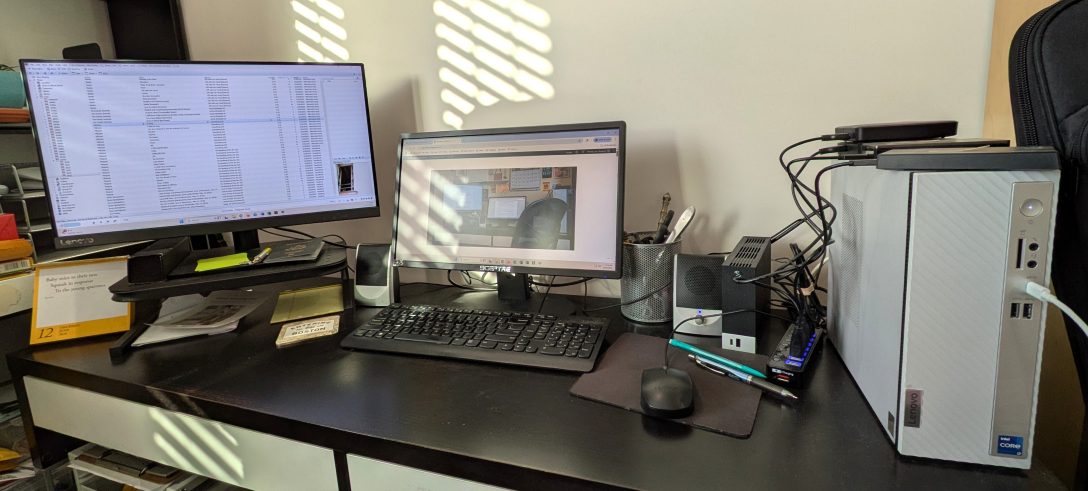
Right now I only have two calendars, as I’ve retired the whiteboard. One is my Zen-a-Day that’s on my desk, which essentially serves its intended purpose as something to think about during the day. The other is the monthly calendar that’s hanging just above my PC tower. In the past I used to put my day job hours on it, along with any other events A and I would be going to. Right now it’s pretty empty.

But while working on today’s 750Words, I thought (and wrote): How about this: on Sunday, when I’m doing my PC cleaning and house errands, why not plan out the rest of the week? Make some time for some creative outlets. Instead of a schedule, at the start of each week I can say something like “hey, let’s work on a comic on Thursday since I have that day off”. I have Sundays off for the most part and do in fact use that day as a ‘cleaning and errand day’, so I think that would be a perfect time to block out an hour or two without it being rigid or repetitive. This would give me more flexibility for anything that might arise scheduled or not, and I can work around other things that might be going on. And most importantly, it gives me a positive thing to look forward to.

Whether this will work out will of course depend on how much energy and dedication I put into it. The whole point is to build up those creative muscles again yet still retain the ability to adjust as necessary.

A year later

We’ve been here at our new home for a little over a year now, and it still seems like we just moved in. We all settled in quickly, even the cats, making a few adjustments and creative additions along the way, and it’s become a home of our own. My desk still sits against the wall in the office, with the black bookcase squeezed into the corner, full with music, reference books, toys and stuffed animals, art supplies, and yes, even snacks. Up on the wall are a few prints by the always amazing Ukiyo-e Heroes, who I highly recommend. When I’m home, Cali likes to interrupt my work by jumping up onto the desk and sitting right there in front of the main monitor, demanding attention. (Juli tends to be more demure, sitting on the floor next to me and plaintively poking at me with her paw in hopes that I’ll take the felt ribbon toy out of the desk.)

The view out the big window to my left isn’t as grand as Spare Oom’s was, but instead I get a great view of the surrounding neighborhood, and on a clear day I can even see Mount Tamalpais poking up in the distance. I get to hear the whoops and hollers of the little kids during recess at the elementary school across the way. Both cats love looking out those windows and watching the cars and pedestrians, and they really love it when the crows and ravens fly by.

We might not be as close to retail and coffee shops as we used to be, but we’re still within walking distance. We’re also close to the Big Famous Park, which we visit a lot more now than we used to. And I’m still a short work commute away that gets me there and back in about ten minutes. It’s a much quieter neighborhood, but it isn’t remote, and it’s still in my favorite part of the city. We’ve been here in San Francisco for twenty years and change and we have no plans on going anywhere else anytime soon.

I still remember that day in 2002 when my mom told me about a travel show segment about the city, and thinking man, I would love to visit someday. Little did I know that three short years later I’d be flying out of SFO after a few days of apartment hunting, and looking out the window at the city’s skyline and thinking yeah…this is going to be my home.

Owning a home is definitely a new thing for me; I was absolutely certain we’d be forever renting. For the first couple of months I would get this sense of urgency that I really needed to write and mail out that rent check, only to remind myself that it was a mortgage payment now. That sense of permanence is not something a lot of us Gen-Xers got to experience throughout our years to this level, and we’d gotten used to it to the point that it was just another thing to grudgingly accept. It’s made me rethink a lot of personal things in my life, and it’s also made me learn how to fix and adjust things on my own instead of calling the building owner. [One funny side note: I never realized how many quarters I spent on laundry until we owned our own washer/dryer unit — one of only two must-haves on my want list, the other being a garage — and all those coins just started piling up instead of being used.]

In a way, this office has become to me what the Belfry used to be at my parents’ house: it’s where I clock in for an hour or two to work on my creative endeavors. Whether it’s writing, playing a bit of guitar, journaling or even doodling, it’s the one place in our home that’s completely dedicated to that and not much else (other than curating my music collection of course). I can focus here, despite the occasional distractions (cat and otherwise). I can also keep my creative work in here, leaving the other rooms for other things in my life.

I’m still getting used to this place being ours in the ownership sense, but I’m glad we made the decision to make it happen.

The Decline and Fall of Western Massachusetts

This is a project that’s been floating around since my high school days in the late 80s. It’s gone under different names over the years (Belief in Fate is the one I’ve mentioned the most, dating back to 1988-89) but Decline and Fall was the title I came up with in late 1995 after the dreaded move home from Boston. It’s a title that maintains a certain Gen-X flair: it’s a riff on Penelope Spheeris’ documentary series about rock and roll excesses, The Decline of Western Civilization — itself a riff on Edward Gibbons’ The History of the Decline and Fall of the Roman Empire — but it’s also a riff on the frustration and ennui of growing up in a run-down small town that one desperately wants to escape. It’s not that I hated my hometown, I’d just outgrown it yet had to wait my turn to leave. It’s jaded humor because that’s what we Gen-Xers do best.

Mind you, this was never a project like Isaac Fitzgerald’s 2022 memoir Dirtbag, Massachusetts — interestingly a book about my same hometown, though I’ve never read it — as that is not the kind of book I want this to be. It was never going to be about partying and taking drugs and underage drinking because there’s fuck-all else to do. Sure, that definitely existed then as now, but that wasn’t my life. I did my best to avoid that because I’d seen firsthand where that road led and I was just too damned stubborn to give into it. It’s a big reason why I latched on so tightly to college radio and writing at that age; if I needed that escape, music and creativity was where I went. The depression and confusion and frustration ended up on the page, always with a soundtrack.

Decline and Fall might have started out gloomy, but as I got older and wiser — and calmer and happier — I started realizing that this story would benefit not as a dire memoir or a gloomy roman à clef focusing only on all that bad stuff (which it originally did during its Belief in Fate phase), but as a story about finding a way out of all that. Thus it’s about that brief time when I discovered college radio (and myself) and found friends that changed my life considerably. [Come to think of it, this might explain my current obsession with the manga The Fragrant Flower Blooms with Dignity which has a similar plot, in which Rintaro’s life is changed for the better when he finds his own solace of love and friendship.]

I bring this up because I’ve been thinking about finally taking it off the back burner to give it another go. Hell, I’ve even made multiple playlists for it recently! It’s become somewhat of a companion piece to Walk in Silence the book project which focuses on the ‘college radio’ music of the mid to late 80s. It’s a story idea that’s never quite completely left my mind, even despite being trunked a few times. That tells me that this isn’t merely an obsession with a half-baked idea, but an idea that needed a lot of time and distance (and maturity) between now and the time it took place. It’s no longer just a story based on vibes but one that speaks of a deeply personal moment in time.

Now, I’m hoping that it doesn’t stall again, but I’m going to be optimistic.

Theadia: So what happens now?

Soon after I wrote last Friday’s post on Thursday evening, I thought I’d give the duology idea a try.

As soon as I found a perfect cut-off point a few chapters previous, I cut everything after that, typed out ‘to be continued’, and pasted those into a new Word document and saved as Theadia II. The change was palpable: I no longer felt that sense of constriction, like I needed to bring this story to a conclusion now. Just like I’d expected: it gave me breathing room, and also gave me more space to come up with what comes after answering the defining question of this project: if you could…would you do the right thing? I’d always felt that while I could conceivably wrap up the novel with our heroes winning the day yet still dealing with the fallout that comes after, I was always constantly worried that I wouldn’t give it enough time and space to happen. Like I’d said previously: I wouldn’t be happy with the ending.

So where am I at now? Well, considering that one of the main plot threads was the growing dread of Nima Federation forcibly reannexing the world and station of FairIsle and taking away their hard-earned freedom, I now have the ability to examine that a bit further. Perhaps they reannex, perhaps they don’t, but that threat has lingered in one form or another since FairIsle gained their independence. And now the threat is about to enter local space. This opens up a lot of interesting ideas, and not just one regarding near-space battles. This project has always been about the civilians and not the military, so it suggests all sorts of things: levels of patriotism, grief and loss, fear and uncertainty, compassion and bigotry. And those are extremely important reasons for Theadia (the collective) to exist. It’s what has driven them all this time, and continues to drive them into this second book.

I’m still not sure if turning this into a duology will work, but I will say that I listened to my instincts, and I’m glad I did.

Theadia update…?

I’m still floating in a stasis on this project, mainly because I’m having an issue with these final scenes of the book. Rereading the novel-so-far is feeling more like a distraction than a help. I’m almost thinking that perhaps I should start in on another project in the meantime, just to take my mind off it for a bit, and come back to it when I feel more refreshed and ready to approach it.

However, the other day I was also revisiting those perhaps this is actually a duology thoughts I’d had off and on throughout this project. While this could conceivably be a standalone, at the rate I’m going it feels like I’m rushing the ending, or alternately I’m tying up all the plot threads a little too cleanly. And it occurred to me: if I stop where I am now in this book and follow through with said thoughts about a duology, that would give me the space and the breathing room to work on the rest of the project. And it’s a perfect cliffhanger at that.

To be honest, this is close to how I’d decided to finish A Division of Souls back in the day. That book is different in that I’d already decided it would be a series and not a standalone, but all the same, by the time I got to that final scene, I actually had a much better sense of where I actually was in the entire trilogy’s layout. Souls was all about Denni coming to terms with being the One of All Sacred, and her final ritual in that book was her acceptance. That meant that the next two books had to be about what she had to do next and how she had to bring it all to completion.

So, back to Theadia: I’ve said before that this book is indeed about taking responsibility when it’s needed, even when it goes against the rules. But it’s also about a bigger story as well: what happens when one’s way of life is threatened for the most dangerous (and frustrating) of reasons. And in the context of this story, I don’t think it’s one that I can successfully tell within the confines of one book. There’s a much bigger story being told in the background, and that is the story that needs more room to breathe.

Perhaps it’s time to make this duology idea happen.

Won’t you be my dictionary, won’t you translate fun

I am absurdly gleeful that I finally bought the twelfth edition of the Merriam-Webster Collegiate Dictionary! I picked this one up at the Barnes & Noble in Corte Madera, just over the Golden Gate Bridge, on our way back from a visit to Petaluma. The last edition I owned was the tenth, which I bought back in 2003 at that bookstore in Harvard Square that I used to frequent. [This was the one at 30 Brattle Street across from the small plaza, just around the corner from Million Year Picnic. It’s a stationery store now.]

I often think about that store, even though it’s been gone for years now. I found a lot of really great stuff to read there. It was part of my weekend jaunt into Boston and Cambridge in the summer, hanging out near the Pit, people-watching and listening to the street musicians, hitting Newbury Comics and Million Year Picnic and HMV and that store before taking the Red Line back up to Alewife Station where my car was parked. This was back when you could park there all day for a super small fee. It was the perfect place to keep your car during Boston day trips like these.

I’d take these trips every now and again in the mid-90s after moving back home, often on Saturdays when I wasn’t working at the record store, but they became more frequent during the early 00s, at least once or twice a month. This was during the peak Belfry Years when I was writing the trilogy, which meant that those bookstore visits were a mix of revisiting my recent past with a lighter heart, looking for inspiration in the science fiction section, and wanting to learn more from writing reference books. Two reasons I remember buying that book there: a) the price sticker had the store name on it, and b) I bought it in early 2003, and on that day the store was playing Beck’s Sea Change album, which I’d been obsessed with even then. I distinctly remember having it hand while browsing, a customer a few aisles away quietly singing along to ‘Lost Cause’. I’ll think about that store every time I listen to that record.

That dictionary got one hell of a workout over the next several years. Cracked spine, worn edges, dented cover, slight water damage and all. When I heard the latest edition was in fact out late last year, I finally retired the old one. It’s somewhere in the garage with the rest of my writing stuff, having kept it down there when we moved house last year. [This is why I don’t remember the store name off the top of my head. Perhaps if I dig it out at some point I’ll edit this entry.]

And now I have a new one, not yet used, shrink wrap just taken off, already placed on my black bookshelf next to my copy of Kipfer’s Flip Dictionary, ready to go at a moment’s notice. Sure, I could use MW’s website — which I do every now and again if I need a quick confirmation that I’m using a word correctly — but sometimes it’s fun just to pull out this big book and do some old-school referencing without any pesky pop-ups or online distractions.