Twenty Years of MS Word

In writing something elsewhere, it suddenly occurred to me that I’ve been using MS Word exclusively for twenty years now. I believe it was sometime in March or April of 2003 that I bought my first completely new PC off the Dell website. With my own money and everything! I’d been using the previous writing programs that came with Windows 3.1 and 98 — MS Write and WordPad — and I realized this would be an excellent upgrade. This was one of those ‘customize your own personal computer’ specials Dell had and I spent the slightly extra money to have that added along with a decent media player that could play cds and dvds. I wasn’t (and still am not) a PC gamer so all that processing power and speed went to those two apps.

Over the years I’ve heard many pros and cons of Word from the writing community. Some swear by it, others swear at it. I’ve heard many writers suggest other programs and refuse to touch this one. Me? I’ve had nothing but pleasant experiences with it. I don’t think it’s ever crashed once on me (not including when it was actually the PC doing the crashing). As long as I keep up my habit of frequently saving my work (thanks, Dropbox!), all is well. Even now that it’s part of the Office 365 umbrella, It’s worked a peach.

All of my novels from A Division of Souls forwards were written, edited and revised using Word, and it’s even used to do the formatting for their Smashwords editions. I’m using it now for MU4. I’ve learned how to use more of its fiddly editing and formatting functions and they’ve pretty much become part of the tool bar at the top header.

I’ll use a Word-like app for reading on my tablet and e-reader, but I don’t plan on switching to anything else at this point.

Making that connection

The hardest thing about writing MU4 so far has been making a personal connection with my characters. I know what I want from them, and I think I know how I want them to evolve, but getting to those points has been fraught with missing by inches.

I also know, this time for a fact, that I’m not trying hard enough. I’m still suffering through waves of the Don’t Wannas with an equal serving of Easily Distracted. I want to write this novel, damn it all, I’m just avoiding working on it, and I’m starting to piss myself off because of it.

If this means I have to take desperate measures, I’ll do it. I’ve already uninstalled or removed several apps from my phone to minimize distraction during Day Job breaks I should be spending less passively. But though I’ve been doing all my actual writing work at home and I do close my web browsers come writing time, I still have too many distractions. If this means unpinning nearly every shortcut from the Task Bar, so be it. Making it harder to open distraction apps usually works for me simply by utilizing the Out of Sight Out of Mind method, and I’d rather not use one of those ‘won’t/can’t open until forty-five minutes pass’ apps if I can help it.

Still — the issue remains that when I am writing, I’m still not quite making that connection. I’m not connecting on that emotional level I’m aiming for. They still feel too distant. And again, that’s a personal issue I have to work through: I have to let myself establish that level, allow myself to take that deep dive. I know I can do it and I’ve done it before.

Eventually I’ll make that connection I’m longing for. I just need to keep trying.

More on Distraction

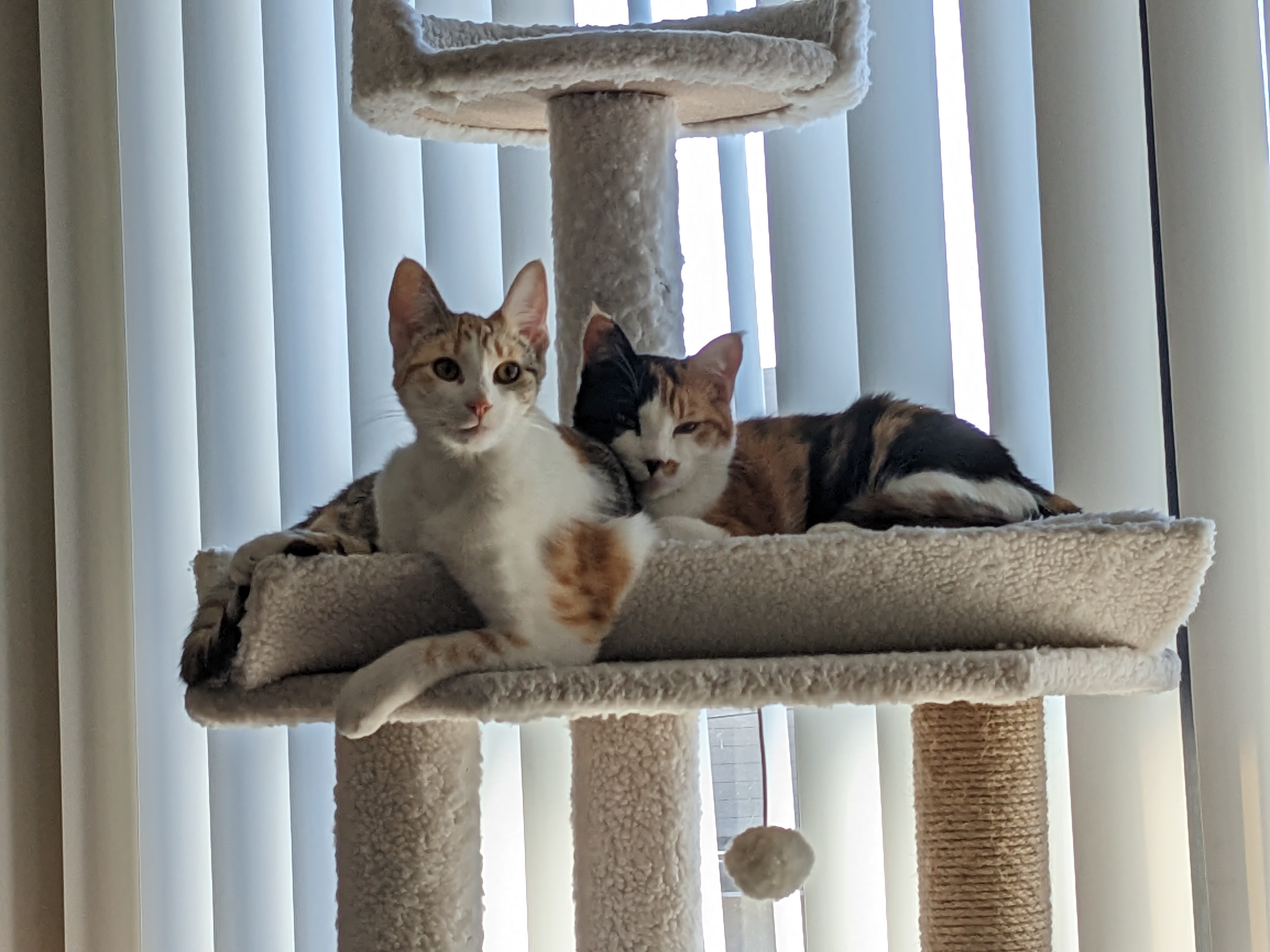
Yes, Cali and Jules (see above) are definitely distracting, in a good way. Especially when they get all cute and cuddly and want our attention. But that’s not the distraction I’m talking about.

I’ve fallen behind on my work on MU4 partly because this past week I’d worked mid-shifts at the Day Job for three of the five days, Tuesday through Thursday, followed by two early mornings starting at 5:30am. My brain’s been a little loopy because of it and the most spoons I had was to maybe do a bit of reading of what I had so far.

I still have the same distractions I’ve had since we moved out to the west coast, of course — fiddling with the music library, refreshing the social media timelines, cleaning out the email inboxes, things like that — but I’d like to think I’ve gotten better over the last couple of years, especially now that my Day Job isn’t a high-stress brain melter and that I’ve cleaned out the detritus up there. I’d say my worst distraction right now is simple avoidance: purposely finding other things to focus on to avoid doing the actual work. The good thing is that’s an easy thing to combat, simply by shutting down those browsers and starting the work whether I’m ready for it or not.

I find that’s the most common start to a writing session when I’m distracted. Most of the time I am ready for it and the output isn’t all that bad (and when it is bad, I try not to dwell on it for long and remind myself to fix it next session). I’m simply just delaying because I’m trying to get the session mood just right. [Hey, remember during the Belfry days when I used to waste a half hour deciding what cds to listen to? Some things never change, do they?] My workaround has been the same thing since I came up with it in the mid-90s: just shut the f*** up and DO it already.

And that still works to this day.

Hopefully this coming week will be better! My schedule is mostly mornings with a day off midweek, so I should be able to work through the lingering Don’t Wanna’s and make some progress. There probably won’t be any new words, but I can at least revise and improve this newly reinserted chapter and work out how to go from there.

Note Worthy

Notes swiftly written on the back of old team schedules

First of all, I do apologize for the terrible pun in the entry title.

When I was writing the Bridgetown Trilogy back in the early 00s, my process was that I’d start the day by utilizing the slower moments of my work day at Yankee Candle by doing a bit of plotting. Nothing too detailed mind you, as these moments usually lasted no longer than five or so minutes before the next wave of boxes came down the conveyor chutes, but I wasn’t looking for detailed to begin with. This was merely doing a bit of planning ahead of a few scenes. I’d think a bit about what I wanted my characters to be doing while I built those pallets of candle boxes and then write it out when I had a minute. And more often than not these scraps of paper were nothing more than the backs of copied labels that we’d tape to the side of our finished pallets.

Then later that evening during my writing sessions in the Belfry I’d take those notes and start elaborating on them. Sometimes I’d use them to the letter, and sometimes I’d actually go in a slightly different direction, but the whole point of these notes was that I’d be prepared for the session instead of sitting there staring at the screen or distracting myself with whatever music I wanted to listen to that night. When I returned to the Trilogy in 2009 to finish the last quarter of The Balance of Light I realized that the best way to go about it was to do the exact same thing: longhand notes followed by typed elaboration.

I used slightly different versions of this process for most of my follow-up novels, but never to the same degree. Most of the notes for Meet the Lidwells! contained personal information about the characters and a detailed discography of the band. Same for In My Blue World: for the most part that was written on the fly with most of the notes merely being character bios. I think part of the reason for this was that working for a bank, even as a back office drone, didn’t really lend much time or brain power for this sort of thing. I figured out alternate ways to write novels, even if I didn’t feel it was quite the same.

So when I recently decided it was time to return to the Mendaihu Universe, I also decided that the best way to play all of this out was to go back to what worked: a bit of note writing while at the Day Job followed by elaboration at home. And being that I’m back in retail, I’m once again able to steal a few personal minutes during breaks and slow times to write, this time using the backs of the previous day’s team schedule we have set up at each register. I have the time and brain power for this sort of thing again, so why not take advantage of it?

So far I’ve gotten myself maybe two or three scenes down that I can work with. I’ll be starting off the fresh new version very soon, and I plan on continuing this note taking throughout the entire project. I’m even thinking there’s a chance I’ll do a bit more Tuckerization, once again using coworkers’ last names somewhere while I keep them updated on the latest fictional drama.

All told, it’s not only great to be back in Bridgetown, but it’s also great to return to a process that worked really well for me.

Juvenilia

I still have pretty much all of my juvenilia here in Spare Oom. Poems I wrote in fifth grade for an extracurricular project, the origins of the Infamous War Novel (my first completed project) and its several versions, the numerous maps I’d draw in the margins of school notes and on book covers, the various story ideas that lasted a few pages and the novel ideas that lasted just a little longer, the several unused Murph comic drawings, the silly exquisite corpse stories between me and my high school friends. I’m only missing a few things, really…some of my early art, a few stories I may have thrown away in embarrassment, things like that.

I don’t read it all that much, but I do think about it now and again. I do so because it reminds me of where and how I started. My dad was a local news reporter and I grew up with a lot of adults assuming I’d do the same considering I too wanted to write, but even then I knew that style wasn’t for me. I loved the idea of making up stories. I tended to have a vivid imagination and weird dreams and I wanted to use them. I must have come up with a few dozen decent ideas — again, most of them lasting only a few pages — before I sat down and started writing the IWN. [And even that one took multiple tries over a few years before I clicked with the first complete version. That was just the one that stuck with me the longest.]

This is partly why I’m okay with having several trunked story ideas over the years. Some of them I truly enjoyed working on, others not so much. Some were written as an emotional outlet, something that needed purging. Some written with the best of intentions but ultimately with little personal connection. Some written in desperation because I needed to do something to balance out personal real-life issues.

I consider my juvenilia reaching into my early 20s. Everything just before I started The Phoenix Effect was written with the idea that I would learn this craft one way or another, on my own terms. It was certainly frustrating to see a number of my college classmates zip by me with relative ease and see print, but I had to remind myself that I wasn’t writing the same thing. I had my own reasons to do this. The Phoenix Effect (and to some extent the unfinished novel before it, True Faith) was different. It was the dividing line between sunny-eyed ‘I wanna be a writer!’ dreaming and ‘I am a writer’ determination.

I’ve used a few ideas from this trunked work elsewhere. Meet the Lidwells! has a few ideas nicked from my abandoned coming-of-age idea Two Thousand, for instance. That novel also uses a few song lyrics I’d written years ago. The universe of Diwa & Kaffi originated from a horror story I’d come up with in high school that I retooled into something completely different. This sort of thing is normal for most writers, actually. There’s no rule against borrowing some of your favorite unpublished scenes elsewhere! But for the most part, I’ve kept them stored away in notebooks and folders in a few bookshelves here. They’re well sorted (I did a major sorting project a few years back) and well-kept so I have no worries about them ever being lost, damaged or misplaced.

Will I ever use any of it in the future, though? Who knows. Probably not, but I’m okay with that too. Maybe I’ll post bits of them in the future, or maybe I won’t. Some writers have donated them to their local library. I doubt I’ll ever get that popular to warrant that, but it’s certainly fun to dream that.

It doesn’t matter that they may or may not be worth to anyone else, but they’re worth something to me, and that’s what matters.

More on putting my novels on hiatus

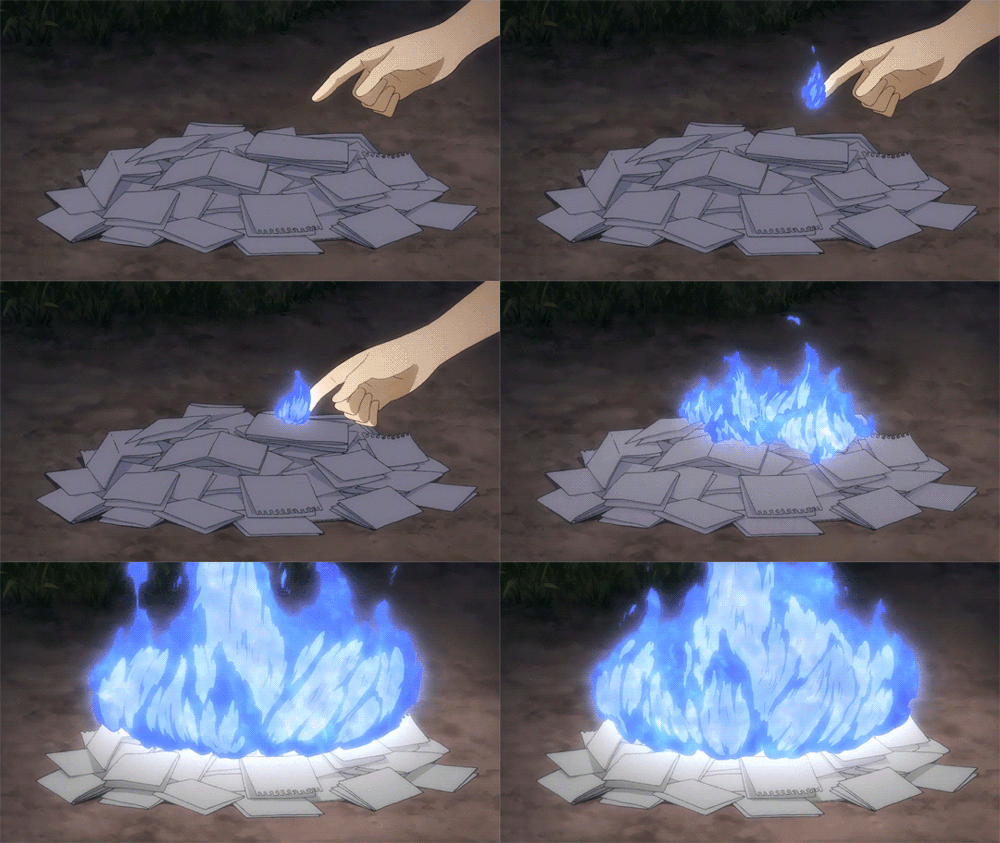
Okay, so maybe I’m not torching my work. That’s not my style! No, this is just a follow-up from last week’s mention that I’m putting Theadia and Queen Ophelia on hiatus.

To put it bluntly, these were both Pandemic Novels.

Theadia was my novel about my frustrations with the Former Day Job. I’d started it in the final months of that particular position, when I’d been forced to head back into the office four days a week. The novel, on the whole, was about Terrible Managerial Decisions versus Doing the Right Thing, set as an unconventional space opera. There’s a lot of that job in this novel…trying to squeeze actual answers out of an ineffectual manager (in this case, a colonel), questioning bad decisions and getting a shrug and a what can you do? as an answer, and of course choosing to do the right thing because no one else will, and the list goes on. I also wrote it because I’d become worried that I no longer had any further stories in me to write because the Former Day Job had become that overbearing over time, and I knew I had to write something before I started to believe that. This was my ‘this is now fucking aggravating this job has become’ outlet.

Queen Ophelia, on the other hand, was my novel about going on a personal journey of discovery. I’d started that one in the first couple of months into the pandemic, when I’d left the Former Day Job and chosen to do some long overdue cleaning out of my anxieties, bad habits and personal issues. This novel, on the whole, was about Giving Yourself a Blank Canvas. The main character, literally an artist with nothing important and no projects weighing down his life at the moment, is offered the chance to learn about his mother who’d left him and his father when he was a baby. Come to find out, she is not just a beast from another world but royalty as well. This was my ‘you’re free, you can be and do anything you want now’ outlet.

Thing is, I no longer need these novels as personal outlets. They were my therapy for those two strange years and they served me well, but now I’ve moved past that need for them. That was the problem with The Balance of Light as well, the third Bridgetown Trilogy book; I no longer needed that trilogy as an outlet or as therapy by 2004 and I felt a bit creatively lost because of it. But also like that novel, I plan on returning to them after some time and distance. I still believe in them, I just have to see them as the entities and creations they are.

In the meantime, I and my creations are both a blank canvas once more, ready to discover new things.

Talking End of the Month Refresh Blues

Image courtesy of hackaday.com

I talked a little bit about this over at my Dreamwidth account, but I think it begs a bit of commentary here: I’m happy to say that I think I’ve finally broken myself of that niggling feeling at the end of every month that I’ve failed in keeping up with my writing schedule. For years, and with the best of intentions, I’d start each month looking at my whiteboard calendar and think, yeah, this time I’ll make it to the end with new words and productivity all over the place!, and inevitably crash and burn about two-thirds of the way through.

It took me until recently that to realize that I’ve been looking at this in totally the wrong way.

Coming into each month with the determination to Do All The Things regardless of real life (and Day Job) getting in the way always leads to failure. And that’s the other mistake I made: seeing that as failure in the first place. In the final weeks I’d always get frustrated that I’d failed to follow my plans once more, and every single time I’d needlessly get angry with myself. It would only be exacerbated by thinking, okay, THIS time I’ll get it right! and setting myself up for failure once more.

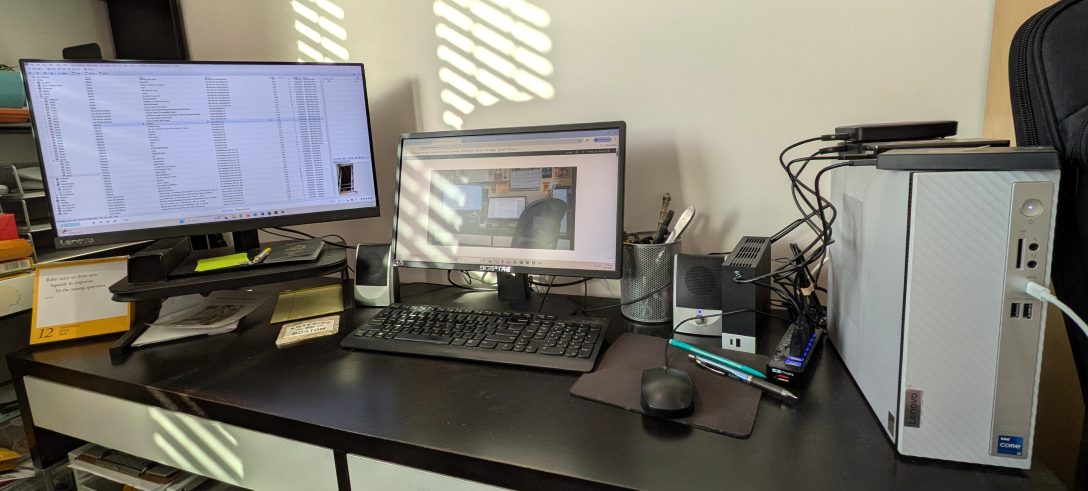
What I need to do instead is see the start of every month as a refresh. I run cleaning software on this PC every weekend without fail (and it’s kept Spare Oom’s computer up and running smoothly for over three years so far, thank you very much), and it occurred to me that I really should see my writing habits in very much the same manner.

When I start the new month tomorrow — including participating in Inktober — the whiteboard schedule will once again be full, once again be seen as a guide rather than an assignment, once again allowing myself days off when Real Life intrudes. The whole point of the whiteboard schedule has always been to keep me working instead of procrastinating or distracting myself, nothing more. It’s my coping mechanism that’s kept me from otherwise faffing around on Twitter or playing with my music collection all day long.

What I shall do differently starting tomorrow is just do my best. That’s all. If I miss a day, I miss a day. And come the end of October I’ll do the same thing I’m doing now, accepting the amount of work I’d done in the meantime and starting it all over again in November. And so on. View it as a refresh, not as a metric.

Putting it all together (in my head)

So the trouble chapter in Theadia has been somewhat successfully rewritten — it could still use a bit of tidying up, but for now it’s a lot closer to what I wanted it to be — so I’m onto the next scene, which takes place maybe a few weeks later. Now that particular scene is okay (again, could be better), but the transition between the two scenes could probably be a little more coherent. The current problem is that I need it to hint at a passage of time without it being a ‘Some Time Later…’ placard.

As I’ve mentioned before, there are a lot of moving parts that I need to be aware of and ensure they’re in the correct order and make sense. Like most of my novel projects, this isn’t something I ever have copious notes for…it’s all in my head. Sure, I’ll have some notes, but rarely will I ever have the entire thing mapped out somewhere on paper or online.

With Theadia‘s latest go-round, I find that I’m filling in a lot of the gaps with these sorts of things: fixing the transitional scenes, inserting new passages to strengthen the conflict within the overarching plot line, and of course filling in the ‘Fix This Later’ blanks. All of this in my head…getting to a point in the story where I know I need to insert the action from an antagonist’s POV, or better show a character’s development from passive to active status. Things like that.

It’s certainly making the story a hell of a lot longer, that’s for sure. But I’m fine with overwriting like this, because when it comes time to edit, I’ll have enough laid out that it will be safe to streamline what needs streamlining. [This is what I did with The Balance of Light, where I excised about sixty thousand words or so. That one’s still a long book, but it reads a lot smoother than it had originally.]

I still haven’t actually finished the book yet — I’d say it’s just shy of the final climax of the story right now — but I’m not too worried about that. I’ll get there soon enough. Once everything else is put together.

Third time’s the charm…?

Hmm. I’ve been plowing through this one scene in Theadia for the last two weeks and it’s taking FOREVER to get through. There’s so many things wrong with what’s ending up on the screen that I’m having second thoughts about keeping what I have so far. I know the problem: it’s a tense scene with a lot of important information that comes to the fore, but the execution of the scene is absolutely atrocious. There’s tension there, but it’s the wrong kind. And the whole scene is from a single person’s point of view and she’s so passive in it that I keep forgetting it’s her scene.

I think the issue here is that I’m still not entirely sure how the scene should unfold. It’s an important scene that needs to be there, where multiple story threads lead up to this moment, but the weave is weak and unstable. [Yes, I’ve been using this particular crafting metaphor a lot with Theadia. There is a reason for it.] What I need to do is map it out again. I did that for Take Two, and to be honest, I probably should have followed my instincts when it was clear this version didn’t quite resonate with me either.

So. What do do? I’m going to cut the entire thing again. Take Three. (Take One did the exact opposite and did a lot of telling-not-showing, which didn’t work either.) As always, I’ll paste this current version into my Outtakes file where I can use it for reference for the next attempt. Hopefully third time’s the charm, yeah?

About (still) writing poetry

Out of all the creative outlets I talk about here, my poetry and lyric writing get the next to least amount of commentary. [I talk about writing songs the least, alas, but that’s another post.] For a good number of years I just put it aside and rarely wrote any at all. And since the mid-10’s I’d been trying to force myself to write more of it, only to fail utterly. Part of it was that it had lost its enjoyment and no amount of forcing it was going to help at all. Another part of it was that I felt I was essentially writing the same personal themes over and over.

I’m noticing, however, that this latest Mead composition notebook of mine is getting rather full. I’m about two-thirds of the way through it, which is a lot more than the last several aborted tries at personal poetry chapbooks. This one was started a couple of months after I’d left the Former Day Job, and I’d done so on purpose: this was going to be a chapbook of endings and beginnings. Words about letting go of things I’d held for far too long, of coming to terms with things long left behind, and making the first unsure steps at something wanted yet untried.

That was the thing holding me back with the poetry and lyrics, really: lack of emotional movement. In a way it was the same with my music playing — once I gave it that emotional spark it had been lacking, I got better at it. Or more to the point, I’d finally come back around to the creative levels I’d been at in the past that I hadn’t been able to reach again. I had to do some purging of old ghosts before I could move on.

I might post some of these poems and lyrics here — or maybe even self-publish them on Smashwords — at some future point, but it’s not high on my list of projects. This kind of writing has always been personal: written for myself. Sometimes it’s to figure things out, other times it’s just to get something off my chest. Sometimes it’s serious and straightforward, sometimes it’s oblique and metaphorical, sometimes it’s just having a bit of fun.

I’ve gotten a lot better at it over the years, though I wouldn’t know if it’s anything good and worth publishing. But that’s the least of my worries there: if it means something to me, then it’s good enough.