Breaking out of the comfort zone

(image courtesy of Bocchi the Rock)

I’d almost forgotten what it felt like to push myself out of that comfort zone I’d been in for years. Why was I even there in the first place? Was it about trust? Self-trust? Embarrassment? Worry? One or many of these things? Well. Most of it’s all gone now, at any rate. All I had to do was free myself from the self-imposed chains.

I think the last time I felt this way was when I’d started The Phoenix Effect back in 1997. A new part of my life had started and the road was relatively clear. It was a choice to say yeah, let’s get this writing career started. I can do this, and stick to it. But let’s face it, I hadn’t really adjusted all that much since then. Sure, I had the confidence to self-publish and all that backstage nonsense that goes along with it. But there had to be more. I knew I was holding back.

This is where I feel I’m at now. Pushing myself out of a comfort zone once again, not quite sure where it’ll take me…but trusting myself enough to know what I’m doing. Time to take more chances and look past the boundaries. Knowing I have people who’ll have my back. And knowing how to move forward with minimal blind flailing.

A lot of this will be new to me, but I’m ready for it. And I’m willing to learn.

I’m allowed to make mistakes…

…but I’m not allowed to see every mistake as a failure.

Writing a scene that ultimately does not work for the novel is not a failure. Dealing with inconsistencies and continuity errors is not a failure. Sometimes writing is rewriting and revising and trying a different tack. I’m allowed to be worried that my project is still a mess that needs a lot of work, but it’s not a failure if I’m willing to do that work to make it better, no matter how long it takes.

Putting a novel project aside for a while with the possibility of it being trunked is not a failure. Sometimes the end result is simply not what I’d hoped it would be, knowing that I could do so much better. Or maybe that I’ve just lost interest in the idea now that I’ve let it percolate for a while.

Hitting only a few dozen words a day instead of a few hundred, or even a few thousand, is not a failure — nor is it a mistake. Not giving myself enough time to write every now and again is not a failure. Distraction and wasting time is not a failure, but an issue that can be fixed if I put my mind to it.

I’m willing to make mistakes. Failure, at least for me, is not even trying in the first place.

Year End Review – Distractions and Detachments

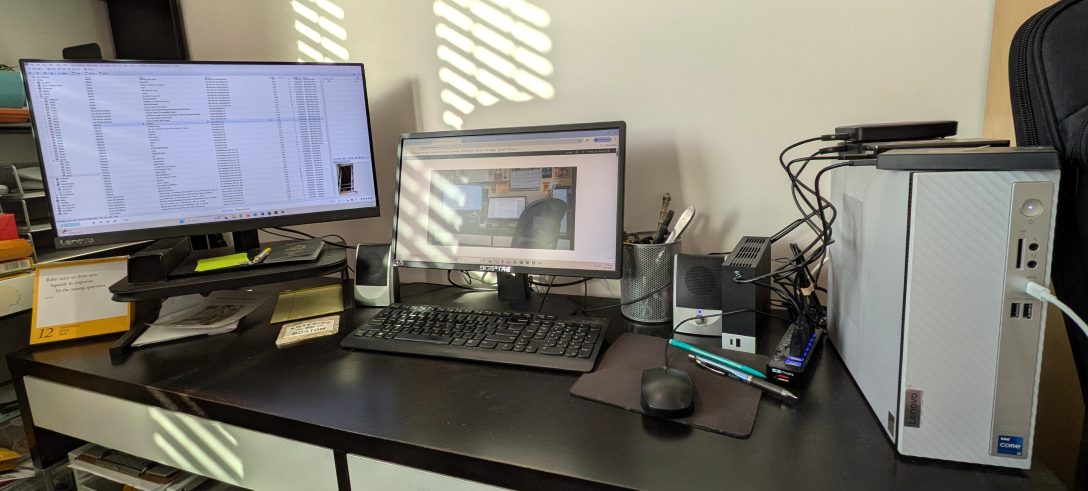
As mentioned over at Walk in Silence, plans have gone just a bit awry this week due to multiple unexpected PC issues, thus sending the new one to the shop and the old one out of closet storage for temporary work. I’m finally catching up on writing work, though access to my music library isn’t all that doable right now. I’m just going to wait until the new PC returns.

Which got me thinking about what’s been bothering me this year: distractions. I’ve been too easily distracted in various parts of my daily life despite my wanting to avoid them. Staring at my phone during work breaks and elsewhere. Carrying around a small notebook to write some of my thoughts I may have but forgetting to do so. Pulling the usual ‘I’ll do it after I finish looking at this for a few minutes’ which invariably wastes a good half hour. Making life choices but putting them off for one reason or another.

I mean, I’m not trying to be one of those crunch-obsessed people that always has to be working every single waking moment, far from it. I’m totally fine with taking time off for fun things and enjoying life in various ways. I’m just tired of being passive and distracted, is all.

Which lends to the other half of this blog title: detachments.

Things I don’t want to do anymore. Things I don’t want anymore. Things I don’t need to be anymore. Letting go of what no longer works and moving on to something new. And right now I know what new directions I’d like to go in. This is about my writing, but it’s also about the personal as well. Life changes are always exciting and terrifying in equal measure to me, because I love the idea of trying out new things on my own and I’m also afraid of completely fucking it all up if it doesn’t work. But if I’ve learned anything in 2023, it’s that I’ve made my peace with some extremely personal things in my past, enough that I have the strength and the will to leave them behind now. To detach from that part of my life once and for all and look forward.

The one thing that’s kept me from doing so in the past is self-made distractions. It’s getting that dopamine rush of playing with my music collection or watching dumb videos on YouTube or reading the latest dumbass thing on social media. Deciding to make needed changes in my life but never getting around to the follow through. I hate that I’ve always been passive about it and yet I do it anyway because of that small rush, and then I feel frustrated for wasting time afterwards. And if I’m going to succeed in stopping those distractions and excuses, I need to detach.

And I’m now at a point where I’m strong enough to do that. And I’ve already started stepping towards that goal.

It’s time to say goodbye to parts of my old passive life once and for all, and embrace the new.

Even if it is terrifying.

Year End Review – Where I’m Going

So. Do I have anything big planned for 2024? Good question.

If you’re talking about writing, sure. I’m hoping to get Queen Ophelia’s War finished and ready for mid-year release, as I’ve mentioned previously. And maybe Theadia as well a little bit later, if I get it prepared in time.

But what about personal things?

I’d mentioned very briefly here that one of my new resolutions is to Slow the F*** Down. Part of this is related to the Day Job, in which I’d fallen into the same damn habit I’d always had with most of my day jobs over the years: always trying to finish everything as quickly as possible. And in this case, considering that I’m back in retail, it meant being a fast checker, helping out as many people as possible, and always stressing out when the lines were long. I fell into the trap of thinking I’d better do it because no one else will, and I’d end up just making more work for myself in the process. I’d finally admitted that maybe I don’t need to be like that, considering nearly everyone else I work with goes at their own (often much slower) speed. Doing this all the time only led to exhaustion and certain managers wondering why I would seem overwhelmed.

I’ve since chosen to Slow the F*** Down at the Day Job, and I’m feeling a lot happier about it. I’ve adjusted responsibilities somewhat and admitted there are times when I should ask for help. I’ve found that there are situations that are Not My Problem. And I’ve admitted there are times when I’m just making more work for myself, whether by overthinking it or giving myself overly high expectations. In the process, I’ve learned to shift certain responsibilities to others when needed, and understanding that, unlike the Former Day Job, there isn’t an OMFGNOW deadline.

I suppose there’s more to it than just the Day Job and the Writing Career going on here, but I don’t have the words for it just yet as I’m still trying to get it straight in my own head. There is indeed a bit of final rewiring of thoughts and emotions going on lately, and that in itself has been a long-game process over the last couple of years that I think is finally coming to a close. A lot of it is about self-confidence and self-trust, but it’s also about reining in those overly high expectations that I’d just mentioned.

So if anything, I think 2024 is going to be about Where I’m Going and Where I’ll Be.

Outside

A lot of my novels spend a considerable amount of time outside, and usually for a reason other than transitioning between scenes. Which is interesting, considering how much time I spend inside in real life, for one reason or another. In Queen Ophelia’s War a lot of it takes place either on wide grassy plains, rolling hills or deep woods; part of it is to evoke a strong sense of natural settings important to the story, but part of it is also to show that what takes place inside isn’t always about safety and security.

I like using the wider world as precisely that: there’s a wider world out there, bigger than what might be going on in front of you. It keeps several characters in check, from feeling completely alone. [I sometimes use the complete opposite of that for emotional punch, too. If you recall my posting of the first chapter of MU4 some time ago, there’s a world beyond what Eika sees, but as far as she can tell it’s completely devoid of any other people, giving a profound sense of desolation and abandonment.]

It keeps the plot from feeling insular, that nothing else happens outside of this one setting. I also get to use nature as part of the plot; in In My Blue World, magic is literally a part of nature in Zuze’s universe. Even in Theadia, which takes place on a planet surface, on a nearby satellite station, and in deep space, all of those locations are important to the plot in one way or another.

Do I go out of my way to write outside scenes? Not always. More often than not, they just end up there, and I’m thrilled when it happens. It means that the scene is important not just to the characters we’re focusing on, but possibly to anyone else out there, just offscreen.

Keeping an eye on things

A funny thing happens when Jules sees a bird outside Spare Oom’s window. I have my two acoustic guitars in front of it, so when she gets excited her tail will start wagging furiously between them, and every now and again I’ll hear a twaaang twaaang twaaang behind me. She’s might not be the quickest cat (unless she has the zoomies) and she’s a calm kitty when it comes to new experiences and enrichment moments, but birds will excite her like nothing else.

What does this have to do with writing? Well, nothing all that much, but I really love this picture of her shooting daggers at two crows back in late June and wanted to share it, but if you really want to stretch a metaphor, I suppose it would be that I’ve been looking at my writing in a similar way. I’ve been making considerable efforts to turn away from distractions, which has always been one of my worst habits. And in doing this, it’s helped me become more focused on what I should be focused on. I’ve been doing my best getting work done on Queen Ophelia’s War, even despite the the day job shifts.

Other than that? Yeah, I’ll totally admit I’ve been distracted by Jules and Cali, but they’re distractions I’m willing to accept.

Creative…privilege?

So some AI-leaning techbro this week posted something on social media about artists, writers, musicians, etc., having the unfair advantage of “creative privilege” because they allegedly came to their craft with some gods-given blessing, and it’s unfair that the rest of the non-creative world has to actually, y’know, work at it, and it’s all unfair that we creatives have that advantage.

Or something like that. Either way, he’s currently getting roasted in response.

I’ll be honest, my first reaction to this complaint was that it kind of reminded me of high school. It reminded me of being a non-sports kid in a school where most extracurricular funding went to the boys’ football team, no teacher wanted be an advisor for school plays so there weren’t any, and the funding and printing for the school newspaper got pulled the year before. So me, my friends Kevin and Kris, and a few others, decided to use our creative privilege to edit and put it out ourselves, using Pagemaker on the school’s Mac and the gracious help of the printing class teacher who ran a few hundred copies off on printer paper and collated them for free. We used our creative privilege by figuring out a workaround and doing most of the work ourselves. Sort of self-publishing it, in a way. And it was a success! We kept it going the entire year on a consistent basis, got several other students to write articles, and kept it alive when no one else bothered.

If there’s such a thing as creative privilege, it’s the ability to move past roadblocks and obstacles. There’s no One Right Way or One Weird Trick They Don’t Want You To Know to do it either, because it’s different for everyone. It’s what works for you, and it’s most definitely not just about finding shortcuts, either. Running a complicated algorithm that essentially mashes up other people’s creative works and then slapping your own name on it is a shortcut, and a dishonest one at that. Figuring out your own style and voice takes hard mental and emotional work, and you need to put in that work, because those who see the end result can definitely tell the difference.

A good example: remember those music mashups of the early 00s? Some of them were amusing and entertaining, and I have a collection of them in my music library. But there’s a big difference between what’s known as the “A + B” mashup (one song over the other with minimal separation or creativity) and the actual DJ mixing (seamlessly sliding one song’s separated vocal lines onto the instrumental of another song). This so-called “AI art” and “AI writing” is, for the most part, the former. And it’s not artificial intelligence, despite the label it’s been given. The computer is merely running software and mashing up different parts the user chose, that’s all; any ‘mixing’ is also the computer doing a bit of barebones touch-up. And yes, you can definitely tell the difference.

So my answer? Sure! I’ve got creative privilege, and I’m proud of it because I worked hard for years at it! I may not be raking in the money and the prestige, but I’m still getting the occasional ebook sale and that’s pretty damn cool in itself. That’s all I’ve really wanted.

And I’m sure you can make it happen as well. You just need to do more than run an algorithm, have the computer do the mashup work, and say ‘there, it’s done’.

Your name is…?

In going through a bunch of my new and old writing projects these past couple of months, I’ve noticed an interesting and consistent trend through my writing career: my by-line.

In nearly all of my rough drafts, the title page wouldn’t say “by Jon Chaisson”, but “by j chaisson”. A single letter (no period) for the first name and lower case for both. Maybe it’s that I always felt a bit odd writing my own full name on my drafts, or maybe I just liked the looks of it. It’s my handle on Bluesky. I’ve also been using it at work lately. As part of my bookkeeping duties I have to sign off on a few forms and slips and I’ve been signing them the same way. I’d only change it to my full name upon uploading it to Smashwords.

So now I’m wondering…perhaps I’d like to use ‘j chaisson’ as my pen name from here on in. This will mean making a few changes at my Smashwords site. I’ll need to do some changing around with the e-books I have available, and not just the author page; I’ll need to change the cover images and the edition information as well. Thankfully I do my own covers and have the originals so it’s just a matter of making the changes and reupping them. Changing the Amazon paperbacks might be more of a hassle, but I’ve been thinking of taking them down anyway.

So why make this change now? That’s a good question, and the main answer is why the hell not? One reason is because it resonates with me. I’ve used it many times in many places and I like how it looks and feels. Another reason, a more professional one, is that it gives me a bit of leeway for when I want to write out of genre. I’ve been thinking about doing this for a while, but it feels like this is a good a time as any to start.

Getting started…eventually

It’s occurred to me that one of the reasons I haven’t been doing any writing work lately — I mean, aside from focusing on the blogs and some Walk in Silence (the book) work — is that I’ve been working on rewiring my head a bit.

I’ve written here before, many times, that I’ve been too easily and willingly distracted by online things: social media, videos, comics, music, and so on. Over the course of this year I’ve been working on fixing that, and I think I’m finally at the point where I have it all under control. I’m not really giving any of it up, I’m just no longer being passive about it. I’ve been here before, I just want to make it last longer this time out.

So what about these new projects that are just…sitting there, doing nothing? Well, that’s a good question. And I have a plan that I hope will work. It might be a Best Laid Plan or it might actually work, but hey, at least it’s a plan: continue with the compartmentalization strategy.

I’m not assigning myself work here, which is the trap I’ve fallen into before. No, this is merely part of the job of being a writer. So for instance, say I have my first ten minute break of the day at work: my current habit is to head to the break room, have a snack, and screw around on my phone for a few minutes reading social media until it’s time to go back. Sure, it might be just fine on its own…it’s a bit of mental relaxation during a busy day, right?

I’m trying to break myself out of that. Mainly because I’m personally bored with the habit. It doesn’t do much for me anymore. [I mean, unless A texts me a picture of one of our cats. That’s always worth it.] I think about my other coworkers: some of them head outside to the upper parking deck. Some of them do a bit of reading or texting or chat with friends who are also on break.

My plan before was to change it up and go straight into writing something longhand. Hell, I even have a small notebook that fits perfectly in my jacket pocket! But once I’m on break….? Nothing comes. I’m right back there, futzing around online. Which means that I haven’t quite mastered the approach. What I need to do is prepare myself for that ten minute writing session! So how about this: let’s say I’m scheduled for that ten minute break at 10am. So to prepare for that, I can think about what I want to write at that time by, say, 9:45. A fifteen-minute prep time while I’m ringing up customers. I can definitely think about my writing while at the register, I’ve done it loads of times. So by the time I do go on break, I’m ready and prepared to pull out that notebook and do a bit of work!

To change it up, why not change the setting as well? Go up on the roof, head outside, go somewhere for that ten minutes. And I’m sure that by the time I get this preparation down, I can use all that extra time during my half-hour lunch using the same process to add to the word count.

Will it work? Well, who knows? But it’s worth a shot, right?
Once more in B-Town

So I’m caught up with the rereads of my current WIPs and I’m ready to get started on the rewrites and revisions of those, which leaves me with one last major task: to reread the Bridgetown Trilogy once more to prepare myself for writing MU4.

Thoughts so far:
–That first chapter with Nehalé Usarai holds up really well after all these years. I love that it hints at the ‘slow build’ of the entire trilogy: quiet and static at first, and slowly growing in intensity and ‘volume’ until the end where you’re left breathless and with a feeling of ‘oh shit this is not going to go well for a lot of people in this city, is it’. I wrote it that way on purpose.
–Sure, the introduction of Caren and Denni uses the classic ‘waking up from a bad dream’ trope, but my writing has been all about using those kinds of tropes and twisting them in different directions. They were not dreaming but visiting their separate lumisha dea — their place of spiritual inner peace — and the visits were not so peaceful this time out. I was lucky in that by 2015 I was intimately aware of the ins and outs of this trilogy so I knew how to make tropes work to my advantage.
–Would I change anything, years later? Maybe? I think I could have beefed up a few character descriptions here and there, maybe make a few of them more dynamic, and fix a few grammar and word choice mistakes, but storywise? Nope. I’m definitely proud of this work. I did exactly what I wanted to do with it and I’m thrilled with the results.

One of the reasons why I return to this universe is that I simply love being within it. It’s the one where I spent this much time, energy and thought: unique characters, detailed maps, an alien language, a spiritual belief system, even a way to travel long distances. It was my own take on the science fiction genre, and I saw it as a way to have fun with the creative process. I could take as deep a dive into it as I wanted, and I certainly did, many times over. And I knew that once The Balance of Light was done, I’d be done with the trilogy…but not necessarily the universe itself. I always knew I’d come back to it, one way or another.

Once I’m done with the trilogy, I’ll of course read what I have so far of MU4 and go from there. I’ll most likely have a much better grasp of what I want to do with it, and what I should do with it.