Going deep again…?

Whenever I think about the Bridgetown Trilogy and the Mendaihu Universe, I almost always wonder if I’ll ever get around to writing something with that level of worldbuilding. Theadia certainly comes close, but that project’s a different beast altogether. While it certainly has an ensemble cast and multiple worlds, it doesn’t have its own conlang or its own highly detailed mythos. It’s a big story, but it’s not a part of a bigger universe like the MU is.

The MU is still alive and kicking somewhere in the back of my thoughts, and I still want to write more stories in that universe, but I’ve come to the realization that if I’m going to do it right, I’m going to have to go in deep once more. And I’m perfectly willing to do that once I allow myself to take that dive again. [And I will not complain one bit if that includes the music side of things, mixtapes and all. That was one of the best parts of the project!]

As you may remember, I deliberately chose to bounce away from that kind of thing because, up to 2015, that’s pretty much all I knew in terms of novel writing projects. Everything had to be a full-immersion, years-long intensity, and I needed not to do that for a while. I needed to know how to write something standalone and concise. Partly to prove to myself that I could do it, and partly because I knew that not all of my newer story ideas would translate well into that long of a format.

I knew I’d come back to the longer form sooner or later. I’ve often said it’s a format I truly enjoy writing. But in the several attempts in writing the temporarily-titled-MU4 novel, each time felt like I wasn’t doing it justice. The deep immersion wasn’t there, only a reflection of the past style. I wasn’t allowing myself that level of focus and, let’s face it, obsession. So it kept getting pushed to the back burner.

This will all eventually change, I hope. I’m not sure when, and I’m not sure how. Perhaps it’ll be a change in my writing schedule, better and more creative use of my break times at work, or perhaps it’ll be something else altogether. Who knows? I may even start a new extended universe instead…?

Not lazy, just languid

I’ve gotten so used to my slightly unconventional two-days-on/one-day-off/three-days-on variations of my work schedule that working five days in a row at the Day Job over the last couple of weeks has thrown me for a loop a bit. [There’s also the fact that last Sunday we did some major gardening, after which I did three loads of laundry, which didn’t give me much of a day off.] I’m trying not to overdo it, so I’m allowing myself the occasional day where I do nothing much of importance.

It’s also that the weather’s been its usual weird westside SF self lately: overcast, foggy, extremely humid, and stuck somewhere in the mid-50s…plus it’s allergy season, occasionally leaving me sniffly and migrainey. On those days I’ve learned it’s best to just slow down a little bit and let nature take its course.

I am working on Theadia, just not on a daily basis and not at intense levels, so at least that’s still moving forward!

Hopefully things will be a bit less languid in the coming days….thanks for your patience!

Theadia (an excerpt)

NOTE: This is a key scene in my current novel I’m working on, and I think encapsulates the theme of the entire project. I also think it’s something that’s become a bit of a personal motto of mine over the last couple of years. It’s a scene that immediately came to mind when I read yesterday’s news announcement. I try my best to be optimistic, but I refuse to be a pessimist if things go south.

*

Stars, wasn’t sure if it was the grav meds being slow to kick in or that she really was that exhausted. They’d landed at Faroe Base over an hour ago and the upper brass had already departed the stash to have their meeting in one of the inner four ships here on the tarmac, but they’d neglected to give Maris – or any other captain, for that matter – any further tasks other than to split their assignments between standing guard outside or manning the comms inside. It was exactly the kind of quickly tossed-off micromanagement that drove her crazy, but she had too little brain space to bother with it right now.

She stepped out the side entryway to the Ravel Blue stash and took in several deep breaths, reacclimating herself to the air. It wouldn’t help her disorientation, but it would at least calm her down. What she really wanted was to head back to her bunk, lock the door, and sleep for the next two days, but there was still far too much to do. And she’d already chosen to ignore any potential hails from Colonel Jaffrey during that stretch of time regardless, because she was plainly out of fucks at this point.

Her comm buzzed twice. A double-tap silent hail. She unclipped it from the side pocket of her uniform and glanced at it, and knew who exactly who’d sent it: Dani Gataki. He was on flight tower monitor duty with Lee Cheng right now and most likely saw them pulling in. She was tempted to respond in kind, but now wasn’t the time. He’d understand.

“You’re looking like shit,” Captain Beecham said, stepping out of the stash and sidling up next to her. She didn’t look nearly as exhausted, but the constant grav change was starting to get to her.

“I’m feeling like it,” Maris muttered, rubbing at her sore eyes with the palms of her hands.

“You want to sit?”

Maris snorted. “If I sit, I will not be getting back up,” she said. “Thanks anyway. Just…waiting for all this shit to end so I can bind off and pass out.” She pulled the water bottle from her side pouch and took an extended gulps, hoping the liquid would help. She was very tempted to take a seat on the fold-out bench someone had taken from inside the stash, but instead propped a leg on it and leaned forward against her knee. “I am so thankful upper brass is heading eastside when all this is done instead of heading stationside again.”

“Hmm. The trips are taking a toll on them as well, I’ve noticed,” Beecham said.

“You know what they’re up to?” It was a blatant attempt to get her to spill information, sure. But she had to try anyway. “Aside from having all these hushed-up meetings, that is.”

Thankfully, Beecham was the kind of captain who would gladly share the information with someone who deserved it and sat close to her on the bench. “Word is that Nima Federation is causing trouble again. Yes, yes…they love to make a noise every couple of years or so. They miss us, I guess? Anyway, what I’ve gathered from other ravels is that Nima is planning something big this time. My assumption is that they might want to reannex us back into the Federation whether we agree to it or not.”

Maris exhaled slowly. She’d heard the same rumors several times over the years, countless versions of them, but they all had the same theme: Nima Federation had been hit hard financially and politically when Galactic House had granted FairIsle its full freedom fifty years ago and had never fully recovered. FairIsle was not just a waystation with a planet but a major transportation hub, a military power, and a leading partner in their sector’s economy. And every few years, almost like clockwork, Nima would get restless and start some stupid shit, like a needle skirmish or a hostile takeover of a minor station, and FairIsle would have to come in and clean up their mess.

“So what’s different this time?” she said.

“The difference is that they’re meaning business now. They’ve already taken over Pioneer and Leicester in the last year, and those are close to Anais Gate exitways. Like, extremely close. And they’ve been hinting that Atelier might be next.”

Atelier. That would be extremely dangerous indeed. That was a ship dry dock station…one that FairIsle used from time to time.

No fucking wonder Force and High Command were losing their shit.

Maris exhaled and pushed herself up again, the muscles in her lower back howling in protest. “And that’s why they’re sending us pilots from Selvedge,” she said.

“That’s the reason gate travel has been heavily monitored this past year,” Beecham said, purposely avoiding answering her comment. “They believe Nima’s going to make good on their threat this time.”

Maris let the wave of anger wash over her in silence. She wanted to scream, wanted to hunt down Jaffrey and demand why he and upper brass were being so damned tight-lipped about it. They were putting several ravels in danger with this passive-aggressive scheme.

“If you could…” Maris started, her voice low and quiet. Reached up to her comm again and turned it off this time. Scanned the immediate area, looked around the sides of the nearby stashes for anyone listening in. Turned back to Beecham, who was watching her with interest and concern. She finally allowed herself to sit down next to her.

“If you could…” she started again, her voice a whisper. “Would you do the right thing?”

“Without fucking question,” Beecham responded.

“As would I,” she said, and gave her the slightest of nods. “Let’s keep in touch.”
Making it believable

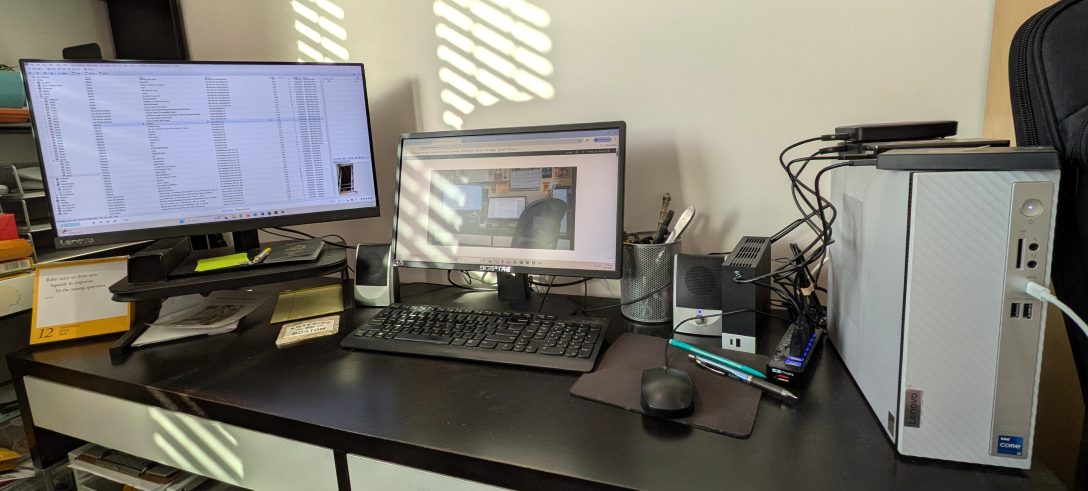
So one of the things about Theadia is that the Day Job for the two main characters is that of coding. Althea works on system translators and special projects, and Claudia works on transportation and communication hardware. So suffice it to say, they know a bit about how things work under the hood, and that becomes their superpower as the story progresses. I based my approach towards their Day Jobs on my own position at my Former Day Job, in which I’d learned what’s under the hood in e-commerce banking. In effect, their story isn’t just about the technology but also compliance, safety and just plain making sure it doesn’t explode in your face.

Thing is, I’d decided early on that what I didn’t want was for the novel to be one large technology infodump. Some people like that kind of thing — and Cory Doctorow does it really well, perhaps overly so — but I knew I wouldn’t. That wasn’t the kind of story I wanted to write. I’d decided that I’d infodump only when absolutely necessary, and so far that’s only been in a few very important scenes. I wanted to make it digestible to the normal reader who might not want that tech deep dive. That also came from the Former Day Job: having to explain tech to someone who doesn’t have the mind for it.

There’s also the fact that not everyone is a technological genius in their field. Sure, there are those out there who are absolutely brilliant at what they do, but there are also those out there whose approach is more of a ‘crossing-fingers-and-hoping-it-works’. And if I’ve learned anything from the Former Day Job, that’s not from a lack of knowledge but more from the reality that, as I’ve said numerous times over the years, systems are only as smart as those who program them. It’s often a LOT uglier under the hood than you’d imagine. Legacy systems that won’t talk to each other unless they’re linked by translators, coding languages that are so old they probably predate some employees, intellectual properties that refuse to work in tandem, platforms whose navigation feels counterintuitive, and so on. But hey, if they still work, why change ’em, right?

That’s how I make the tech world of Theadia believable. It’s not about the fancy and nerdy hacking but knowing and understanding what’s under that hood…and how to manipulate it when necessary.

Okay, moving on…

I’ve spent way too long trying to make that chapter work and I’ve been getting nowhere. I know something needs to go there but it’s just not coming to me, so I’ve called it, placed a WRITE THIS LATER on the page, and moved on. Maybe I’ll come back to it, or maybe I’ll come up with something altogether different. Or maybe I won’t need it after all? Who knows?

Either way, I’m now working on another revision chapter — one I’ve already written and want to polish up — and I probably won’t return to this problem scene for quite some time. I’ll have it playing in the back of my head, sure, but I most likely won’t actually do any writing for it until I get the rest of the novel done. I actually did this with Diwa & Kaffi — chapter eleven, where Diwa is making rolls with his mother and talking about his dad, was the last thing I wrote for that novel before prepping it for publication. By the time I wrote it, I had a much better idea of what was needed and it came to me much quicker and easier.

It’s not a process I do all that often, but sometimes it’s necessary to move on instead of wasting so much time focusing on something that refuses to budge.

On creating new characters midstream

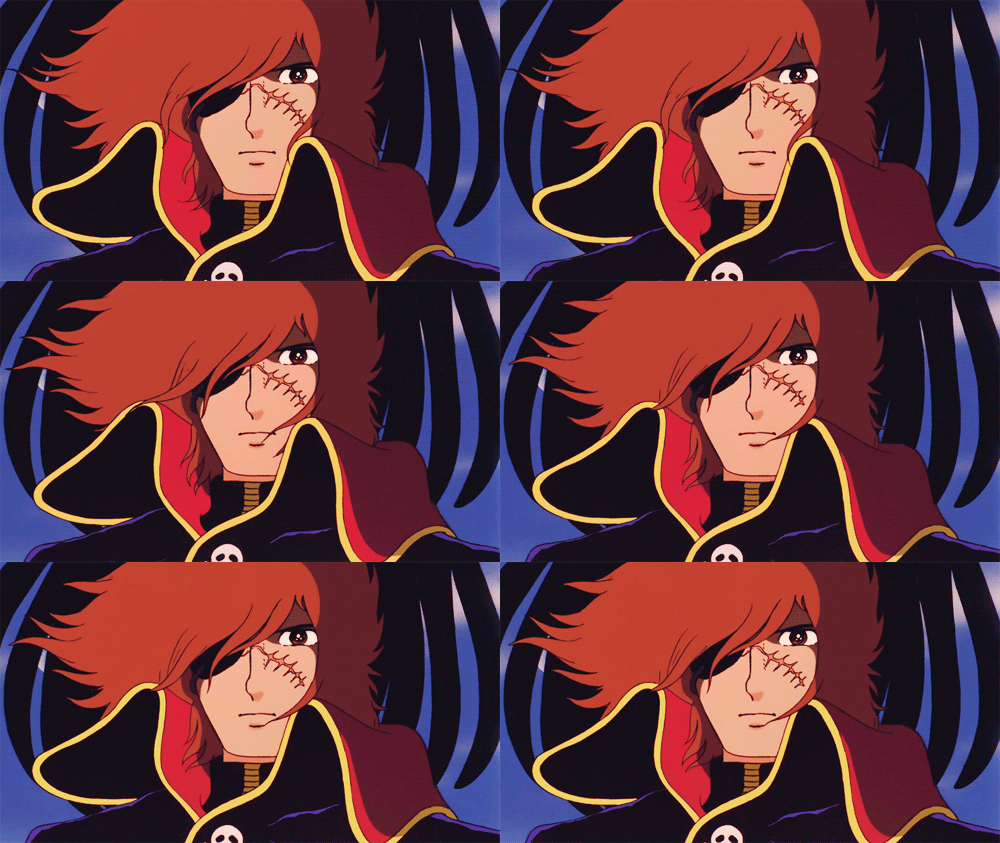
Okay, so Captain Will Dewar in Theadia is definitely not Space Pirate Captain Harlock, but the gif was too good to pass up, heh.

Anyway, I’m kind of stuck on how to write Dewar, as he’s a relatively new character unlike nearly everyone else in the novel. But in the process, I’m reminded that this also happened back when I was writing A Division of Souls; originally Christine Gorecki was merely a name of an old friend that Poe mentioned during a tense moment to ease Caren’s distress. By The Persistence of Memories she’d acquired a major role.

So why Dewar, anyway? Again, he was originally a one-off, someone mentioned in passing during a conversation between a few flight captains, someone known as being gruff and not entirely friendly but someone who could be trusted. As it happens in this particular revision/rewrite, I need to expand his role as someone willing to take extremely dangerous chances in order to help the main characters achieve their goals.

But who is he when he’s not in uniform? What kind of civilian would he be? Well, I kind of see him a bit like Alan Ritchson’s take on the Jack Reacher character: ridiculously well-built, surprisingly intelligent, yet a bit of a quiet loner. He’s not all that easy to rile up, but you don’t want to be in the same area when he is. I wouldn’t say he has a strong sense of justice, but more like a strong drive to ensure the right thing is done, and done correctly the first time. He craves competence.

All this thought and brainstorming, just for a secondary character! Well, this is why I loved writing the Bridgetown trilogy so much: every character in that universe has a backstory and a reason for being there, and that’s exactly the kind of writing work I love doing. [Why yes, I’m definitely anti-AI when it comes to creativity, why do you ask?] While I do have some idea of who Dewar is and what he’s about, I’m still a bit vague on his reasons for being who he is and why he does what he does, and how he relates to the other characters.

Well, that’s something I’ll need to keep plugging away on, isn’t it?

Catching up on reading

My bedside reading pile looks a little less ominous these days as I’ve thinned it out a little bit, finally finishing up some titles and getting rid of others that didn’t quite work for me. Over the last couple of weeks I’ve been rereading a few books by favorite authors in preparation to read a newer title in the same universe that I haven’t gotten to yet.

Recently I’ve finished Karen Lord’s The Best of All Possible Worlds and The Galaxy Game in preparation to start reading the third in the Cygnus Beta series, The Blue, Beautiful World. I’d read them way back in the summer of 2015, and though I clearly remember loving the books, it seems I’d forgotten why, until reading them again. The style is very much in my wheelhouse, and must have inspired or influenced me in some way, as the books’ style is very similar to mine. I read these right about the same time I’d been working on self-publishing the Bridgetown Trilogy, so I must have been looking for something to inspire my future projects.

There’s also the fact that with age and maturity (even within the last decade), I hadn’t noticed just how brilliant the setting is: it’s a story regarding a dying planet that could have been grimdark and dystopian…but wasn’t. It’s about what happens to the survivors, learning to live and adjust to new planets and new cultures, and focuses on a group of people dedicated to ensuring this emigration is successful. It’s actually kind of hopeful without quite being hopepunk.

This, by the way, is similar to the setting of my current WIP Theadia: a story regarding a possible incoming war between galactic sectors…but isn’t merely about the war itself. It’s about what happens to those about to be affected by it, and focuses on a group of people dedicated to ensuring the damage is minimal. Purely coincidental, by the way, considering I hadn’t reread the two books in nearly a decade, but on the other hand, I’m kind of secretly thrilled that I feel like I’m pulling it off. Rereading this series basically said to me, yeah, you can write this kind of thing and get away with it.

My next reread will be Lavie Tidhar’s Central Station which I remember really liking as well, followed up by his recent book Neom, which takes place in the same universe. I was especially drawn to the first book with its origins as separate shorter stories that ended up telling one larger story, and that in itself inspired me to want to someday write a novel with a similar setup. My sometimes-trunked, sometimes-not project Can’t Find My Way Home briefly had a new life back in 2017, partly inspired by that.

So in short, what I’m thinking is this: perhaps it’s time for me to do some more serious catching up on reading, because obviously I’m finally being reminded where my inspirations and influences come from, and maybe find something new in the process!

Theadia and…Knitting?

It was supposed to be a one-off joke that most likely wouldn’t have made it into the finished version, but somehow it’s become an all-encompassing theme within this project. And to be honest, I’m totally fine with that because it works perfectly!

Theadia has numerous knitting and crafting references littered throughout. The three main military space ships we see are pins (small one-person fighters that serve as the front lines), needles (two-seaters working as artillery) and stashes (boxy, bulky troop transporters). The main setting is a well-off planet and space station called FairIsle (named after the Shetland island known for its knitting) and the planet’s central capital is Beam City (a weaving tool). And so on.

So why knitting, anyway? Well, originally it was a nod to A’s craft projects — she’s made numerous scarves, fingerless gloves, toys and baby clothes over the years, and that’s her creative outlet while mine has been writing. Something we both enjoy immensely even when we’re doing something else like listening to music or watching TV, or more more recently, even despite the constant and sometimes destructive interruptions of our cats!

The more I leaned on this little in-joke, the more I realized that it was a perfect metaphor for the project itself: every single event is interwoven with something else that happens elsewhere. Whether it’s a character’s refusal to act or another’s fearless action that changes the course of history, their actions are not just about their own world.

Reminding myself that weaving is the main structure of this entire project is what’s helping me in this new revision/rewrite. Whatever new scenes I’m working on have to not just tie in (har har) with the plot in general, but have to, in some way or another, cause or influence a change down the road. So by the time we’re near the end of the story, we have a whole tapestry of events going on about to lead to something unexpected yet extremely important.

Not bad for a one-off joke, yeah?

[EDIT: Yes, I am aware that the header gif I used is actually crocheting and not knitting. It was the one I found online that looked best! Heh.]

Those little ‘aha!’ moments

I’ll admit one of the things that’s been worrying me about the new version of Theadia is that with the new scenes, I sometimes feel like I’m putting in filler. I know I’m not; I’m putting these new scenes in for reasons that will become clear further into the story. Thing is, some of these reasons are a bit, er, vague at the moment because I don’t have a crystal clear idea of how to reveal these plot points.

Then there are the moments where I’m being super patient with the low word count and pushing through, and somehow a shining bit of plot clarity pops in. That aha! moment, so to speak. I’ve just had a few of them over the last couple of days, in which I somehow backed myself into the exact spot the scene needed to be in.

Those are some of my favorite moments in writing, to be honest. It’s the pay-off for all the hard work and the frustration, where I suddenly see all the threads being woven together at once. That happened a lot with the Bridgetown trilogy and is happening here as well.

So I just need to remind myself to remain patient and vigilant, and all will make sense eventually.

Outside

I think it’s safe to say that the cold rainy season here in the Bay Area has finally come to a close (I hope), which means that I’ll be able to return to something I’ve been wanting — and needing — to do at work for a while now. And that’s go outside during my breaks.

I was doing it for a while there, heading up to the roof parking deck for my ten minute breaks and the back half of my lunches. For a while there I was just heading to our small break room and slumping into one of the chairs and, well…maybe not doomscrolling, but passively reading news sites and social media again. At least I’m not getting myself worked up like I used to, so there’s that.

Anyway, I think heading up to the roof, or even out to the side parking lot for a few minutes can’t be all bad, especially since I have a small notebook in my inside jacket pocket that’s been itching to be used for quite some time now. I’ve been using it to work out a few vague ideas for Theadia, but I think it’s time I start using it more often like I used to in the Yankee Candle days: working out what I want to write for the current chapter, that way I’m not wracking my brain at the start of my writing sessions.

As long as the weather is with me, I think this is a fine idea!

[On a side note, I can safely say I don’t need to head outside to do any exercise, as this day job keeps me on my toes and I can easily rack up a few miles’ worth of steps on my fitness app. I’ve joked with one of the bakery workers that any of the cake slices I buy from them get worked off by the end of the day, considering how much I flit around the store!]