Adventures in Self-Publishing: Seeing the Final Result

image
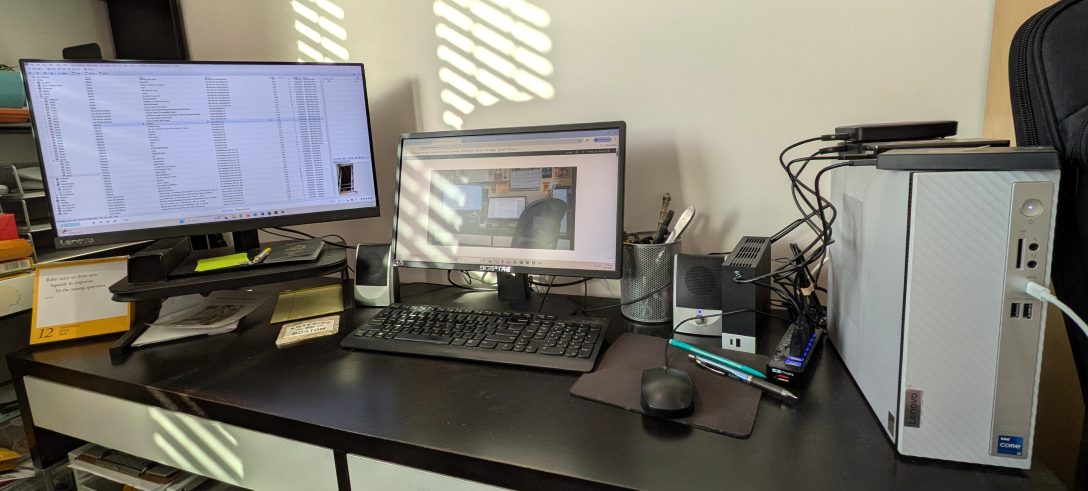
Above: the MS Word document I’ve been carving away at for the last two months. Below: the final result in EPUB format on my Nook.  Lon Dubh the blackbird approves.

Two things that are Totally True when an author sees the galley/ARC/final result of their book:

–A mixture of elation and pride.  More often than not this is a project that has taken far too long for our liking, but still the author has a bit of a squee when they see it all bound in paper or in final ebook form.  Look at that!  I made a thing!  A professional thing!  A thing others will (hopefully) enjoy!

–The turnaround time from the above excitement to worry and mortification when typos and other mistakes reveal themselves when you’re checking out how pretty it all is:  +/- two hours.


Most of this weekend was spent working on the formatting of A Division of Souls, which was easier than I’d expected it to be.  Come to find out, most of it entailed highlighting blocks of text and adjusting a lot of Settings, which I do all the time anyway.  Saturday afternoon I cleaned up the end matter (glossary, acknowledgements, etc) and other easy bits.

Sunday was spent doing a lot of Style changing — primarily my old habit of hitting Tab at the start of every paragraph to a permanent 0.3″ paragraph start instead.  Ctrl+A was my best friend through most of this.

Creating a table of contents was shockingly easy.  Just a bit of bookmarking and hyperlinking, et voila!  I’m done.

There was also a good half hour of dithering about line spacing…single, 1.15, or 1.5?  Single looked too crowded to me, and though I liked 1.15 myself, A. (who reads more ebooks than I do) felt otherwise.  So 1.5 it was.

So by late afternoon, I was ready.  It was time.

Uploaded the file to the Meatgrinder at Smashwords (their quite apt name for the software that checks for errors and also translates it into multiple formats).  Waited for the scanning and the translating.  Waited for the email letting me know if there were any errors.

At 6:52pm PT, I got the email; no errors, everything was groovy, and it was now on its way to being available at all fine ebook retailers.  I’ve also added a ‘Buy Stuff’ tab up at the top of this blog to make it all official and stuff.

So yeah.  I can now finally say I’m a pro.  Go me!


Oh, and the typos and mistakes?  Thankfully just a few:
–Apparently epub doesn’t like accentuation marks in the glossary, so I’ll have to use caps instead.
–An event I’d decided to rename, that got missed a total of three times.  A bit of Find/Replace did the job.
–A few places where the carriage returns didn’t take.  Easy enough to clean up.

Yo ho ho, it’s a writer’s life for me. 🙂

And One Giant Leap…

First mock-up cover, thanks to Shutterstock and a half hour on PicMonkey.
First mock-up cover, with help from a Shutterstock sample and a half hour on PicMonkey. NOT THE FINAL VERSION.

Small steps.  That’s what writing novels has been about for me.  On the surface it may look like I’m one big mess of contradictions: deep focus on ideas but extremely haphazard drafts; some really tight writing balanced out with a handful of ‘screw it, I’ll fix it later’ placeholders; things that pretty much every writer needs to go through.  We create a hell of a lot more than what ends up in the final version, and a lot of it does tend to be directionless wriggling, trying to figure out where the hell we want the story to go.  A lot of small steps.  Missteps, steps into slippery mud, and blind kicks into the air, with the hopes that the end result is instead a well-choreographed saunter down a red carpet, fans cheering at the sidelines.

And one giant leap, making the decision to publish.

Last week, I made the decision that I was going to work with one of the indie self-publishers and finally release the Bridgetown Trilogy into the big bad world.

This past week I’ve begun preparing myself for an early September drop date.  Starting one final line edit of A Division of Souls, making various business decisions, starting a detailed spreadsheet for the accounting…and everything else that goes into releasing a book on one’s own.  I’m even making my own covers, with the help and feedback from others.

The one thing I did not expect during this process?  I’m enjoying the hell out of it.

The research into what publishing services would work for me?  The images I’d want for the covers?  What kind of expenses I’d be expecting to shoulder?  That is, the business side of all of this?  I’m really enjoying this part of it.  Never thought I’d admit that.  Certainly back in my early writing days, I was that writer who was all about the creative spark and saw the economic side of it as the death knell to creativity.  [Thankfully I got rid of that mindset right quick.]  Now?  I’m finding the ‘behind-the-scenes’ work just as fascinating as the writing.

I think it’s because I’ve made myself see it similar to the music business, of which I have a decent basic knowledge and a keen interest.  Bands rarely if ever go into the studio and slap down a perfect and complete album straight out.  There’s a lot of working parts, a lot of outtakes, presales boosting, word of mouth and other bits and bobs that may not be obvious to the passive listener, but are quite important to the end result.  Writing and publishing is very similar in that respect.  I’m fascinated not just by the creative process, but the amount of work it takes to make it professional level, making all the pieces fit perfectly.  I’ve not only been actively participating in all the levels, but I’m learning from them.

Am I going to be blogging about it as I go?  Of course I am!

This is the part of the business not many writers and blog readers get to see…and more often than not, this is also part of the business that writers tend to want to ignore (often for good and legitimate reasons).  In the process I hope these upcoming posts will also help others who are thinking of following a similar path.

So yeah.  Here we go.  One Giant Leap.

On Writing: Mental Playgrounds

I’ve mentioned before that I’ve been utilizing the daily word website 750 Words off and on over the last few years, and using it as a sort of ‘mental playground’ where I can have fun playing with ideas that happen to pop into my head.  In short, it’s a simple site where you log on and crank out at least 750 words for the day.  It doesn’t matter what it is…poetry, prose, automatic writing, it doesn’t judge as long as you hit the goal.  It’s a perfect place if you have trouble getting yourself started, but it’s also a great place for training yourself to write something without Editor Brain (or Revision Brain, for that matter) getting in the way.  I’ve used it for both, and it’s definitely helped get the writing juices flowing.

Now?  I use it as a testing ground for new ideas.  I’ve come up with at least three solid novel ideas this way, which will become future projects a little further down the road.  A half hour’s riffing on an idea really can go a long way, and with a few weeks’ worth of consistent work, one can have the makings of a complete outline, or at least a very rough draft.

Lately, I’ve been using it to try out different ideas for this new Mendaihu Universe story.  The first few chapters of any new project often end up sounding very disjointed and lacking continuity, and it’s very obvious that I’m still trying to figure out where the hell I’m going with it.  [Case in point, during my transcription from longhand to Word document yesterday, I noticed a scene starting midday, but changing to evening within a page.]  Which is fine, considering the first draft is always the roughest, but at some point before I get too far, I have to lay some ground rules.  I have to say, okay — enough floundering, time to give this story meaning and direction.

This is where the 750 can come in handy for me:  it’s what I call the outtake reel.  I’ll come up with a specific scene and riff on it, see how it fits in the context of the overall story, if it’s true to the characters, and above all, if the idea will be useful down the line.  Sometimes it’ll work, sometimes it won’t.  It won’t be the final take, but it’ll at least give me something to shoot for.  And with this week’s exercises, I found myself rewriting the same scene that I’d come up with way back in 1993 for the first Vigil outtake, only updated and with different characters.  I hadn’t planned on using the scene ever again, but it seemed to fit so naturally here that I ran with it.  It’ll most likely be somewhere in Act 2 of this current book.  In the process, it also clarified a number of plot ideas I’d had for this project, so I won’t be floundering nearly as much anymore.


Having a mental playground for your novel ideas is always a good thing.  You may have to train yourself (like I did) to realize that these are only rehearsals and rough outtakes and not part of the final version, but the outcome of these exercises is almost always fruitful.  By letting your characters run around freely, you end up learning a bit more about them, and in the process you’ll know how they’ll react within the scenes you place them in.   By letting yourself riff on an idea that may or may not even be a part of the current story, you might even come up with a much clearer idea of what you do need to work on.

You don’t necessarily need a site like 750 Words; it might be an ‘outtake’ document on your PC, a dedicated notebook, or a handful of scrap paper.  Whatever works for you.  Like I said, this is the rehearsal stage…it’s where you work out the idea, get rid of the stuff that doesn’t work, and work on strengthening the stuff that does.  And above all, it’s where you have fun with it, with Editor and Revision Brains off having a cocktail somewhere else.

On Selling the Book: Who Is My Audience?

Kakashi from Naruto, @Masashi Kishimoto
Kakashi from Naruto, ©Masashi Kishimoto

It’s come to that point, and I don’t think I can avoid it anymore.

Who is my audience for the Mendaihu Universe novels? I admit it’s something I never really took took seriously while writing the Bridgetown Trilogy in the first place.  Sure, I bashed some of my ideas out with my coworkers while working at Yankee Candle, and I know a few of them have been waiting way too long for me to release these damn things.  I’ve talked about this universe here and there online for years.  I’ve had a small handful of beta readers over the years.  And then there’s me, the one who create the series, who loves writing within it.

And thinking about how to sell the thing to potential publishers, agents or readers is something I haven’t exactly wanted to think about too often, because I hate dealing in sales.  I had a telemarketing job back in ’93 and it was soul-sucking, and I lasted all of three months before I left.  Not that I can’t sell things I’m interested in — as mentioned earlier, I could upsell you records like no tomorrow — but it’s just not something I enjoy doing.  And come to find out, a lot of writers I know are in the same boat.

But seriously — who is the target audience for this universe, anyway?

I have a few ideas on who might enjoy reading this series, and though I’ll be shamelessly upselling to everyone in general, I know there are a few subsets of genre readers out there who might really enjoy the books, and I’ll be giving extra focus to those readers when the time comes.  [The actual upselling can be pretty tricky as well…there’s a fine line between selling it to a potential audience and billboarding yourself everywhere.  Something to think about.]

But who should I sell it to?

Well, that’s a good question.  I consider myself lucky that I’ve gone to various sff conventions, and that I have a reasonably large group of online friends and acquaintances so I’m familiar with what kind of readers are out there.  There are those who’ll read anything.  There are those who will only read military sf, or hard sf, or sword and sorcery, or paranormal romance, or what have you.  There are slow readers, speed readers, those who love short stories and those who love doorstop novels.  If I had to narrow it down, I would say my potential readers would be a mix of general genre readers, urban fantasy, and future sf, with a bit of fantasy realism in there as well.  [I think some manga readers/anime watchers would also enjoy the series, and that’s why you see Kakashi up there.]

Part of the trick is not so much to say “I want to sell to manga/fantasy/future sf readers” but to say “How can I capture the interest of this particular fantasy reader?” and adjust accordingly.  That’s part of what ‘knowing your audience’ is about: understand who it is you’re showing your wares to, and speak with them, not at them.  That’s something I learned in my day job, actually…don’t demand their attention, but pique their interest.  Your pitch will be a lot less stressful that way.

I’ve been thinking about this over the last few months — mind you, I’ve been doing a lot of research on this, not just hemming and hawing (although there’s been some of that as well).  I don’t want to do this half-assed.  I know if the response to the initial launch is crickets, thankfully I should be able to pick myself up, dust myself off, and launch it again, the right way.  There are way too many moving parts in this game, and I can totally understand that it can be frustrating, and one missed part can send the whole contraption falling down in an avalanche.  I’m hoping all this homework paid off, however, because it’s almost high time to get these things out in the world.

Back to the Grind

Spare Oom awaits.
Spare Oom awaits.

It’s been a crazy couple of months.

Between the trips to New York City and London, the weekend plans, multiple work-related issues and everything else, I’ve been so full up that I’d made the decision to clear the whiteboard schedule, temporarily stop work on a lot of creative projects, and focus only on the most important ones.  That meant that I focused almost all my creative juices on the new Mendaihu Universe story.  Little by little, I let a few things in as time permitted, such as guitar practice and photography.

Now that all the major events are out of the way for the time being, it’s time to get back to the grind and open up the floodgates a bit more.  I’ve replanned the whiteboard schedule again; I’m not filling it up too much just yet, but I’ve added art, music and work on the Walk in Silence book back into the mix, and moved the updating of the WtBT blog to Mondays.  I may revisit the daily 750 Words if time permits.  And musically, I have a few ideas I’d like to record in demo form as part of the Drunken Owl project.

The temporary hiatus did have its positives, as I was able to provide better focus on what needed it, and still have time to relax.  I was also able to recalibrate how I viewed my writing — not just the output but the style, and looking at what can be adjusted — to the point that I should also be able to do the same with my other writing projects that I put aside.  Long story short, I’ve realized that the best practice (to borrow an annoying work-related phrase) for me is to do most of my writing longhand and use my PC time for revision and rewriting, and that’s how I plan to work from here on in.

These last few months have been a relaxing reprieve, but I’ll say this:  it’s great to be back on schedule again.

A Bit More About Day-to-Day Balance of Work, Writing, and Play

Some of us writers tend to think of writing as separate from work and play, like it’s a third piece of the balancing-your-life puzzle rather than filing it under one or the other.  I’m one of those, purely out of semantics.  I think of ‘work’ as my day job.  I think of ‘play’ as goofing around online, watching TV or going somewhere with A., or some form of entertainment.  Writing?

Well, writing, at least for me, is a synergy between the two.  It’s work — hella hard work sometimes — because my brain isn’t just thinking about the part of the story I’m telling at that very moment, but also thinking about the story’s end result so many as-yet-unwritten pages in the future.  At the same time it’s an incredibly fun process, because I’m creating something and I’m proud of my ability to do so, especially after all these years of practice.  To that end, I end up thinking of it almost as a second job, albeit one that I enjoy doing.

The trick, at least lately, is to remind myself not to sit on my ass all day long, sun up to sun down.  There’s a life out there, outside of the nonstop chugging of my mind gears.  That’s why we make it a point to hit the local YMCA a few times a week and take long walks on weekends.  But I also need to remember that not everything on TV is crap.  We’ve been really enjoying Wolf Hall on PBS the last few weeks, there’s always another Attenborough or Burns documentary to watch, and Canada and the UK seem to have a wealth of great mystery shows that we can stream.

Back in the early 00s (aka the Belfry Years), I had to remind myself to put down the writing and go out and play now and again.  This is why I went on road trips to Boston and elsewhere, took the occasional night off to watch The X-Files, check out my current stash of comics, or read that new novel I’d just picked up.  Still a bit sedentary to be sure, and I was still working out plot ideas in the back of my brain, but I made sure I didn’t become a hermit.

Nowadays I’ve made it a point to get up during break times at work; I’ll walk down to the lobby to check the mail or get that load of laundry.  I’ll watch an episode of Murdoch Mysteries with A before heading up back to write for an hour or so.  I’ll listen to my mp3 player and think about plot ideas while walking a half hour on the treadmill at the Y.  I’ll still sneak in some writing whenever I can, but not entirely at the expense of living a life outside of writing.

It’s a tricky balance to maintain, and as always, there’s no set-in-stone way to go about it.  It’s all about whatever works for you personally.

New MU Story Update: Where I Am and Where I’m Going

It’s a silly milestone, but a milestone nonetheless:  I’ve been writing this new story in a wide-ruled three-subject spiral bound notebook, and a short time ago I just hit the first of two subject tabs, which means I’m a third of the way through the notebook already.  With 120 pages in the notebook, this means I’ve used 40 of them so far, which means I’ve written at least 80 pages.  Woo! Go me!

Still no title for it yet, either, which is totally not me.  Usually I give a new project a temporary title soon after starting it — either a borrowed song title or a boring phrase as a placeholder — but at this point it’s still known as “New MU Story.”  And you know what?  I’m okay with that.  It means I’m focusing on the right things.

At this time it’s still longhand as well…I haven’t started with the transcription to Word yet.  I suppose I’ll do that soon, when the time comes for me to expand the initial first draft.  From past experience, that usually ends up being somewhere around halfway through Act II, when things start to get complicated plot-wise.  I do that for two reasons:  one, by that time I have a firmer grasp of the story as a whole and what may need adjustment; and two, the revisiting of the Story So Far gives me a good idea of where I need to go from there.  At this time I’m going to assume that I’ll start on the transcription sometime next month.

Is this going to be a single book, or will it be another trilogy?  That’s a good question, and one I’m not going to answer right away, not even to myself.  It’s definitely one of many in this universe, that’s for sure.  I’m not even sure when I’ll be finished. I’m just happy that it’s still going strong, and that’s good enough for me right now.

On Extremes and Evolution

I’ll note this now: this is not necessarily a post on violent extremism, like the kind we often see in today’s news, but about how far a character will go to hold onto their beliefs, and why.

One of the themes that I’ve been thinking about for this new Mendaihu Universe is extremes.  I used it to some degree in the Bridgetown Trilogy, wherein many characters have their beliefs and emotions tested.  Is what they’ve always felt really the truth?  Is the kind of peace they’re fighting for really what is needed?  And what if what you perceive to be the truth actually is the truth, at least in your own reality?  How far would you go to fight for what you believe to be the right thing to do for everyone?  These were the universal questions, set upon a group of people.  I wanted not only to show how they progressed as their own person, but also as a collective.  Actions do affect everyone involved in one way or another.  It’s not just about the action itself, however…it’s about the consequences.

For the new Mendaihu Universe book, I’m looking at the same themes again, but this time on a personal level.  After the spiritual revolution that took place in the Bridgetown Trilogy, we now see its outcome, some generations down the line.  Without going into too much detail (partly because I’m still pretty much at the beginning of the story anyway), I want to examine how the actions of the past affect the beliefs of the future.  I want to see how these beliefs and rituals have changed, now that they’ve been commonplace for a significant amount of time.

The idea of extremes for this new project came to mind after watching a large number of historical documentaries about Britain, and a lot of Time Team episodes with my wife over the last few months.  Specifically:  today we have believers of various faiths, many of them reinterpretations or reimaginings or revolutionary versions of older ones.  Some faiths raise imagery, idolatry and destination to holy statuses, for instance.  I started pondering about something I’d thought of much earlier in my life, back when I was taking catechism classes.  I started thinking about what life was like when these Biblical stories took place; not just what the stories tell us in description or what’s given to us over the years with tapestries and paintings and whatnot.  This is where the Time Team episodes were coming in:  while watching Phil and Mick and Raksha and all the other Time Teamers troweled their way into the past and tried to reconstruct what ancient buildings may have looked like, I started thinking about the Bridgetown Trilogy from the same point of view.  What we see now, as we’re excavating the past, may be something completely alien from the original idea, changed and mutated by time and evolution.  It’s only when we take the time to not just look but understand what that past moment was about, do we get closer to the truth of that point in history.

First thought of course being: how would Denni Johnson, awakened as the the deity, the One of All Sacred in its last iteration, be viewed by those who follow the One some fifty to a hundred years later?  One of the first mentions of Denni in this new book is when a character sees an eight foot statue of her, complete with angelic wings, hands reaching down to all those who look up at it, near the same corner of the warehouse where she’d ascended to deity status in the first place.  I followed up with a few other ideas: new characters taking the names of those in the trilogy, following in the footsteps of their ancestors.  The human-alien relationship on Earth becoming closer in some respects and more tenuous in others.  And so on.

This is what I think about now when I’m watching a documentary or reading a book about something historic.  I’m not just being told a story about something that happened in the past; I’m also being given an idea of what thoughts, ideas and emotions may have been like as well.  I’m being given context to go with the story.  And this is what’s been going on with this new Mendaihu Universe story; I’m writing about a far future that’s trying to remember what the past was like, in order to learn from it and move forward in the right direction.

Changes in Writing Habit

My writing habits seem to change about every two years.  I’ll find something that fits with what I’m working on perfectly, and I’ll stick with it until it doesn’t work anymore.  Sometimes I’ll retain it for far much longer than I probably should, but I’ll eventually change it up.

I came to the conclusion a few weeks ago that this new change is going to be rather significant.  The whiteboard that I’ve been using for the last few years has suddenly been cleared off, with only the blog post schedules showing.  I’m even putting off continuing the daily 750 Words for the time being (though I may be continuing the ‘secret project’ I’ve been using those words for, using a different format).  In fact, I’m pretty much backing away from the internet for a while, because it’s been a distraction.

It came to me when I first started writing the new Mendaihu Universe project longhand.  I’ve mentioned this over at my LiveJournal, but I’ll mention it here: I felt a need to return to my old writing habits.  And more importantly, I felt a very strong need to back away from the internet, maybe even backing away from writing directly to PC for a while.  I’ll keep the computer on by having some music playing in the background, and I’ll keep it handy for when I need it for research or to check on an older manuscript or something…but I felt the need to create more organically.

I came to this conclusion via many different ways, really.  I think part of it came to me last year when I started writing a personal journal entry almost every day, It also surfaced in October when I’d bought art pens and took part in the Inktober meme.  Interestingly, my ‘secret project’ also had a hand in it, even though I was typing it as part of my daily 750 Words.  The point being:  I was writing swiftly and fluidly, forcing myself not to self-edit, and this included the personal journal.  There’s a few entries here and there in that moleskine where I’ll stop midsentence and write “No, let me reiterate that” instead of crossing it out.

And that’s the key.  In the years working on the Bridgetown Trilogy rewrite/revision, the Walk in Silence project and the aborted Two Thousand, I realized that I’d been stuck in the mode of internal revision as I was writing, and working solely on PC has that effect on me.  That is because it’s always been like that.  I wrote about ninety percent of The Phoenix Effect longhand in two spiral notebooks — no revision, just pantsing it as I go — and transcribing and revising it on the PC in the Belfry in the evenings.  I consider the Bridgetown Trilogy a major revision/rewrite of that same book, even though it contains mostly new passages that were never in TPE.  Pretty much every other project I’ve worked on since then was straight to Word.

I wanted to change that with this new MU story.  I realized that most of those post-trilogy projects were tough slogs because I’d never turned my Internal Editor off.  Plus, now that we’re in the Space Age and can jump online any second of the day if we so choose, that gave me all the reasons to procrastinate.  At first I thought a strict whiteboard schedule would help…and indeed, it has, to some extent.  Because of that schedule I got rid of the ‘out of sight, out of mind’ mentality.  I’m back to the point where I want and need to write something every day, even weekends.  But I felt it wasn’t enough.

That’s why I chose to start this new project completely offline, like I did with TPE.  I wanted to see if I could recapture my old writing habits, without all the distractions and the internal editing.  Just pick up the notebook and the pen and start writing.  No worries if I mess up or make a continuity error; this is not the place to fix it right now.  This is the time to write the story purely as it comes to me.  No focusing on word count or anything else…just let it ramble for however long it would take during that session.  I’ve even taken this “new” old habit to an extreme; instead of writing at my desk, I put some music on my PC and sit across the room on the love seat instead.  It’s a little better for my back (I think?), and I’m able to stretch out a little more.  I can also take it elsewhere: I can write in the living room while A watches a movie.  Or as I did last weekend, I can write at our hotel (both in bed and in one of the chairs) in the middle of New York City, as well as during the flights to and from said city.

Suffice it to say, I was pleasantly surprised when I noticed just how amazingly well this recaptured habit was working out for me over the course of a month.  The story is still evolving and I’m sure I’ll be completely rewriting the beginning at some point (as I always do), but it’s moving at just the speed I like for first drafts.  My average over the last few days has been about two pages in a half hour, which is about right; I used to hit five pages in the hour I used to spend writing TPE back in the late 90s.  Once I become more involved in this new MU story, I’m sure the time spent writing and the page count itself will extend itself.  I haven’t even planned on when I’ll start the transcription, and I’m choosing to leave that wide open.  I’ll start it when I feel I’m ready for it.

Is this for everyone?  Who knows?  Each writer has their own best habits and rituals.  It took me a while to realize it, but I seem to have rediscovered mine.


On Reading: Be Not Afraid

I just finished reading AM Dellamonica’s Child of a Hidden Sea last night, and absolutely loved it.  It’s one of those books where you end up staying up past your bedtime so you can finish it up.  Fast-paced and fun, it straddles between YA and adult fantasy, following a girl named Sophie Hansa as she travels — first accidentally then purposely — to an alternate world full of magic, seafaring piracy, and family intrigue.

I mention this because I think it ties in nicely with a recent blog post by writer Shannon Hale called “No Boys Allowed: School visits as a woman writer”.  She talks of her tours of schools to talk about her Princess Academy books, specifically the problems she has at some schools where her audience is all (or nearly all) girls, with nary a boy in sight.  More to the point: the fact that the boys weren’t invited, or needing permission to join in.  It wasn’t just expected that boys would have no interest in a writer who writes about princesses…even if it was unintentional, they’ve also reinforced the idea that boys shouldn’t have an interest in stories about princesses.  It’s just not a manly thing to read, even if you’re 10.

This reminded me of an event in seventh grade, between myself and the school librarian.  [I mention it briefly in the comments section of Hale’s entry.]  They had this special event every month or so where kids could buy cheap paperbacks from a bookseller; they were your typical MG and YA novels, maybe some comic collections and kids magazines, that sort of thing.

I took an interest in that partly because my dad and I had started taking road trips on weekends to Northampton or elsewhere to stop at bookstores, and I’d pick up something to read every now and then.  This book club was an easy way for me to find more things to check out.

At the time, I was interested in a lot of YA novels from Apple Paperbacks and other publishers; the covers may have been kind of dorky and the stories somewhat simple (strangers following you, problems with your friends, having weird yet really cool magical abilities), but they were fun reads.  I knew pretty early on that I wasn’t that interested in stories about sports, or men of action, or any of those other typical boy-centric stories.  The reason was simple: I like a good story, regardless of the gender of the main character…but the subject has to interest me.  I wasn’t going to waste time reading about a kid trying to make the baseball team when I had no interest in baseball and sucked at it anyway.

Mind you, this was also the time where I’d started becoming interested in writing fiction.  The Infamous War Novel I started in 1984 was the first one I completed, but I’d had at least a dozen or so incomplete ideas dating back at least a few years earlier than that.  This had little to do with passive reading.  I was gravitating to what I knew I enjoyed and wanted to write.

So when I’d ordered a few of these Apple Paperbacks (including Willo Davis Roberts’ The Girl with the Silver Eyes — one of my first forays into the SF genre, come to think of it!), I was excited to start reading these things.  However…

However, the school librarian had side-eyed my choice in reading.  In fact, if I remember correctly she actually pulled me aside.  “Are you sure you want to read books like this?” she’d asked.  “Don’t you want to read about sports or spy novels?”  I stood my ground and kept reading these things, but there was something in the back of my mind that nagged at me: was I reading the wrong things?  Was it wrong for me to like books with female leads?  I shrugged that off just as quickly as it came, but that was probably the moment where I realized I would not be able to confide in this particular librarian.  After all, she was also the one who had seen me pick up a copy of James Fenimore Cooper’s The Deerslayer in the school’s library and asked if I would really ever get around to finishing it, considering it’s over five hundred pages long.  And now I had it in my head:  Would other boys think I was a fag (and I mean that in that wonderful 80s teen way) because I liked books about girls?  Did I have to keep these books to myself now, for fear that others would side-eye me as well?

She apparently had my number well before I had it myself.

The sad thing is, this was also right about the time where my attention span had started to wane.  Not out of any emotional or mental deficiency, but because I was starting to get bored.  I didn’t figure it out until many years later that my grades really started slipping right around that time because I’d lost interest.  I’d rather be listening to music or writing (yes, even then at 13…especially then) than reading some assigned book that I just didn’t want to deal with.  The end result was that I would end up with my first failing grade in my entire school career.  I got an F.  In English, of all things!  I wanted to be a writer and I loved reading!  What had happened?

Thankfully, I turned it around and managed to squeak by with a C- by the end of the semester and didn’t have to stay behind or take summer school. I knew I wasn’t dumb, I just needed to make a concerted effort to get the work done.  It was a slog and I did a half-assed job most of the time, but I did well enough to graduate with the rest of my class.

But the damage really had been done in junior high.  I don’t blame that librarian…she was of an older generation and was safe in her Boys Are Boys and Girls Are Girls world.  My bad grades were my own damn fault.  But if it wasn’t for my 7th grade English teacher assigning us Ray Bradbury’s Dandelion Wine (one of my all-time favorite novels), my mission to write and finish a novel, and a stubborn will to read what I wanted, I’d probably have done worse.  I remained a B- student pretty much all the way until I graduated college.  And I barely picked up a book for pure entertainment purposes, even though I was still attempting to be a writer…that wouldn’t happen until around 1995.

I know it sounds petty, but this is what happens when you throw preconceived expectations on kids of that age.  Let me explain — I know you mean well, and I can see where you’re coming from (even when the gender segregation is a dumbass thing to do).  You’re giving them anchors and guidelines, something for them to base their life experiences on.  You’re trying to train them to see potential roads they should follow for future education, and that’s a good thing.  But at the same time, you’re not paying attention to how the kids are processing it.  A. and I have similar tastes in some things, but wildly different tastes in others.  I don’t even have the same path of logic as she does half the time.  We should learn how to think critically, but we also have to remember that each person thinks, lives and reacts differently.

I like what I like, and I choose not to be afraid of admitting that.

This is also partly why I chose to put Denni and Caren Johnson as the most important characters of the Bridgetown Trilogy — I remembered those Apple Paperbacks (and I was reading Kate Elliott’s Jaran series at the time) and enjoyed reading female lead characters.  I had no other reason, political or feminist or what have you, for centering the story around them.  They. Are. Important. Characters.  And they were not extensions of me.  That’s all.

I know this is kind of a long diatribe, but I felt it was important to share.  I’d like to believe that the boundaries we should teach kids are not external such as gender roles or conformity, but internal, such as respect and awareness.  Read what you want to read.  Write what you want to write.  Learn what needs learning.  And don’t edit your reading preferences because of someone else’s opinions.

Be not afraid.