One of the hardest parts of wanting to keep a daily habit of writing at 750Words (especially after a long hiatus) is trying to come up with something to write about in the first place. Some days I’m just fine and the ideas come easy to me, but other days I tend to overthink it and get nowhere. I’m also still trying to get out of the habit of using the site to write personal things that really should be offline in my moleskine notebook.
Something I’ve recently come up with to get around that temporary writer’s block is what I’ve been calling “Seven Or Eight Things”. Instead of trying to think of something I could stretch to roughly eight hundred words, I’ll split it up: I’ll write about seven or eight things for a hundred words. There’s no planned subject, I just let the words take me somewhere for a brief time.
Surprisingly, it’s been working even better than I’d expected! Over the last couple of days I’ve been talking about writing plans, thoughts on an album I happen to be listening to at that moment, or working through a creative problem I’m having. A few personal things still pop in, but those entries are actually in the minority this time out, and that’s perfect for what I’m trying to do here. Most of the time it’s something that pops into my head at that particular moment, so it could be anything!
Mind you, this is not a plan set in stone. It’s merely a process I’m trying out where I’m able to approach the daily words easier, but without the added stress of forcing myself to think of something to write about. If anything, it’s a reminder that I shouldn’t be so hard on myself when it comes to creativity. Leave the hyperfocus to the projects that need it; this is merely the warm-up exercise and stretch that I need beforehand.
I am now at the point in Theadia where I have to visit all the WRITE THIS LATER gaps and…well, write them. Thankfully, I planned ahead of time during this last reread/revision, where I wrote out a paragraph or two of each plot point I need to hit for these scenes and chapters. Also thankfully, most of them are scenes featuring a not-quite-secondary, not-quite-primary character, which means I can focus mostly on the action. As you can guess, I wasn’t entirely sure at first how to approach him as he’s not the kind of character I usually write, and that’s mainly why I skipped them. One, so I won’t lose focus on the rest of the novel, and two, by the time I come back to these scenes, I’ll have a better idea of who he is and why he does what he does.
So why am I putting them there in the first place? Well, if I truly felt that I could get away with not putting them in, I probably would have shoehorned a variant version of the scene (or the information it’s relaying) elsewhere and via a more important character, but I don’t feel that’s the case here. This is a character that isn’t part of the tight-knit main character circle, but they do have a very important link with at least three of them that I think strengthens the story’s logic and flow. He’s an insider that helps the mains achieve their goals without actually abandoning his link to his status within the ranks. He’s gruff and cranky but he’s also extremely intelligent and supportive.
I’ll be honest, using the WRITE THIS LATER gap style of writing novels is still a rather recent change in my writing process. I always write in chronological order from start to finish, and I’m always worried that if I skip scenes too often, the multiple interwoven plot threads running through my head will unravel. This changed when I wrote Diwa & Kaffi, however, when during one of the rereads I realized I’d forgotten to add a key scene that would make the logic and flow work even better.
I still use the style quite infrequently, but these days I’m not as nervous about it. As long as I use it for the right reasons and not out of any sense of laziness or ‘just don’t wanna’ avoidance!
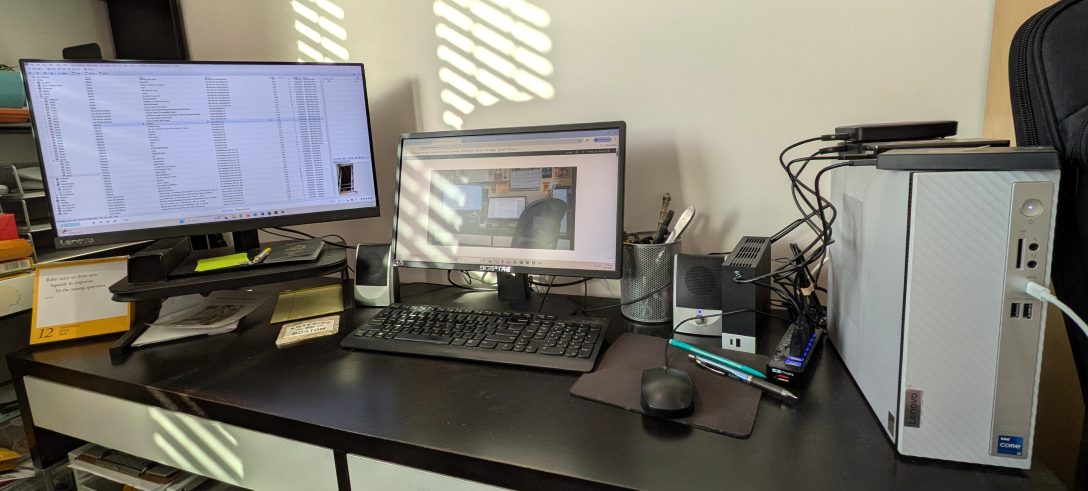
It’s been a couple of days since we settled into our new place, with nearly everything unpacked and put away. We’re still organizing as we go of course, but for the most part it’s all where it needs to be or at least close by. And both cats have been monitoring and supervising every step of the way.
I made the decision early on to keep a lot of my stuff down in the garage storage until further notice so as to not crowd everything in our now-shared office. This means that most of my notebooks, early writings, journals, and so on are down there, still easy to access but locked away. It occurred to me that I don’t need them immediately. Not to worry, they’re in closed plastic bins and out of harm’s way. [And besides, my juvenilia has definitely seen worse storage times.] Whenever I finally get around to restarting the scanning project, they’ll be ready to go.
In the midst of all this, I realized that this gives me the opportunity for a completely fresh start here in the new office. When you’re living in the same place for over fifteen years, it’s kind of hard to go cold turkey on some of the habits and processes you’ve become so used to. So instead of trying to find where I left off with all of that journaling and longhand writing and so on, I’m just going to start a new moleskine notebook. Spend a little more time just enjoying listening to music instead of obsessively collecting and organizing it. Pick up those art supplies and have some fun during downtime. And most importantly, instead of finding a place to put up my whiteboard schedule (and not wanting to damage these pristine walls on day one), I’m just going to try my hand at working without one.
This doesn’t mean abandoning my two current projects, of course. I’ll need to pick up where I left off with the Trilogy Remaster, and I still need to finish off Theadia and start in on its revision and eventual publication. Those two have been at the front of my mind ever since we started this whole moving house chaos two months ago. Give me a day or so and I should be back on track!
Do I know where I’m going to go from here? Not entirely…but I’d like to think that’s a good thing. I’ve given myself a clean slate as it were, and I definitely need to allow myself to experience those more often.
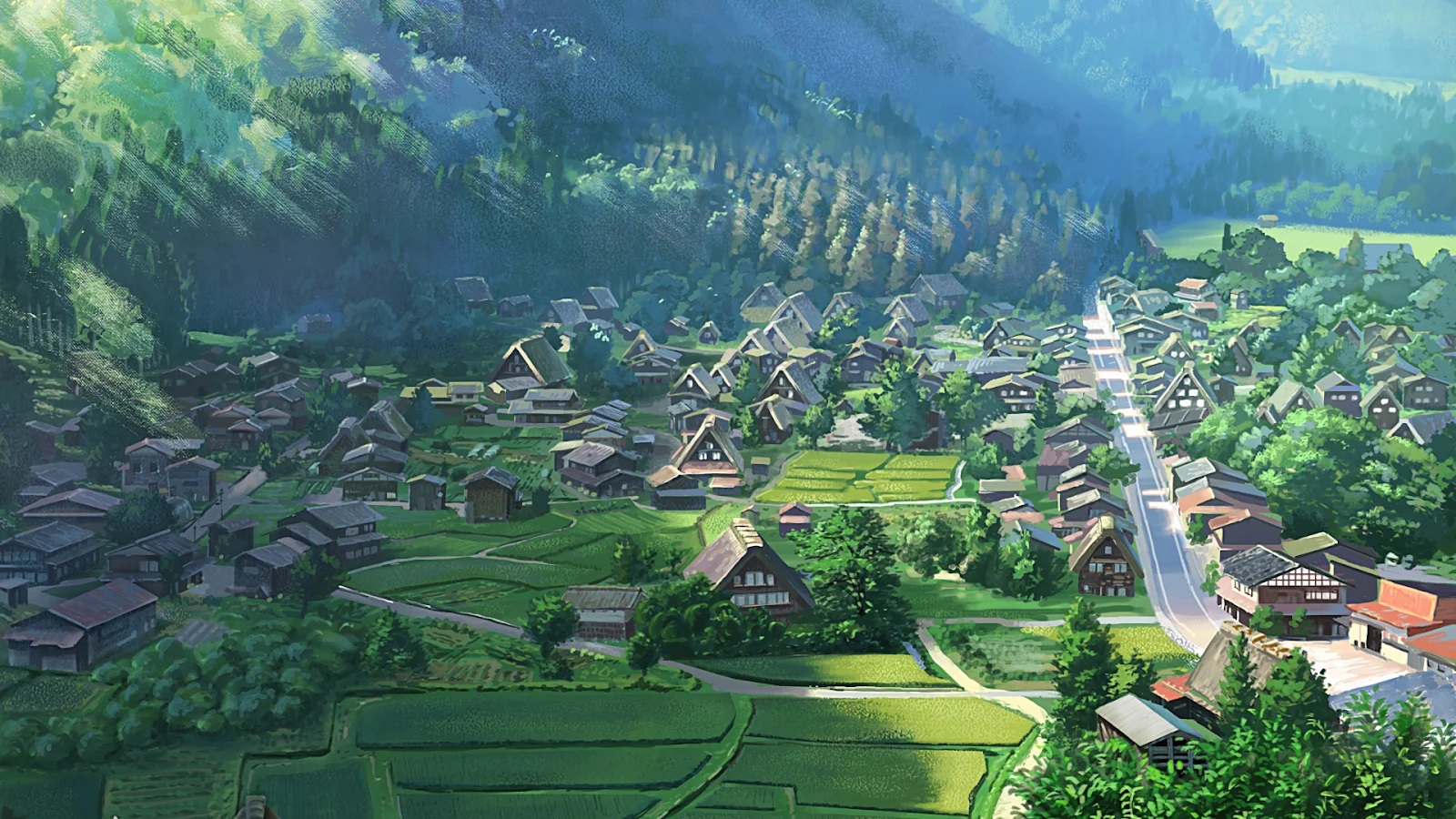
One thing I’ve been looking forward to in writing MU4 is that many scenes take place in locations that weren’t in the original trilogy. For instance, three of the first four chapters I’ve written so far take place outside the Bridgetown Sprawl, specifically in and around a small outpost town west of the city. It has specific ties to the trilogy, but as of now those ties aren’t the main focus.
It’s been fun and refreshing so far to write these characters in this new location. I’d been wanting to write a MU story set in the Wilderlands for ages! While this doesn’t solely take place here, a good portion of it will. This of course means giving the location a distinct layout, perhaps a map or two that I can use for reference, just as I did with Bridgetown. It’ll also have its own set of rules that I will need to follow. This is a special place in the mythology, so what happens here will affect everything that happens after.
Creating the setting has always been one of my favorite parts of writing novels, to tell the truth. Such as the city shared in two different universes/timelines for In My Blue World. The bayside cities and suburbs of Diwa & Kaffi. Even the small New England town of Meet the Lidwells. I love creating layers of this kind of background: its geography, its size and shape, its population. Little things that might not be completely important to the story as a whole, but certainly makes it more real.
Sometimes even I catch myself trying too hard to fit in. Yes, me. The one who’s always gone on about being a nonconformist and doing my own thing. We all do it, really: we make ourselves a bit malleable so that we can get along with our employers, coworkers, neighbors, whoever it might be. Adjusting our lives in small ways so we can be a part of a functioning and peaceful workplace or society. And that’s a good thing! There’s really no good reason at all to be an active misanthrope other than to attract attention to yourself, and there’s no good reason at all to be actively terrible to people other than selfishness.
But sometimes, when I’m not paying attention to the situation, that malleability will take over and become the default. Always trying to be everything to everyone, as Art Alexakis once sang. In the process I’ll lose sight of my core self. And next thing I know, I’m feeling miserable and wondering how I let myself fall into this predicament. I’ll have lost sight of what I wanted because I hadn’t established my own boundaries.
So I need to remember to make my own music.
I’ve told managers that I might not follow their exact process of workflow, but I’ll prove that I have my own that work just as well (if not better, and still within their established regulations) for me and will achieve the same expected results. I’ve told them that I can’t do any off-schedule ‘on-call’ work because I have my writing career. I’ve told them that sometimes their role-playing training doesn’t work on me because I’m terrible at that on-the-spot “repeat what I just told you” style of learning because of the way my memory works — make me do it in a live setting and I’ll learn by doing instead.
What I’m saying is that I have to remember that the worst I can do is go into a new work situation and establishing an ‘I’ll do whatever you tell me’ malleability. I have to remember to let them know that my style is this: tell me why I need to do something and give me the context, and I’ll figure out my own way to make it work. That’s how my brain works best, and that’s how you’ll get the best out of me.
It might not be the musical score you’ve already established, but it’s a melody that makes sense to me and achieves the same goal.
I’ve always wanted to create, ever since I was a kid. I knew early on I wanted to be three things: a writer, an artist, and a musician. Not just one or two of them — I wanted to be all three. It wouldn’t be something I’d learn overnight or through osmosis, of course. These were things I knew would be a lifelong learning experience.
The downside to this was that once I’d shared this dream with others, I was constantly reminded that, American capitalism being what it is, the expectations were super high. [Never mind the fact that whenever I mentioned writing as a kid, adults immediately expected me to follow in my father’s footsteps and become a reporter — which I did not want to do. I knew I wasn’t good at it, and it didn’t intrigue me. My strength is in making up stories.] Most of these expectations were learned by experience and by reading well-meaning advice books and columns: write this kind of fiction, always write in that style, shmooze with these people and you’re in. And in college: read these books, be influenced by that author, be a part of those scenes. I really hated that part of the creative field for a long time, to be honest: being forced into a mold I knew I wouldn’t fit into.
I tend to be the kind of writer who’ll read an article talking about bad things in fiction — prologues, dialogue tags that aren’t “said”, adverbs, whatever — and how I should never use them. Of course, the nonconformist in me (thank you, college radio!) always responded with, well, why not? I would use them anyway, not really to prove them wrong but to prove to myself that they can be used, one just needs to understand how they work to one’s benefit. For example, I play around a lot with unspoken pacing in my work as a subtle way to hint at impatience or exhaustion or whatever other emotion a character is feeling. It’s really fun to do and I’ve learned to pull it off. So I’m always worried that someone will read that scene and say it’s too slow, when I’ve spent a considerable amount of time deliberately making it slow on purpose. I know, it’s not for everyone, but I really enjoy doing it.
Anyway — I’ve been thinking a lot these days about just how much time and effort I need to put into my creativity and make it a strong career choice instead of just a hobby or a side thing. All this week I’ve hit 1000-plus words for all three writing projects, and just the other day I officially started up my Shutterstock portfolio page (it’s sparse at the moment but I’m working on building it up a few days a week). Yes, I’ve taken the plunge and also working on my photography. It’s long been on the backburner and it’s high time I started taking further steps.
That’s been my true motto with my creativity all this time: let’s see how far we can take this. It took me years to understand what I truly meant by that; I didn’t want it to mean ‘mavericky pushing the envelope’ or ‘shock value because I can get away with it’. I wanted that to mean, let’s take this creative outlet and play around with it, mold it into something worth expanding on, and make it a long-game career that I’ll always enjoy and dedicate time to. I did that in the late 90s with my writing. I’ve done it to some degree with my music playing. And now that I’ve realized I have another creative outlet that intrigues and inspires me — close-up nature and landscape photography — that I’d like to expand on. See how far I can take it. I’d like to think I’m pretty good at it to some degree (again, always room for improvement, of course) and I’m willing to take that next step to make it happen.
I call all this a fever dream because it feels like one to me sometimes. Dedicating that much time, energy and brain power to creativity is kind of weird if you think about it because most of the time you’re starting with absolutely nothing and making something out of it. I won’t say it’s “magical” as I so rarely think of it in those terms, but it really is unlike any other day job I’ve ever had. It’s following an idea and having absolutely no idea where it’ll take me, but trusting that I’ll get there if I trust myself.
It’s taken me far too long to get to this point, I’ll admit, but I’m glad I’m there now, and I won’t look at it in terms of regret. I’m here now, so let’s embrace it.
I’ve heard all kinds of advice about names in fiction. Some say you should really think it over before you chose a character’s name; others just suggest that you make the name believable and pronounceable. I think most of us have grown out of needing a Dickensian hit-you-over-the-head name like jilted sweetheart Rosa Bud from The Mystery of Edwin Drood, of course.
What makes a good character name, though?
I’ll admit that I don’t think too much about it. Just enough to make sure the name fits the character I have in mind. I go with the sound of the name and the mood of the character. Alec Poe’s name came to me when I wanted someone whose family was part of the collegiate crowd, and yet doesn’t quite fit his personality due to him being adopted. Caren Johnson’s name was chosen because I wanted her to have a simple name despite her very important fate, to the point that I spelled her name with a C instead of an K.
Back when I was first trying out this whole writing gig, I didn’t even go that far; I just picked names of people I knew. I knew three Scotts in junior high and used that as the Infamous War Novel’s central character. I knew a few Stephens in high school and used that for Belief in Fate. [‘Stephen’ became my go-to placeholder name for a lot of my stories at the time, especially around 1986 when I found it was Morrissey’s first name.] Come to think of it, I knew absolutely no Simons, and that was probably my first not-based-on-anyone character, again in BiF. I used Simon again with my anti-me Murph character (his full name is Simon Murphy — yes, it is in fact the same character who gets a cameo in The Persistence of Memories!), getting ‘Murph’ from the nickname of one of my managers at the college library.
It really wasn’t until 1993 when I started writing science fiction that I actually started focusing on choosing the right name, going just a slight bit further than just ‘because it sounds good’. The characters in the original Vigil story were newer and better names for older IWN characters. Most of the names in True Faith were chosen for a specific reason: there’s a family whose full names are all two syllables and the first name has double vowels; another family’s first names were only a single syllable and contained either O’s or A’s.
That’s when I realized that naming conventions could be used as a way to describe a family’s culture. I could have a bit of fun with them by briefly telling the reader about the character’s background without actually having to do an infodump. [There is a reason why the Shalei name is so prevalent in the trilogy: it’s an extremely common Meraladian clan name like the Vietnamese ‘Nguyen’ or the English ‘Smith’. It’s meant to show that they are the largest Meraladian clan in this story’s world, even if they aren’t all closely related.]
Since then I’ve stayed with my own naming conventions, especially with the new projects. There are a few characters named after the person or character that inspired them, and there are a few whose name fit their background. I still don’t linger all that long on finding the best one, just one that rings true to who they are and what they’re about. I’ve expanded over the years to include more names from different countries and cultures as well.
Do I have a list of names I’d like to use? Sure I do! It’s in my head, of course…one of those ‘I should use that somewhere’ lists that come up whenever I’m reading or watching something. I own a few baby name books and name-meaning books as well. I don’t think I’ve ever used a name specifically because it means anything, though. More that I’ll use it backwards; a character I’ve already named might have some secondary or minor traits that fit in with said meaning, just to expand on their background. Either way, it’s a necessary part of the writing process, and I’ve come to have fun with it.
And now I’ve gotten to the point where I’ve used the word ‘name’ so many times in this post it sounds like a silly sound effect in my head. :p


 Welcome to Bridgetown