Adventures in Self-Publishing: Cover Art

Almost-official cover, take two.

Today’s work included taking the step of buying a stock photo and finally utilizing my sort of decent art skills for future profit. I used the most basic plan on Shutterstock: $41 for five downloads, four of which I’ll use at a later time for the other two books in the trilogy, and maybe a future project or two.  That was the easy part.

The hard part was thinking three or four steps ahead before I even started. There are a few things that I had to keep in mind before I went anywhere with this.

Image Resolution. Many places like Smashwords and BookBaby require high resolution of the finished product. This is so your potential readers will see a nice clear picture on their e-reader, and won’t cause pixelation (i.e., it won’t look all blotchy and fuzzy if you blow up the picture larger than necessary).  Thus I downloaded the highest resolution, which I believe was 3400 x 3400 pixels. Much higher than necessary, but after cropping, it still looks good.

Cropping ratio.  This is something that is actually pretty important yet not too many people think about.  The most common ratio for e-book covers, I’ve read, is 1:1.33.  That is, 1.33 times taller than it is wide.  And looking at this cover take, that makes sense, because it’s roughly the same shape as most tablet and e-reader screens.  I admit I went a bit lo-fi here to figure it out:  I took a ruler and measured the picture on the screen.  In the above thumbnail here, it’s 2.5″ wide.  If you multiply that by 1.33, you’ll get 3.325″, which is very close to the height I ended with.

Fonts: color and placement.  I have to thank album covers for being able to understand this one.  For my example, the most important part of the cover, aside from the visual, is the title, right?  So in this version, instead of bannering it up on top like the previous attempt, I chose to spread it down the entire center.  The font had to be larger than the other two lines I’d be adding (the subtitle and my name).  BUT — it also had to stand out.  In this case, I asked for assistance from one of my artist friends: since I knew I’d be using this photo and that its primary color was blue, what is the opposite of blue?  [This is actually pretty easy to figure out: here’s a color wheel chart you should save for reference!]  In this case, it’s yellow, so I used a very light shade of it for the title, to make it stand out, even more than the subtitle or my name (both in standard white).  The fonts themselves were provided on the free version of PicMonkey.com…the title is Geo Sans Light and the other two are De Walpergen Pica.  All three were placed with a bit of ingenuity:  I aligned the sides of the text blocks with the sides of the picture, and had everything center-aligned.

Clarity.  My original outtake in the previous post used the Edo font on PicMonkey, but here my wife suggested a different, plainer font.  It’s a bit unexpected to be sure, because it doesn’t look like a genre font.  It’s classic and plain, but it still looks professional.  The trick here was to ensure that none of the words vanished in the white spots of the picture behind it; yellow stands out well against blue, but gets lost against white.  Everything is readable, and that’s the most important part.

Viewing it in different sizes.  This is another thing that sometimes gets glossed over or forgotten, but it’s actually quite important, and ties in with everything else.  Think of it this way — say you’re looking for that new book you know has just come out, but you need to scan the New Release shelves and the endcaps in order to do it.  Chances are when you see it, you’ll be at least a good ten or twenty feet away.  Same goes with e-books: when you’re browsing online, you’re not looking at the actual-size cover, you’re looking at a thumbnail cover.  This is another reason I downloaded the high-res version: the picture itself doesn’t look too sketchy, but more importantly, the fonts are still readable.  It’s okay if the subtitle is fuzzy; it’s not important.  What is important is the title and my name, so I had to make sure they were large enough to be read.  This is why I’d tweeted it right after I’d completed it:  I wanted to take a look at it on my phone, to see how it looked on a much smaller screen, plus I’d get feedback from my friends as well.

*

Granted, I already own Photoshop (a birthday present from a few years back), and I’m kind of lucky that I have a lifelong interest in art and a passable ability for it, so I’m able to do most of this myself, which is exactly what I wanted to do.  Some of you may want to hire out a professional cover artist instead.  There are many out there — The Creative Penn has some good links to a few out there, for instance.  And many of them are quite affordable.

In the end, the cover still remains one of the most important parts of the book (or e-book), because it’s the first thing every reader sees.  You can let the pros take control of the cover creation, and all you’ll need to do is explain the images you’d like to see.  But if you have the ability and want to go it alone, definitely keep the above in mind.  Don’t just throw something together and call it done, either; just like musicians, save a small handful of differing takes and use the one that works best.

And One Giant Leap…

First mock-up cover, thanks to Shutterstock and a half hour on PicMonkey.
First mock-up cover, with help from a Shutterstock sample and a half hour on PicMonkey. NOT THE FINAL VERSION.

Small steps.  That’s what writing novels has been about for me.  On the surface it may look like I’m one big mess of contradictions: deep focus on ideas but extremely haphazard drafts; some really tight writing balanced out with a handful of ‘screw it, I’ll fix it later’ placeholders; things that pretty much every writer needs to go through.  We create a hell of a lot more than what ends up in the final version, and a lot of it does tend to be directionless wriggling, trying to figure out where the hell we want the story to go.  A lot of small steps.  Missteps, steps into slippery mud, and blind kicks into the air, with the hopes that the end result is instead a well-choreographed saunter down a red carpet, fans cheering at the sidelines.

And one giant leap, making the decision to publish.

Last week, I made the decision that I was going to work with one of the indie self-publishers and finally release the Bridgetown Trilogy into the big bad world.

This past week I’ve begun preparing myself for an early September drop date.  Starting one final line edit of A Division of Souls, making various business decisions, starting a detailed spreadsheet for the accounting…and everything else that goes into releasing a book on one’s own.  I’m even making my own covers, with the help and feedback from others.

The one thing I did not expect during this process?  I’m enjoying the hell out of it.

The research into what publishing services would work for me?  The images I’d want for the covers?  What kind of expenses I’d be expecting to shoulder?  That is, the business side of all of this?  I’m really enjoying this part of it.  Never thought I’d admit that.  Certainly back in my early writing days, I was that writer who was all about the creative spark and saw the economic side of it as the death knell to creativity.  [Thankfully I got rid of that mindset right quick.]  Now?  I’m finding the ‘behind-the-scenes’ work just as fascinating as the writing.

I think it’s because I’ve made myself see it similar to the music business, of which I have a decent basic knowledge and a keen interest.  Bands rarely if ever go into the studio and slap down a perfect and complete album straight out.  There’s a lot of working parts, a lot of outtakes, presales boosting, word of mouth and other bits and bobs that may not be obvious to the passive listener, but are quite important to the end result.  Writing and publishing is very similar in that respect.  I’m fascinated not just by the creative process, but the amount of work it takes to make it professional level, making all the pieces fit perfectly.  I’ve not only been actively participating in all the levels, but I’m learning from them.

Am I going to be blogging about it as I go?  Of course I am!

This is the part of the business not many writers and blog readers get to see…and more often than not, this is also part of the business that writers tend to want to ignore (often for good and legitimate reasons).  In the process I hope these upcoming posts will also help others who are thinking of following a similar path.

So yeah.  Here we go.  One Giant Leap.

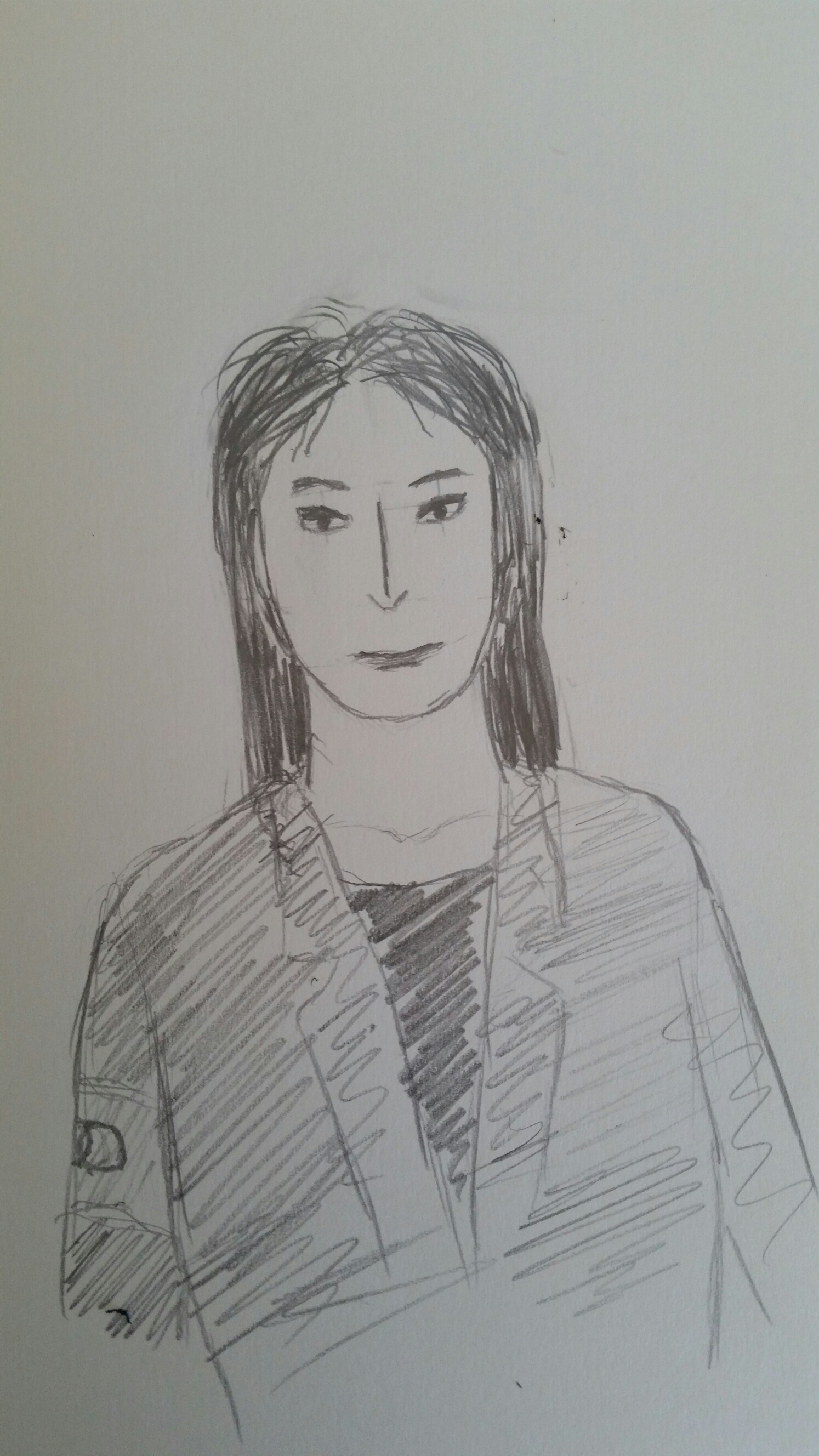
Character Sketch in progress

image

I’m not entirely happy with this one, though I do kind of like how it came out. I’m a bit frustrated because I wanted to draw Amna Ehramanis (Denni’s best friend), but realized the person was looking more like an adult than a teenager, and Amna is supposed to be very petite. So halfway through I made some changes and kinda sorta drew Akaina Shalei instead. Although I think I got the face close, she’s actually much more muscular, and is supposed to have the Meraladian wide face that Caren and Denni inherited.

[Short version: Akaina Shalei is one of two Mendaihu adepts who offer assistance to Caren and Poe, right after the Awakening ritual. She and her brother Ashyntoya have worked together as adepts for years and are highly respected. I will most likely redraw her and add Ashyntoya as a double sketch next time out.  Also, the patch you see on her right arm is the Shalei clan sigil of two intersecting circles, which is also used by the Mendaihu to signify Lightwalking, or dual realities.]

On Writing: Mental Playgrounds

I’ve mentioned before that I’ve been utilizing the daily word website 750 Words off and on over the last few years, and using it as a sort of ‘mental playground’ where I can have fun playing with ideas that happen to pop into my head.  In short, it’s a simple site where you log on and crank out at least 750 words for the day.  It doesn’t matter what it is…poetry, prose, automatic writing, it doesn’t judge as long as you hit the goal.  It’s a perfect place if you have trouble getting yourself started, but it’s also a great place for training yourself to write something without Editor Brain (or Revision Brain, for that matter) getting in the way.  I’ve used it for both, and it’s definitely helped get the writing juices flowing.

Now?  I use it as a testing ground for new ideas.  I’ve come up with at least three solid novel ideas this way, which will become future projects a little further down the road.  A half hour’s riffing on an idea really can go a long way, and with a few weeks’ worth of consistent work, one can have the makings of a complete outline, or at least a very rough draft.

Lately, I’ve been using it to try out different ideas for this new Mendaihu Universe story.  The first few chapters of any new project often end up sounding very disjointed and lacking continuity, and it’s very obvious that I’m still trying to figure out where the hell I’m going with it.  [Case in point, during my transcription from longhand to Word document yesterday, I noticed a scene starting midday, but changing to evening within a page.]  Which is fine, considering the first draft is always the roughest, but at some point before I get too far, I have to lay some ground rules.  I have to say, okay — enough floundering, time to give this story meaning and direction.

This is where the 750 can come in handy for me:  it’s what I call the outtake reel.  I’ll come up with a specific scene and riff on it, see how it fits in the context of the overall story, if it’s true to the characters, and above all, if the idea will be useful down the line.  Sometimes it’ll work, sometimes it won’t.  It won’t be the final take, but it’ll at least give me something to shoot for.  And with this week’s exercises, I found myself rewriting the same scene that I’d come up with way back in 1993 for the first Vigil outtake, only updated and with different characters.  I hadn’t planned on using the scene ever again, but it seemed to fit so naturally here that I ran with it.  It’ll most likely be somewhere in Act 2 of this current book.  In the process, it also clarified a number of plot ideas I’d had for this project, so I won’t be floundering nearly as much anymore.


Having a mental playground for your novel ideas is always a good thing.  You may have to train yourself (like I did) to realize that these are only rehearsals and rough outtakes and not part of the final version, but the outcome of these exercises is almost always fruitful.  By letting your characters run around freely, you end up learning a bit more about them, and in the process you’ll know how they’ll react within the scenes you place them in.   By letting yourself riff on an idea that may or may not even be a part of the current story, you might even come up with a much clearer idea of what you do need to work on.

You don’t necessarily need a site like 750 Words; it might be an ‘outtake’ document on your PC, a dedicated notebook, or a handful of scrap paper.  Whatever works for you.  Like I said, this is the rehearsal stage…it’s where you work out the idea, get rid of the stuff that doesn’t work, and work on strengthening the stuff that does.  And above all, it’s where you have fun with it, with Editor and Revision Brains off having a cocktail somewhere else.

A Division of Souls: More Character Sketches

image

Two more characters to add to the gang. These two ladies are good examples of what happens when you don’t have nearly as much faith in your home team as you wish you did…or are expected to have.

Saone Lehanna (aka Sonia Lehane) also has the luck of being the youngest daughter of an extremely important man, Natianos Lehanna, a very wealthy CEO who just happens to be the high leader of the Shenaihu faction here in Bridgetown.  Her older sisters are all shadow agents under Natianos and are already well integrated into his corporation.  High expectations to live up to, for sure.

There’s just one problem — she’s no longer a full-blooded Shenaihu anymore.  By mere chance, she happened to be at ground zero when Nehalé Usarai performed his Awakening ritual, which forced Saone to become a cho-nyhndah (an equal balance of Mendaihu and Shenaihu).


Kryssyna Piramados (aka Kristan Leguire), on the other hand, is from a regular blue-collar family o Shenaihu with a long history of agents in the Alien Relations Unit, and she’s just joined the Branden Hill HQ.  She willingly went through the ritual of becoming cho-nyhndah soon after Saone’s forced awakening, which has pretty much made her the black sheep of her own family.

She met Saone in college, and they soon became ch0-shadhisi (that is, lovers and bound by spirit).  Natianos dislikes Kryssyna, pretty much seeing her as a traitor, but to be honest, Kryss doesn’t give a shit about that at all.  As long as she and Saone remain together, that’s all that matters.

On Worldbuilding: Fluid History

John: “Hey there, Jeremy, what do you know about holes?”

Jeremy HIllary Boob, PhD: “There are simply no holes in my education.”

–Yellow Submarine

If you’ve ever watched any kind of documentary or series, there’s always some element of “we’re not entirely sure what happened at this point in time, but we can make an educated guess by looking at the following clues” or some such.  The further back we go in time, the harder it is to pinpoint the date of an event; eventually the most we can say is “sometime during the [x] Era.”   Those are extreme examples, though.  Sometimes our view of history changes within a few decades, when we look at the events of a specific time with the eyes of a different generation, maybe even a different culture.

I started thinking about this sometime ago when I started writing the new Mendaihu Universe story.  One of the subplots deals with the events that took place in the original Bridgetown Trilogy, though this new story takes place about seventy years later. Without going into too much detail, our histories of our heroes in that trilogy have become somewhat embellished, even after so short a time.  Denni Johnson, the teenager who had ascended as the earthbound deity the One of All Sacred, is now viewed as a saint, complete with a marble statue that thousands flock to and pray at.  Her sister Caren and Caren’s ARU partner Alec Poe, who never ascended as far as Denni did, are seen as more than human; Caren is believed to be an angelic protector, and Poe is seen as a Mighty Warrior.

And yet, all three were merely human.  Gifted with psionic abilities, just like anyone else in the Mendaihu Universe who have gone through an awakening ritual, but still — they were just as human as the rest of us.

Part of the focus on this new story is how certain people and events in history get changed over the years.  We may have documents, we may have databases and videos, but it still boils down to how the person or event is seen by the viewer.  We put amazing people on pedestals, even if their personalities were less than stellar, because regardless of their infallibility, they changed the world in some way.  The same could be said of horrible people as well; their vileness goes down in history as a grim reminder (even if, on a personal level, they weren’t one hundred percent vile).  We rarely look at these things objectively; we always have some emotional attachment to them, however big or small.

The evolution of historical accuracy fluctuates a lot more than we’d like it to, quite often because of this emotional attachment.  In this new story, the views of the new devout (those who follow the steps of the One of All Sacred — that is, Denni — and hope to find clarity in their lives) have become reasonably established.  However, schisms have already broken out; there are those who see Denni as a savior, and others who see her as an ascended but flawed human.  There are the Elders, the spiritual leaders who have been around for centuries, who are also splitting: those who have embraced the evolution of belief, and those who want to retain the status quo.

It’s a bit of a mess, but that’s the fascinating part of history as it happens.  No one really knows what the hell is going to happen next until it does.


A Division of Souls: Character Sketch!

image

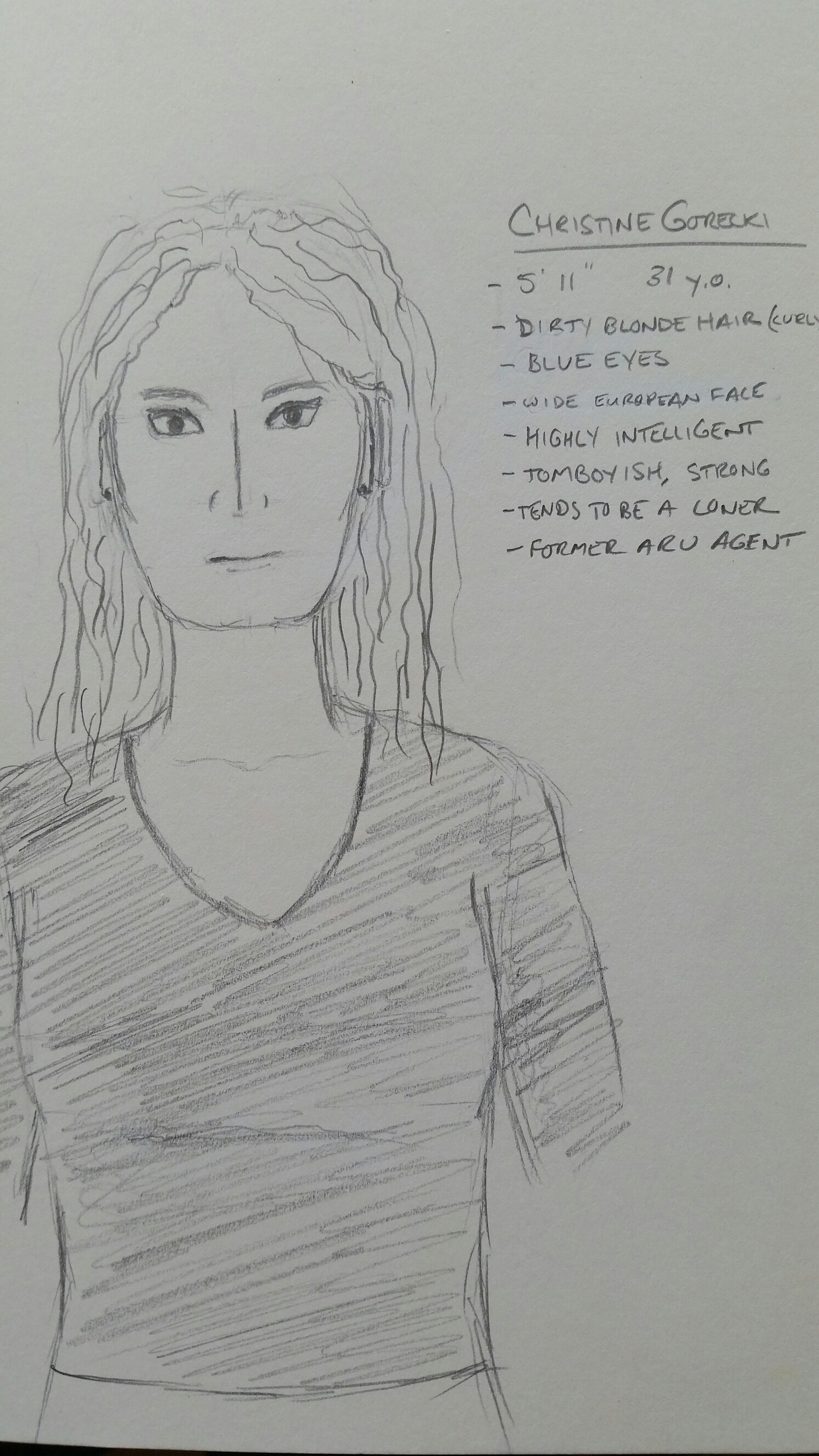
And we’re back! My first bit of artwork now that I’m back on the whiteboard schedule is another character sketch for the Bridgetown Trilogy gang.

Christine Gorecki has an interesting background, as she was originally a tertiary character when I created her late in the ADoS story; she shows up in person in the last third of the novel when I needed to have someone ARU-related meet up with Sheila and Nick during a specific point in the plot.  I ended up really liking her and gave her a major role in the trilogy.

She’s somewhat of a lone wolf.  She’s highly intelligent and resourceful and originally used that to her advantage while she was part of the Alien Relations Unit.  She’d decided about six months previous to the events in ADoS to take a temporary leave of absence to clear her head and deal with some very personal issues, and in the meantime she’d started freelancing as a detective as well as a low-level healer, which she runs out of a storefront on the ground level of the apartment building she owns.

Christine shares a very close friendship with Alec Poe; she is often the first person he thinks of when he needs outside (non-Vigil) help, and trusts her completely, and the feeling is mutual.  She’s also close friends with Caren Johnson and her sister Denni, and looks after them from a distance.

On Selling the Book: Who Is My Audience?

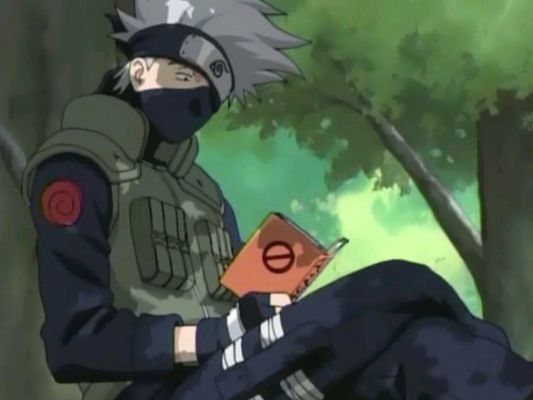
Kakashi from Naruto, @Masashi Kishimoto
Kakashi from Naruto, ©Masashi Kishimoto

It’s come to that point, and I don’t think I can avoid it anymore.

Who is my audience for the Mendaihu Universe novels? I admit it’s something I never really took took seriously while writing the Bridgetown Trilogy in the first place.  Sure, I bashed some of my ideas out with my coworkers while working at Yankee Candle, and I know a few of them have been waiting way too long for me to release these damn things.  I’ve talked about this universe here and there online for years.  I’ve had a small handful of beta readers over the years.  And then there’s me, the one who create the series, who loves writing within it.

And thinking about how to sell the thing to potential publishers, agents or readers is something I haven’t exactly wanted to think about too often, because I hate dealing in sales.  I had a telemarketing job back in ’93 and it was soul-sucking, and I lasted all of three months before I left.  Not that I can’t sell things I’m interested in — as mentioned earlier, I could upsell you records like no tomorrow — but it’s just not something I enjoy doing.  And come to find out, a lot of writers I know are in the same boat.

But seriously — who is the target audience for this universe, anyway?

I have a few ideas on who might enjoy reading this series, and though I’ll be shamelessly upselling to everyone in general, I know there are a few subsets of genre readers out there who might really enjoy the books, and I’ll be giving extra focus to those readers when the time comes.  [The actual upselling can be pretty tricky as well…there’s a fine line between selling it to a potential audience and billboarding yourself everywhere.  Something to think about.]

But who should I sell it to?

Well, that’s a good question.  I consider myself lucky that I’ve gone to various sff conventions, and that I have a reasonably large group of online friends and acquaintances so I’m familiar with what kind of readers are out there.  There are those who’ll read anything.  There are those who will only read military sf, or hard sf, or sword and sorcery, or paranormal romance, or what have you.  There are slow readers, speed readers, those who love short stories and those who love doorstop novels.  If I had to narrow it down, I would say my potential readers would be a mix of general genre readers, urban fantasy, and future sf, with a bit of fantasy realism in there as well.  [I think some manga readers/anime watchers would also enjoy the series, and that’s why you see Kakashi up there.]

Part of the trick is not so much to say “I want to sell to manga/fantasy/future sf readers” but to say “How can I capture the interest of this particular fantasy reader?” and adjust accordingly.  That’s part of what ‘knowing your audience’ is about: understand who it is you’re showing your wares to, and speak with them, not at them.  That’s something I learned in my day job, actually…don’t demand their attention, but pique their interest.  Your pitch will be a lot less stressful that way.

I’ve been thinking about this over the last few months — mind you, I’ve been doing a lot of research on this, not just hemming and hawing (although there’s been some of that as well).  I don’t want to do this half-assed.  I know if the response to the initial launch is crickets, thankfully I should be able to pick myself up, dust myself off, and launch it again, the right way.  There are way too many moving parts in this game, and I can totally understand that it can be frustrating, and one missed part can send the whole contraption falling down in an avalanche.  I’m hoping all this homework paid off, however, because it’s almost high time to get these things out in the world.

On Writing: Coming Back to Music

One thing I didn’t expect to revisit while writing the new MU story is to visualize the scenes I’m writing based on a specific song.

I used that sparingly during the original writing of the Bridgetown Trilogy; there are very few scenes where, at least in my mind, a specific track should be playing.  The final scene of A Division of Souls having Failure’s “Daylight” playing.  A scene of Alec Poe driving down a highway with Supreme Beings of Leisure’s “Strangelove Addiction” playing.  And so on.  I never mentioned them in the book outright, of course.  The scene was never based specifically on the song, it was only background that happened to fit.

Come 2015, I’m writing the second chapter of the new story, in which a character has stepped into Light and is soaring over the extended metropolitan sprawl of Bridgetown, sensing the presence of everyone he flies past as he heads towards Mirades Tower.  I’m about a page in, when Dot Allison’s “Message Personnel” pops into my head.  I play the song through with its peaks and valleys of psychedelic ambiance, and the next thing I know…the entire rest of the scene plays out crystal clear in my head, just waiting to be written.

I haven’t written a scene in that manner since…well, since I wrote the Infamous War Novel almost entirely in that fashion, nearly thirty years ago.

I found myself doing it again just the other day, as I was writing the start of the new chapter while flying home from London.  The in-flight music selection happened to include Led Zeppelin’s recent remaster of Physical Graffiti, which meant I got to listen to my favorite LZ track, “Kashmir”, in all its epic glory.  I’d used the song in the IWN, so it was to some surprise that the lurching bombast of the track somehow lent itself to the scene I was writing that moment, in which another character has ascended towards a higher aspect of the kiralla (a dragonlike form meant to be one of the highest forms of spirit in physical form), and she’s reveling in the fact that she’d ascended all on her own without training or ritual.  The track screams BIG, and so does the scene.

It’s kind of weird to revisit this old writing process of mine that helped me finish my very first novel when I was a teenager, especially when I wasn’t expecting it.  I’m not planning to lean on this style exclusively, though now that I know it still works to some extent, I’m not exactly going to avoid it either.  Whatever works to get the scene done how I’m visualizing it.

Back to the Grind

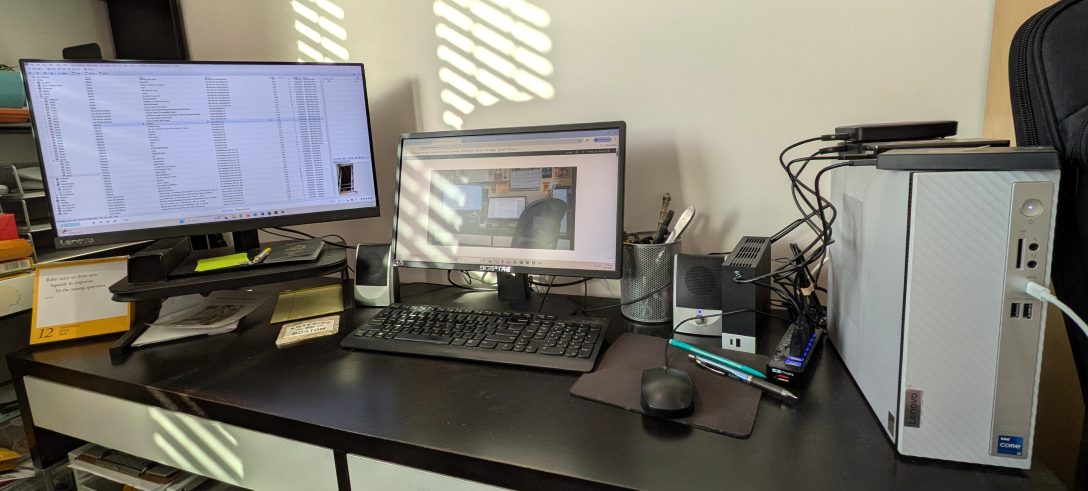
Spare Oom awaits.
Spare Oom awaits.

It’s been a crazy couple of months.

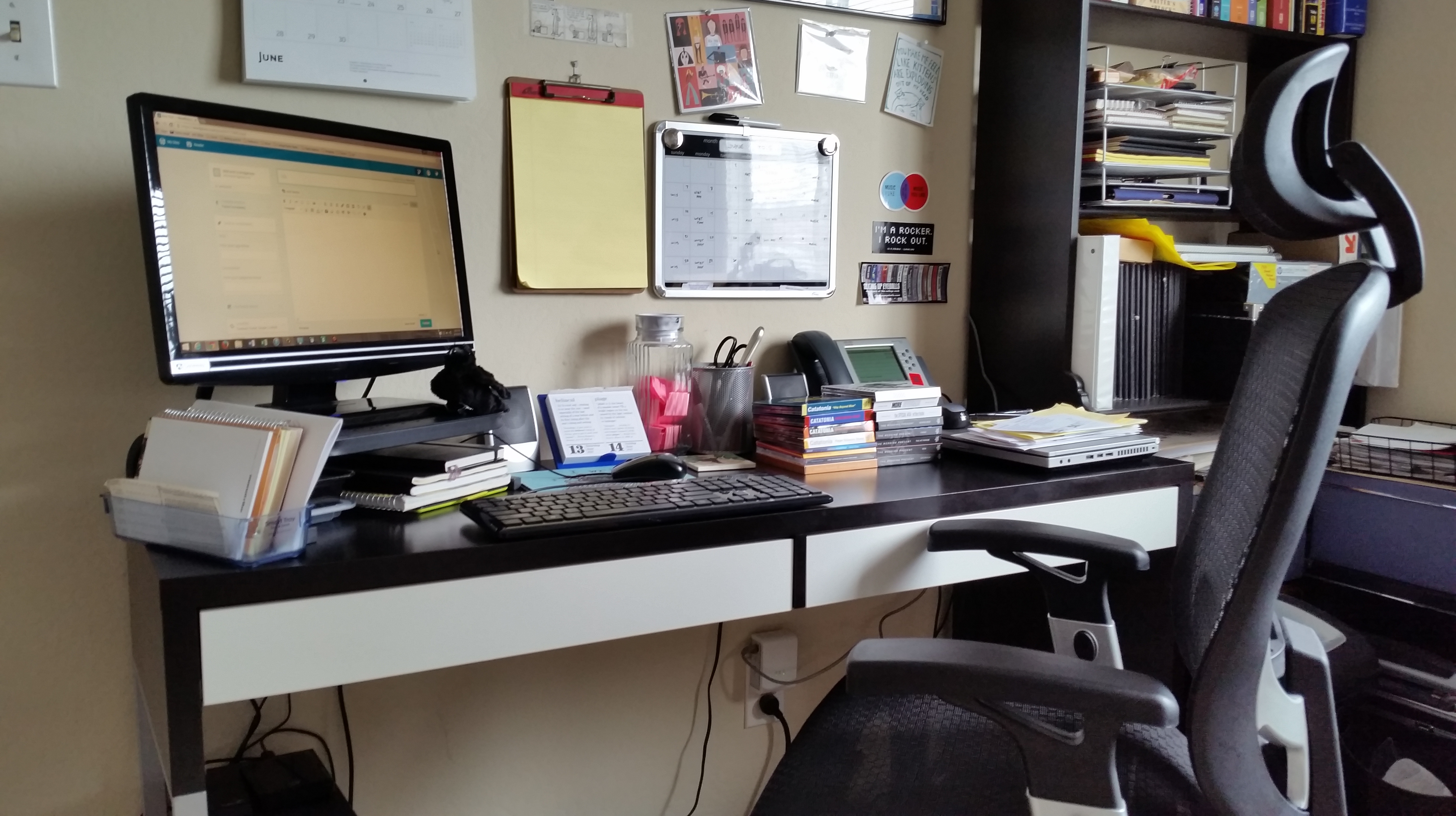
Between the trips to New York City and London, the weekend plans, multiple work-related issues and everything else, I’ve been so full up that I’d made the decision to clear the whiteboard schedule, temporarily stop work on a lot of creative projects, and focus only on the most important ones.  That meant that I focused almost all my creative juices on the new Mendaihu Universe story.  Little by little, I let a few things in as time permitted, such as guitar practice and photography.

Now that all the major events are out of the way for the time being, it’s time to get back to the grind and open up the floodgates a bit more.  I’ve replanned the whiteboard schedule again; I’m not filling it up too much just yet, but I’ve added art, music and work on the Walk in Silence book back into the mix, and moved the updating of the WtBT blog to Mondays.  I may revisit the daily 750 Words if time permits.  And musically, I have a few ideas I’d like to record in demo form as part of the Drunken Owl project.

The temporary hiatus did have its positives, as I was able to provide better focus on what needed it, and still have time to relax.  I was also able to recalibrate how I viewed my writing — not just the output but the style, and looking at what can be adjusted — to the point that I should also be able to do the same with my other writing projects that I put aside.  Long story short, I’ve realized that the best practice (to borrow an annoying work-related phrase) for me is to do most of my writing longhand and use my PC time for revision and rewriting, and that’s how I plan to work from here on in.

These last few months have been a relaxing reprieve, but I’ll say this:  it’s great to be back on schedule again.