Twenty Years of MS Word

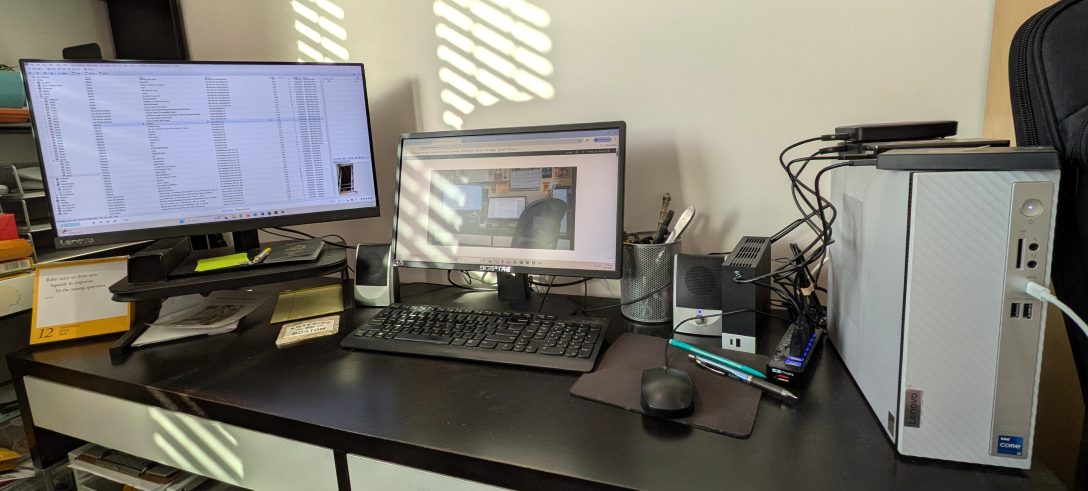
In writing something elsewhere, it suddenly occurred to me that I’ve been using MS Word exclusively for twenty years now. I believe it was sometime in March or April of 2003 that I bought my first completely new PC off the Dell website. With my own money and everything! I’d been using the previous writing programs that came with Windows 3.1 and 98 — MS Write and WordPad — and I realized this would be an excellent upgrade. This was one of those ‘customize your own personal computer’ specials Dell had and I spent the slightly extra money to have that added along with a decent media player that could play cds and dvds. I wasn’t (and still am not) a PC gamer so all that processing power and speed went to those two apps.

Over the years I’ve heard many pros and cons of Word from the writing community. Some swear by it, others swear at it. I’ve heard many writers suggest other programs and refuse to touch this one. Me? I’ve had nothing but pleasant experiences with it. I don’t think it’s ever crashed once on me (not including when it was actually the PC doing the crashing). As long as I keep up my habit of frequently saving my work (thanks, Dropbox!), all is well. Even now that it’s part of the Office 365 umbrella, It’s worked a peach.

All of my novels from A Division of Souls forwards were written, edited and revised using Word, and it’s even used to do the formatting for their Smashwords editions. I’m using it now for MU4. I’ve learned how to use more of its fiddly editing and formatting functions and they’ve pretty much become part of the tool bar at the top header.

I’ll use a Word-like app for reading on my tablet and e-reader, but I don’t plan on switching to anything else at this point.

Movement

One of the things in the back of my mind while writing MU4 has been that as much as I enjoy a nod to a previous story, the last thing I want to do is open this novel the same way A Division of Souls did. This is partly why it’s taken me a good couple of tries to nail the landing in these first few chapters. The stakes are just as high, but they’re different stakes this time.

I’ve also been reminding myself that this is a universe that is in constant motion. Sure, there are moments of quietness and contemplation in these stories, but that’s when the mind is in motion. This is how I remember writing the previous novels: every session has to have at least one scene where something moves. It can be incremental, or it can be the steadfast refusal to do so, or it can be a rash unthinking decision.

The Mendaihu Universe always had a theme of Balance In Motion; there are a few scenes in the original trilogy where someone says that life is always changing and never static (or something close to it), and it’s up to ourselves whether to move with the changes or stay in one place. Denni’s decision in this case was the one that changed fate: she chose the former, to adjust her role as the One of All Sacred when and where necessary. No former Ones had done ever done that.

So what about MU4, then? Well, without giving too much detail, let’s just say there’s a schism going on: the ones who have adjusted their fates and those who have refused. One of MU4‘s themes is about how far people will follow those paths. There’s dedication, and then there’s extremism. There’s response and then there’s reaction.

I’m just as curious as you are to where all this movement will take us.

Patience

I’m usually pretty good at being patient. If I have to wait for a certain length of time, I’m not all that bothered by it because I’m good at keeping myself occupied in the meantime. [This is especially helpful when I’m working a very busy eight hour shift at the day job. The trick is that I break it up into two-hour increments, and take my lunch or my ten-minute breaks in between.]

Writing a novel, on the other hand, can sometimes be a lesson in just how long I’m able to wait. It’s a different kind of time management, based on the pacing of the story and the time I’m able to spend working on it. In this case, working on MU4 has definitely been a case of patience-testing. I’m purposely not distracting myself with other more compact story ideas, which has happened in the past. I’m determined to see this one through. I do have distraction issues of another sort, however, which I’ve mentioned plenty of times: the Don’t Wanna’s. It’s not that I don’t want to write the story, I just don’t wanna do the work.

Once I get past that, however, I’m good to go. Power up the Word document and get stuck in. And once I’m there, patience is the last thing I worry about: I rely solely on what I need to write at that point in time. Whether it’s a lot of words or just a few, I give the best I can, and that’s when I enjoy it the most. That’s when I realize I could do this all damn day if I wanted. [And have, though rarely.]

It’s after I finish the session when that patience-testing comes in, of course. It’s when I’ve written just a few hundred words and the scene has moved ever so slowly and I’m far from finishing it, that’s when I want to surge ahead and get to the next scene! It’s not that the scene is glacial; it’s just that I’m moving slowly and deliberately.

But I’ll get there, sooner or later.

Writing inspiration: John Lennon

I picked up John Lennon’s Skywriting By Word of Mouth not that long after it came out in the mid-80s, probably sometime around the start of my junior year in high school. It was a collection of his post-Beatle writings mainly composed during his five-year hiatus in the late 70s. Some of it was autobiographical, but a considerable part of it (such as the above) was in his classic absurdist style, and I was immediately drawn to that. I was a kid that loved puns and wordplay, and I was immediately drawn to its stream of conscious humor and weirdness. I loved the idea of utterly random phrases woven together by shared words and homophones.

This in turn inspired me to write such things in a similar vein, my own versions written on the school computers (we had Apple IIcs in the computer lab, where I wrote this sort of stuff when I wasn’t playing Lemonade Stand or Jungle Hunt when I should have been doing homework). I think part of it was the need to find another creative avenue after multiple years stuck in the Infamous War Novel, and a need to just have fun. My version of this nonsense verse was heavy with music references (“sunshine in the shade and drink their lemonade when the sun shine my shoestring on my guitar”) and written under the nom de plume Johannes Brezhnev, with the title Oy Vay. [I don’t entirely remember why I latched onto that Yiddish phrase, though it may have been used in a then-recent Bloom County strip, of which I was a huge fan.]

I still have the original printouts! I haven’t read them in years, so I’m sure some of them have not aged very well at all — after all, this is part of my juvenilia pile — but every now and again I bring back that style just for funsies. When I’m a hundred or so words short doing my 750 Words and have nothing of import to write, I’ll bring the style back out (I now refer to them as “wibblies” because why not).

It’s nonsense verse and serves no purpose, but it’s a lot of fun to write!

Slowly getting there

I’m definitely not hitting any huge numbers or even finishing scenes as of yet, but I’ll hit those goals once again, soon enough. I’m not going to push it. Right now, my only writing goal is to get something written. The other day it was a little over six hundred. Tonight it’s probably more like two hundred.

Again, this is how I remember writing A Division of Souls: at the beginning of the project, it was about forward motion, even if it was a little at a time. This allowed me to take my time absorbing the scene and the characters within it, really get to know them a bit. These are mostly all new characters I’m introducing right now, the main cast that will take over where the original gang left off, and I’m learning about them as I go. This has already paid dividends as I’m getting to know one of the new mains more intimately, flaws and all. Which lets me figure out what’s going to happen next.

So yeah, that’s all I have to report here right now. Here, have a new groove from Unknown Mortal Orchestra that’s been playing on my PC lately!

Making that connection

The hardest thing about writing MU4 so far has been making a personal connection with my characters. I know what I want from them, and I think I know how I want them to evolve, but getting to those points has been fraught with missing by inches.

I also know, this time for a fact, that I’m not trying hard enough. I’m still suffering through waves of the Don’t Wannas with an equal serving of Easily Distracted. I want to write this novel, damn it all, I’m just avoiding working on it, and I’m starting to piss myself off because of it.

If this means I have to take desperate measures, I’ll do it. I’ve already uninstalled or removed several apps from my phone to minimize distraction during Day Job breaks I should be spending less passively. But though I’ve been doing all my actual writing work at home and I do close my web browsers come writing time, I still have too many distractions. If this means unpinning nearly every shortcut from the Task Bar, so be it. Making it harder to open distraction apps usually works for me simply by utilizing the Out of Sight Out of Mind method, and I’d rather not use one of those ‘won’t/can’t open until forty-five minutes pass’ apps if I can help it.

Still — the issue remains that when I am writing, I’m still not quite making that connection. I’m not connecting on that emotional level I’m aiming for. They still feel too distant. And again, that’s a personal issue I have to work through: I have to let myself establish that level, allow myself to take that deep dive. I know I can do it and I’ve done it before.

Eventually I’ll make that connection I’m longing for. I just need to keep trying.

Connections

I’ve been thinking a lot about what some of the themes in MU4 might be, and I think one of the most important is about personal connections; the ones we make, the ones we destroy, the ones we wish we had and the ones we protect with everything we have.

I posted a rough version of Chapter 1 some months back, in which a young woman named Eika is dropped off in a deserted town and forced to undergo a solo trial to prove her worth as part of the Order of the Blessed Ones. Her story of connection is about the utter lack of it in her failure to live up to her family’s and community’s expectations. In Chapter 2 we’ll see the connection between two new Alien Relations Unit officers, Lizzie Kapranos and Ruu-Sseikassi Tiiegasi, who will have a somewhat unconventional connection with each other that’s different than Alec Poe and Caren Johnson’s in the previous books. And later on we’ll see an arc about Ampryss and Shirai, and how their connections to their original fates have changed because of the Season of the Ninth Embodiment.

I’ve chosen ‘personal connections’ to be one of the backbones of MU4 (and possibly other related stories) partly because of what Denni Johnson did near the end of The Balance of Light: she pretty much broke all the rules and expectations and sent fate off in uncharted directions. Every detail, every question and every choice is related to what connections the characters make, because that is the only anchor with each other that they truly have.

Of course, this isn’t about strict maintenance of those connections…like I said, it’s also about how they can be destroyed, and why.

But then I’d be giving away too much if I kept going, heh.

More on Distraction

Yes, Cali and Jules (see above) are definitely distracting, in a good way. Especially when they get all cute and cuddly and want our attention. But that’s not the distraction I’m talking about.

I’ve fallen behind on my work on MU4 partly because this past week I’d worked mid-shifts at the Day Job for three of the five days, Tuesday through Thursday, followed by two early mornings starting at 5:30am. My brain’s been a little loopy because of it and the most spoons I had was to maybe do a bit of reading of what I had so far.

I still have the same distractions I’ve had since we moved out to the west coast, of course — fiddling with the music library, refreshing the social media timelines, cleaning out the email inboxes, things like that — but I’d like to think I’ve gotten better over the last couple of years, especially now that my Day Job isn’t a high-stress brain melter and that I’ve cleaned out the detritus up there. I’d say my worst distraction right now is simple avoidance: purposely finding other things to focus on to avoid doing the actual work. The good thing is that’s an easy thing to combat, simply by shutting down those browsers and starting the work whether I’m ready for it or not.

I find that’s the most common start to a writing session when I’m distracted. Most of the time I am ready for it and the output isn’t all that bad (and when it is bad, I try not to dwell on it for long and remind myself to fix it next session). I’m simply just delaying because I’m trying to get the session mood just right. [Hey, remember during the Belfry days when I used to waste a half hour deciding what cds to listen to? Some things never change, do they?] My workaround has been the same thing since I came up with it in the mid-90s: just shut the f*** up and DO it already.

And that still works to this day.

Hopefully this coming week will be better! My schedule is mostly mornings with a day off midweek, so I should be able to work through the lingering Don’t Wanna’s and make some progress. There probably won’t be any new words, but I can at least revise and improve this newly reinserted chapter and work out how to go from there.

It’s okay, just…keep going

Image courtesy of Recovery of an MMO Junkie

I think I need to rewrite Chapter 2, and I’m not entirely happy about it. But it has to be done.

I’ve got a good handle on what needs to happen in the chapter…but this first attempt doesn’t quite stick the landing. I’m pretty sure it’s because I’m writing it from the wrong point of view. The way I have it now is that it’s a nod to the opening of A Division of Souls, but really lacks the oomph I want it to have. It lacks the important conflict that will set the course of the rest of the story. It’s causing the pace of everything else to slow down considerably, and that’s not what I want.

I guess when you’re a deity followed by multiple worlds, you get a little jaded by the repeated nonsense that goes on? So maybe not from Denni Johnson’s point of view…maybe from Alec Poe’s instead? I mean, he spent the entire Bridgetown Trilogy trying to maintain a balance that normal people wouldn’t be able to handle, so maybe he might be a little cheesed off that this bullshit is still happening.

Yeah, that works for me.

I really should be used to multiple takes of early chapters by now, and right now I’m reminding myself that this is all part of the job. Just cut it out, paste it in the Outtakes document, and keep going. That works just fine. I think I’ve done this enough where I can bypass the temporary freak-out of thinking I’m a failure or that I’ll never get this thing off the ground. I hope…? Anyway, I’m not going to let such a minor error cause much of a problem. I’ll just need to start again!

On Gender and Pronouns in Character Building

One of my coworkers at the Day Job goes by they/them pronouns. I do my best to use the correct ones, though I’ll slip sometimes. After working with them a short time and getting along quite fine, I told them to feel free to correct me at any time — in fact, if I slip in their presence, they are free to slap me on the arm. [And they have, much to mutual amusement.] I’ll still slip from time to time, but I think I do pretty well now. In fact, it’s gotten me thinking a lot about others I work with or the customers I meet, wondering if I’m using the right pronouns they prefer, and it got me thinking a lot about how I write gender in my novels.

I’ll admit I didn’t know much at all about the gender spectrum when I began writing the Bridgetown Trilogy back in the early 00s. I mean, I did, but I didn’t have all that much real-life experience at the time to base it on other than movies and books that may or may not have done it justice. I did, however, encourage myself to insert characters with different sexual and/or romantic preferences. Caren, for instance, is bisexual. Sheila is lesbian and Nick is asexual. (Alec is purely hetero but he accepts the entire spectrum, which fits his character.) The closest I got to it was hinting that Colin was a variant of the gender spectrum, which gets explained in a bit more detail in The Balance of Light — the reveal of who Colin really is, and how there are others like them, is actually tied in with the book’s thematic concept of balance.

It wasn’t until maybe the last ten years that I realized that maybe I should expand my central casting a bit more. I’d learned a lot and expanded my knowledge and experience considerably by that point, so it only made sense to use it. In My Blue World, for instance, includes both nonbinary and trans minor characters that I put there for that reason. And in MU4, I’ll be introducing two new soon-to-be majors, one of whom is trans and the other is nonbinary.

I realize that some writers are worried that they’ll do it wrong: placing this kind of person in there for the gold star (Hey look, I’m inclusive n’ shit! Gimme a cookie!), creating this character for manufactured conflict or drama (the minor role/target that ends up dead because Real Life Is Gritty), or something similar. I knew I’d fall into that same trap if I overthought it or constantly worried about it, so the way I approached it was to approach the way it is in real life: hey, some people are just trans or nonbinary or queer or whatever, simple as that. No literary reason except that’s just who they are, and that’s how life is. I do expand on their character description as necessary to ensure they read as such, but I’m always conscious of making them realistic instead of a caricature or a stereotype. I don’t create these characters for political reasons, because that’s not the kind of writer I am (and believe me, I’ve tried that route and I am absolutely terrible at it). I create them because it’s like meeting my coworker for the first time: they just happen to be such, and it’s up to me to honor that.

And just like my coworker, I have to make sure I use the correct pronouns. In Theadia one of the main characters is nonbinary and I had to make sure I constantly used they/them. And yes, I did have to fix it in a number of places during revision! I totally understand that when you’re taught that he/him and she/her are the socially correct defaults, it’s sometimes easy to forget when you meet (or in this case, create) someone who doesn’t go by that default. It’s not about going out of your way to please them; it’s just about creating an alternative to make it work for both sides.