Who Are You

One of the many preparatory steps I’m taking for the upcoming New Project (Nothing to Do with the Trilogy, Honest) is thinking about new characters.  Of the two projects I have on deck, I’ve decided that I’d like to know more about the characters ahead of time, before I get any actual writing done.

I’ve done this before with the trilogy, but for the most part they were in my head.  Considering I pretty much knew a lot about them by the time I wrote the three books, I could get away with that.  However, these new projects are different.  I’d rather not wing it this time.  [I mean, I can if I have to…but I’d rather not.]

In this instance I’ll be creating character sheets.  Nothing too detailed or intensive, just enough for me to use as reference.  I’ve seen many webcomic artists do this; they’ll have an image folder or scrapbook that will have the basic character designs, but will also include fashion photograhy and color palettes (personal styles), celebrity casting (what they look like, facial expressions, different angles, etc), unique physical attributes (hair, piercings, etc), and so on.  I did something similar to this for some of my trilogy characters, adding things like their birthdays, current addresses, and so on.  I rarely had to pull them out for reference, but they were good to have on hand just in case I’d erred in description somewhere.

I also usually add a map or two as well.  I drew a basic layout of Bridgetown early on for reference and it came in quite handy multiple times.  I will most likely do the same for one of the two upcoming projects.

It does sound like I’m purposely limiting the amount of pre-work I do.  It’s true, I don’t like to give my outlines all that much detail, at least not on a long-term basis.  Just enough so I know what to write within the next three or four chapters and a vague idea of the direction of the novel as a whole.  The same goes with the characters; the most I’ll do is create a character sheet that will remind me of the basics so I can remain consistent.  Essentially, something I can anchor the character to.

There are numerous books and articles out there suggesting how to create characters with depth, and I’ve read many of them.  They all have great ideas that will help you create a better novel.  I’ve always tended to uses these suggestions as a baseline rather than concrete directions, and that’s worked just fine.  There’s no right way to do it other than whatever works for you.

Juggling My Writing with the Day Job

juggling2
This is about the extent of my actual juggling proficiency, tbh.

Juggling between Day Job and Writing Career can be a tricky thing.  I’m lucky in that I work from home, which affords me time to listen to music as long and as loud as I like, plus my commute is about twenty feet from my bed and into the next room.  But there’s not a lot of time to do much writing work, even during slow times.  We both wake up around 6am and start our days at 7:30am.  I have a half-hour for lunch at noon, and two fifteen-minute breaks (one in the morning, one in the afternoon).  Then there’s the time right after work, where we’ll occasionally head over to the local YMCA for some exercise and getting off our duffs.  We’ll have dinner soon after that, when we return.

That gives me about two hours in the evening during the weekdays to work on whatever project I happen to be on.  We’ll get into bed around 8:3oish and read for an hour or two before passing out for the night.  Like any other writer, I really wish I had more time to work with.  But somehow I pull it off.

How do I do it?  Well, a few things, really.

Assigned time.  My midmorning break (around 9:30am) is when I do my longhand writing.  Specifically, I write a daily entry in my moleskine journal.  I don’t give myself a subject to write about; it’s just a personal entry of things on my mind at time.  It may or may not have anything to do with writing, but as long as I’m writing something, that’s all that matters.  The afternoon break (around 2:30pm) is less structured, but it’s there for me to use if need be.

Being conscious of the use of my time.  Not gonna lie, I get sucked down the Wikipedia rabbit hole and the cat gif vortex and the Twitter noise just as often as everyone else does.  I’m okay with a bit of goofing off now and again; it gives my brain a rest, especially if the Day Job has been stressful.  But I’ve also trained myself to shut down the browser as soon as I realize I’m just wasting time.  [An unexpected plus is that my reaction time has gotten faster; I’ll waste five minutes instead of fifteen now.]

Being on a roll.  Sometimes I’ll get into a groove and not want to stop.  Why stop when I can still go?  I used to do this all the time with my old Belfry writing habits, and I still do it with the housework, so why not?  I’ll get one blog post done, and if I have enough time, I’ll write another one.  And if I’m still on that roll, maybe I’ll work on something else.  At least until i get tired or get diverted by something more important.  The downside is that I might exhaust myself now and again, but it’s a small price to pay.  This works out especially well if I’m having a slow day at the Day Job.

Planning out my day.  This is where the whiteboard comes in.  I’ve made it a point that I want to write two blog posts a week for each site.  For the most part I’ve been keeping that, even though some of the entries have ended up going live in the afternoon (like this one) rather than first thing in the morning.  [That’s been my own fault lately.  Still working on the planning part.]

And of course, deadlines.  I haven’t given myself a strict deadline for when I finish editing The Balance of Light, given that this one’s getting a severe surgery as compared to the other two, but I’ve at least told myself that I want it done by the end of the year.  This worked out well for the other two books: I’d chosen a specific date at least a month and a half in the future as the drop date and made sure the book was finished at least a week beforehand.  This meant that I’d focus on nothing except for the editing, formatting and publishing of the books for that amount of time — this meant that things like the 750 Words would fall by the wayside, that the blog posts might end up a bit scant, and that I’d conveniently forget to work on any other projects.  But the payoff was perfect: once the project was considered done, I gave myself a week off to relax and play catch-up with everything I’d put aside.  By the time I’m back to normal, I’m ready to go on the next project.

But what about the Writing/Day Job juggling?  That’s a good question.  What I’m trying to say here is that looking at it in terms of Day Job versus Must Do All The Things isn’t exactly the right way to do it.  The trick is to already know that you only have a finite amount of time.  I only have about two hours of free time in the evening which I can fully dedicate to whatever writing project I’m on.  In those two hours, I’m going to do my damnedest to keep myself focused on it.  And during my Day Job hours, if the pace is slow enough that I can get away with it, I’ll work on something quick and easy like Daily Words, or write part of a blog post.  Otherwise I’ll stick with the scheduled assignments during my free time.  In turn, that lightens up my end-of-day load of work that still needs doing.


It’s tricky, but it can be done!

Names

I’ve heard all kinds of advice about names in fiction.  Some say you should really think it over before you chose a character’s name; others just suggest that you make the name believable and pronounceable.  I think most of us have grown out of needing a Dickensian hit-you-over-the-head name like jilted sweetheart Rosa Bud from The Mystery of Edwin Drood, of course.

What makes a good character name, though?

I’ll admit that I don’t think too much about it.  Just enough to make sure the name fits the character I have in mind.  I go with the sound of the name and the mood of the character.  Alec Poe’s name came to me when I wanted someone whose family was part of the collegiate crowd, and yet doesn’t quite fit his personality due to him being adopted.  Caren Johnson’s name was chosen because I wanted her to have a simple name despite her very important fate, to the point that I spelled her name with a C instead of an K.

Back when I was first trying out this whole writing gig, I didn’t even go that far; I just picked names of people I knew.  I knew three Scotts in junior high and used that as the Infamous War Novel’s central character.  I knew a few Stephens in high school and used that for Belief in Fate.   [‘Stephen’ became my go-to placeholder name for a lot of my stories at the time, especially around 1986 when I found it was Morrissey’s first name.]  Come to think of it, I knew absolutely no Simons, and that was probably my first not-based-on-anyone character, again in BiF.  I used Simon again with my anti-me Murph character (his full name is Simon Murphy — yes, it is in fact the same character who gets a cameo in The Persistence of Memories!), getting ‘Murph’ from the nickname of one of my managers at the college library.

It really wasn’t until 1993 when I started writing science fiction that I actually started focusing on choosing the right name, going just a slight bit further than just ‘because it sounds good’.  The characters in the original Vigil story were newer and better names for older IWN characters.  Most of the names in True Faith were chosen for a specific reason: there’s a family whose full names are all two syllables and the first name has double vowels; another family’s first names were only a single syllable and contained either O’s or A’s.

That’s when I realized that naming conventions could be used as a way to describe a family’s culture.  I could have a bit of fun with them by briefly telling the reader about the character’s background without actually having to do an infodump.  [There is a reason why the Shalei name is so prevalent in the trilogy: it’s an extremely common Meraladian clan name like the Vietnamese ‘Nguyen’ or the English ‘Smith’.  It’s meant to show that they are the largest Meraladian clan in this story’s world, even if they aren’t all closely related.]

Since then I’ve stayed with my own naming conventions, especially with the new projects.  There are a few characters named after the person or character that inspired them, and there are a few whose name fit their background.  I still don’t linger all that long on finding the best one, just one that rings true to who they are and what they’re about.  I’ve expanded over the years to include more names from different countries and cultures as well.

Do I have a list of names I’d like to use?  Sure I do!  It’s in my head, of course…one of those ‘I should use that somewhere’ lists that come up whenever I’m reading or watching something.  I own a few baby name books and name-meaning books as well.  I don’t think I’ve ever used a name specifically because it means anything, though.  More that I’ll use it backwards; a character I’ve already named might have some secondary or minor traits that fit in with said meaning, just to expand on their background.  Either way, it’s a necessary part of the writing process, and I’ve come to have fun with it.


And now I’ve gotten to the point where I’ve used the word ‘name’ so many times in this post it sounds like a silly sound effect in my head. :p

Things and Stuff

sweeping

I seem to be in one of those moods again.  You know the ones: where suddenly feel the need to change everything up, try something new (or bring back something old after I’ve freshened it up a bit).  I think it’s because I’m on the back end of the Colossally Long and Really This Shouldn’t Have Taken This Damn Long project of releasing the Bridgetown trilogy.  I’m definitely seeing the light at the end of the tunnel, and it looks quite sunny out there.

Which reminds me — the layout of this blog is rather dark, isn’t it?  I mean, I like the look of it myself, but I feel the color scheme is starting to outgrow its usefulness.  Book 3 is starting to kick up dust on the horizon on its way towards release (still looks like it’s going to be either very late this year, or possibly early next year, by the way things are going), and it’s got a much brighter outlook.

I’m thinking that in the next few weeks, I may change up the site here, make it a bit more warm and inviting.  I’ve got the next few weekends wide open, so maybe some Sunday I’ll pop in and open up the shades!

*
scully

I read a lot of webcomics first thing in the morning while having my breakfast and booting up the Day Job laptop, and I’ve noticed a very weird trend.  In particular, it’s a trend dealing with the balance between the creator’s vision versus reader expectation.  I first noticed this during my weekly reading of the Naruto manga series as it was being uploaded to various comic sites, in which a certain subset of fans were getting increasingly upset that the creator, Masashi Kishimoto, was driving the plot where they didn’t want it to go.  A few fans ragequitting the series towards the end (which was nearing 700 chapters by that time!) in protest.  Others going on lengthy Tumblr diatribes as to why Kishimoto was flat-out WRONG for writing his story the way he did.*

Fast-forward to the other day, when two webcomic artists, Mildred Louis (Agents of the Realm, a wonderful take on the magical girl trope) and Pascalle Lepas (Wilde Life, an incredibly inventive supernatural/horror story) both started tweeting about readers who have recently contacted them, either through DM, site comment or email, letting them know how much they like their work…except that if you fixed X, Y and Z, and did A, B and C instead, it would be so much better.**

Dude.  Really?

I could never quite understand why some fans would do that, especially to creators who are releasing their work on their own and not through any publisher or production company. Would you contact your favorite band’s lead singer on Twitter or Facebook to say you loved the new album but Track 6 sucks ass because it’s a bit too long and someone hit a bum note?

Why would you cross the line from appreciative fan to self-appointed Subject Matter Expert on someone else’s creation?  Why would you want to?  There’s obsession (like my discography completism, for instance) and then there’s obsession (NO NO! You can’t write *my* babies into a corner like that!!), and the second kind is really kind of creepy.

I’ve seen writers get this a lot too.  I’ve gotten it a few times.  Well-meant criticism, but really…it’s our creation, not yours.  We’re trying to tell you a story we think you’d enjoy.  You’re like Vern from Stand By Me, continually interrupting Gordie’s story about Lard-Ass Hogan and just pissing everyone else off.

Constructive criticism isn’t always about saying ‘you did X, Y and Z wrong; here’s how to do it better.’  It’s definitely not about saying ‘this wasn’t written the way I wanted it to be written, therefore it’s wrong.’  And despite your apparent knowledge about what makes a good story, you’re forgetting the most important part: you’re speaking from opinion, not experience.  Your criticism isn’t helpful; it’s coming across as pedantic and selfish.

If you’re a professional editor at one of the major publishing houses?  If you’re a pro artist who’s worked on your craft for years?  Sure, that’s different.  We all like hearing from the pros on what we can do to make our creation that much better.  But if you’re just a Fan With A Very Important Opinion, not so much.

I know, I know…touchy subject.  Just something I had to get off my chest.

* – Never mind that Naruto is, obviously, a Japanese story on numerous levels, and so the storytelling, as well as the character development, is going to be quite different from expected American storytelling norms.  This seemed to be the one major point that the most vocal of this subset would often forget or ignore in their arguments.

** – I’m well aware that this could be mansplaining.  Louis and Lepas didn’t explicitly state that’s what it was, so I’m not going down that route here, but it would not surprise me if that was part of it.  And yes, I have seen it thrown at both male and female creators.  Still, if it was mansplaining, that’s not cool either.  It’s not well-meant criticism.  You’re just being a douche.

*

kermit typing

WHAT IS MY NEXT WRITING PROJECT?  I can year y’all asking me that through the intertubes (mainly because you’re about as sick as I am with me blathering on about the damn trilogy).  I’ve got it narrowed down to three projects:  another novel in the Mendaihu Universe, the time-travel idea I’ve had for some time, or the music-related novel I outlined a short time ago using my daily words.  Each of them has merit, and I’m pretty sure the latter two will have a much quicker turnaround than the first one, so it’s still up in the air.

I’ll be making a decision quite soon, so as soon as I’ve made the decision, I’ll let you know.  One of them may actually involve some reader participation of some kind, and I’m really looking forward to trying to get that to work.  We shall see!

Until then, hope everyone has a gook weekend!
Spare Oom Unplugged (again)

gravity falls
courtesy of Gravity Falls

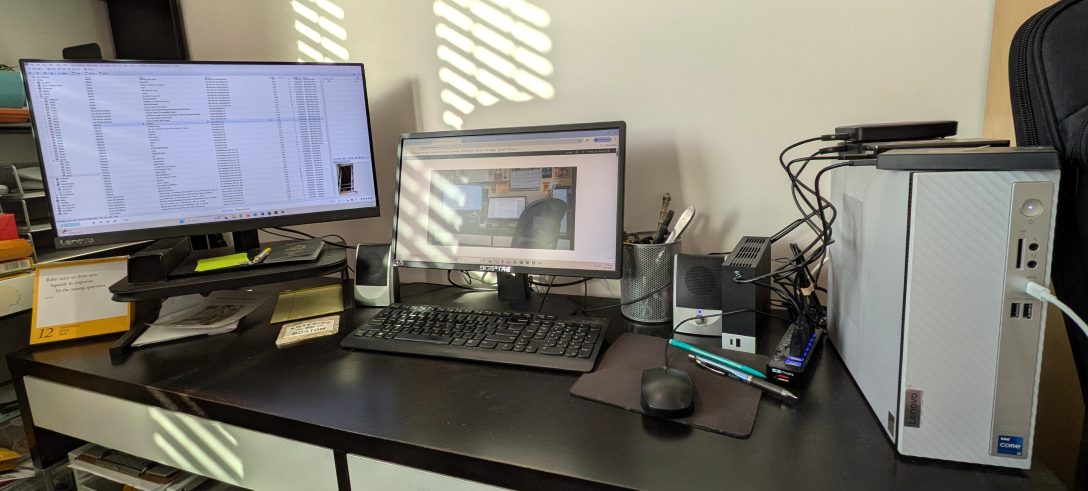
Yes, I’d have to say it was definitely a good idea to work longhand with this edit.  The evenings where I’m focusing solely on this project is when I take the binder to the loveseat across the room and settle in.  I’m not chained to the desk, but I can still have the tunage going while I work.

Which brings me to the subject of unplugging again.  It seems every six to eight months I need to unplug from the internet and do some IRL things.  Or more to the point, needing to remind myself to unplug from the internet and do some IRL things.

What this usually means is that, even though I kvetch about it from time to time here at WtBt, I don’t always follow through.  Sometimes I’ll just have a long day at work and want to goof off online and watch cat-drifting gifs all night.  Or I’ll consistently distract myself with the Twitter feed.  Sure, I’ll catch myself and shut down the browser right there and then and do something more productive with my time.

It’s not like I haven’t eased up on the distractions over the last year.  I’m not as passive about them as I used to be.  In fact I’ve become quite tight with my latest writing schedule of practice words, blog entries and exercises, balancing them quite nicely with the Day Job and the regular writing work.

This time out, however, I’m thinking about actively unplugging for a bit.  I mean, doing some serious longhand work, for various reasons:

–Obvious:  Less chance of distraction.
–Health:  Reasons for me to start moving around and getting out of the chair more often.  Also, considering my Day Job is to look at a laptop all day, and following it up by looking at a PC later that evening, I really should give my eyes a break more often.
–Personal:  Sitting with A. instead of hiding away in the back room all day and night.
–Mental:  Focusing solely on the task at hand because, well, it would be the only thing I have at hand.  Also, I have something a little more tangible to work with, rather than having to remember where I was in the document, especially if I’m flipping back and forth.
–Physical:  Handwriting tends to be less straining on my wrists than typing, even with my new PC and its wireless keyboard and mouse.
–And let’s be honest here: when I write new projects longhand, I need to be able to write on the fly.  The habit of editing on the PC is far too ingrained right now, thanks to the Epic Trilogy Editing Seasons.  Once the trilogy project is done, I can reassess.

But yes…it’s one thing to say “I’m thinking of doing [X] to make my work better” or “I’m going to close the browsers now so I can work”, but it’s another to make good on those statements.  And unplugging does seem to be the only way to do this cleanly and efficiently.

Does that mean all my blogs are going on hiatus?  Nope, not this time around.  Those will still be around, as long as I have something to say.  I don’t have to unplug for mental reasons this time.

I just want to be a better writer is all. 🙂

Cooler heads

west side story cool

Cooler heads have presided, and the edit of The Balance of Light has been reeled back in.  I’m keeping it a single book. It won’t be the sprawling epic that my Writer Brain threatened earlier this week.  Heh.

Printing out the manuscript seems to have worked wonders, as I figured it would.  Having done a galley edit with a test copy of A Division of Souls (which helped me find a lot more issues I’d missed), doing the same for Book 3 seems to be working out just fine.

Which reminds me — remember that first chapter I deleted a month or so ago?  Yeah, it’s back in again.  Why, you ask?   Well, again, cooler heads.  I realized that starting the story on the original Chapter 2 was an even WORSE idea.

So…what does that mean?  I need to delete at least 50k words somewhere in this behemoth.  Where the hell is that going to take place?  Well, that’s a good question.  This is another reason for the printing out of the ms…so I can give it another reread and find those soft squidgy spots that can be cut out.  Scenes I can merge or leave out.

This is still going to go far past my original deadline, but again — I’m okay with that.  As long as I’m going in the right direction, that’s all that matters.

A Positive Outlook

ganbatte kudasai

Not gonna lie, when I first started working on this writing gig with some serious effort, I was just like every other n00b writer: I’m gonna shake up the literary world with my unconventional ideas!  All my stories are going to be accepted by agents!  They’re gonna love my stuff!

Of course, age, maturity, knowledge and perhaps a bit of bitter reality has thankfully made me think otherwise.  I’m a writer just like anyone else, and the chances of my writing being a smashing success are just about the same as any other writer’s:  a complete crap shoot.  Luck, a bit of sales smarts and a decent story are the only constants in this job.  The rest depends on getting the right agent or editor and whether or not they think they can do something with your work.

This popped into my head the other day, while thinking about the fact that I’m on the back end of an extremely long-term writing project.  Lately I’ve been comparing how I viewed the Bridgetown Trilogy during its Phoenix Effect years, how I viewed it during the trilogy rewrite, and how I view it now that I’ve self-published two of the three books.

The pre-Belfry years (the True Faith era) was when I was the cockiest, that was for sure.  I knew I wasn’t the best of writers, but that didn’t matter — I had an awesome story that I wanted to tell, and it was going to sell tons (once I finally finished it)!   The Phoenix Effect era was a little more down to earth in terms of outlook; I knew I was far from professional, but I was doing all the required homework and revising it the best I knew how.  It was that era when I wasn’t exactly sure where I stood in terms of heading towards being a professional writer.  I was stuck in that phase for a long time.

Now I’m at the point where I’m looking at the trilogy and accepting where I may have gone wrong over the years.  Doing major rewrites was one part of that; deciding to take control of the entire production was another.  I don’t think the trilogy is a failure, far from it.  No book is completely one hundred percent perfect.  Are there things in the trilogy I think might still need fixing?  Of course.  All writers think that about their own books, and I’d be surprised if a writer didn’t feel that way about their precious projects once they’ve signed off on them.

There are many reasons why I’m self-releasing the trilogy, and that’s one of them: the ability to learn from my mistakes, fix them, and re-release the end result.  Self-publishing is great for things like that, if you look past the ‘but it’s out in the world already so it’s ruined forever!’ irrational fears.  Maybe I released the book too early; I can always sit on it for a few years, do an overhaul maybe five years from now, and re-release it.  There will always be a new potential reader who’ll be willing to give it a chance.

One of the biggest things I’ve learned about the entire trilogy project is to accept that I should not strive for excellence in writing, but to do my best at it.  Being professional doesn’t exactly mean ‘being famous’, it just means knowing what steps one needs to take to create a positive end result.  Perseverance, knowledge, and maturity.  And having a good solid goal (other than I’m want to be famous!, of course) does help significantly, whether it’s to be professionally published or to self-release.

I don’t need to be Phillip K Dick or William Gibson or Neil Gaiman or Ray Bradbury or whoever.  I just need to be me, to the best of my ability.

I’m not sure what to write next.

portlandia
courtesy Portlandia

Yes, I’ve blogged about this before.  I have a bunch of ‘maybe’ projects simmering on the back burner, waiting to be picked up and worked on, or trunked and forgotten.  It’s not going to take center stage until I finish and release The Balance of Light, so it’s going to be a while, but that doesn’t mean I can’t start with the pre-production.  I can certainly start playing around with outlines, character sheets, timelines and whatnot.  Just that the bulk of the project won’t begin until at least sometime this autumn.

But I’ve been thinking a lot lately about the process of starting a new project.  As I’ve said before, it’s been so long since I’ve come up with a completely new idea that sometimes I wonder if I’ve forgotten how to do it.  [I don’t always think this, though…one of the ‘maybes’ came out of nowhere during my 750 Words exercises, so I know I can do it.]

I know I sometimes overthink this part of the process; it’s the most stereotypical of writer’s blocks: what should I write?  We focus too much on wanting/needing to start something.  It’s like when you need to start that term paper for English class, but you have no idea what to write about…and that’s when you start stressing, because you’re focusing too much on getting it done before deadline and not enough on the writing itself.

I try to keep my mind open when new ideas come to me; more to the point, I try not to rely mainly on chance and random inspiration, because that almost never works.  The trick is to sow some kind of seed of an idea and work with it for a bit, see if you can make something out of it.  I tend to be a pantser in terms of writing, so what I consider my best ideas usually come from something only distantly related to it: one of the ‘maybes’ I have on tap came to me out of someone else mentioning the Osmonds in passing on their blog.  Out of that came the idea of writing a fictional music biography.

I have an idea jar here in Spare Oom, a long narrow glass jar with a plastic stopper that I bought for a dollar-something at the kitchenware store up the street.  I haven’t used it in some time, but there’s a few years’ worth of scrap paper in there of passing ideas.  Thoughts that came to mind that I didn’t have time to follow up on.  Just images, scenes, or characters that popped into my head while I was doing something else.  I haven’t even looked at these notes for some time, so now I’m curious as to what’s listed.  I used a few of them for my daily practice words a year or so ago.  Perhaps it’s time to do that again.

I’m not sure what I’m going to write after the Bridgetown Trilogy is done, but at least I’m going to be somewhat prepared.

On Writing: Who Am I Writing For?

gromit

I’ll admit, that’s not a question I often thought about when I first started writing, because the answer was most likely going to be: well, ME, of course.  What a silly question!

I’ve tried in the past to write for a specific audience, and it never quite panned out the way I wanted it to.  Love Like Blood was me trying to write to the urban fantasy crowd.  Two Thousand was me trying to write for the litfic crowd.  True Faith was me trying to write for the sf/virtual reality crowd of the mid 90s.  All three projects have since been trunked, as I found them to be some of my worst work.  Paved with good intentions, but let’s face it: I was pandering.  I was trying to write for an easy buck.

Recently I’ve been thinking about who I’m writing for, and each time, I’ve come to the conclusion that I’m still writing for who I want to write for:  just your regular blue-collar joe who likes to read.  Yes, I’m still writing for me, but I’ve noticed the biggest response I get from readers is not always the avid science fiction/fantasy reader, but those I know who like to read a little (or a lot) of everything.  Someone who might read the latest George RR Martin but follow it up with, say, a history of 60s counterculture.  Or maybe not even that: someone who just likes reading what they like reading, and don’t necessarily fit into the definition of ‘avid fan’.

That’s not to say I find avid genre fans beneath my stature, far from it.  I just know that I’m not a hard sf writer or a military sf writer or even a high fantasy writer.  I just write what comes to mind, and I try to fill my created worlds with people and ideas that my readers will connect with.

The Mendaihu Universe might be chock full of spirituality, but I try not to write religious/spiritual fiction, which is its own genre.  The characters in this universe of mine have the same issues as readers: frustration, fear, indecision, confusion, irritation.  I put the characters into an everyday situation that just happens to have a supernatual/spiritual setting.  And for the most part, I think I pull it off, because nearly all my readers so far have commented on that as a definite plus to the worldbuilding.

I’ve been thinking about this in part because I’ve been trying to figure out how to sell my trilogy now that two-thirds of it is already out there.  It’s one thing to self-publish and release it, but it’s quite another to get it out there and advertise it.  As much as I dislike sales, I do need to think about who my target audience would be.  I know, I should probably think of this WHILE I’m writing the stories, but that can’t always happen.  Again: if I write to order, I write horribly.   I can only write what I know I can write.

But what about my other projects?  The non-MU stories?  Who am I writing for then?  I probably won’t know until the project starts.  I have some non-genre stories in mind that could easily be quirky litfic.  I have some genre stories that would fit nicely in the urban fantasy mold.

For me, I guess the only way I’ll know is when I start writing the damned things!

#atozchallenge: I is for Inspiration

The inspiration behind the stories, ideas, settings and characters of the Mendaihu Universe have come from all kinds of places over the years.  I’ve talked about quite a few of them on various blogs as well.  I’ve mentioned the albums I listened to, the movies and the books and the TV shows and and and…  There’s been a lot that I’ve read and enjoyed that inspired me to write these stories.  I made a semi-official list sometime around around late 2002 that included all of these.  Maybe one of these days I’ll update it and paste it here on the blog, just for fun.

So where does this inspiration come from, anyway?  Well, my first rule of being inspired by something has always been if it causes me to drop everything and run to the computer to start typing.  If I finish reading a book or watching a TV show or a film and my first reaction is a creative excitement, if it’s made me notice the writing and the production in a good way…then it’s done its job, and done it well.

[Good recent examples: the always level-headed Christopher Foyle in Foyle’s War, no matter what mood he may be in; the deliberate pacing of the movie adaptation of The Martian, the one-person cast of driving ninety percent of Gravity; the movements of a large cast in Kate Elliott’s Black Wolves.]

I always cite music as  an inspiration, though that tends to be more on a molecular level, as it were.  Certain songs will inspire the mood of a specific scene; some albums will be my go-to’s for writing sessions (one recent release getting heavy rotation here is Shearwater’s Jet Plane and Oxbow).  I may occasionally hear a song and imagine a scene not yet written; with those I’ll either make brief notes or I’ll listen to the song a few more times and think about whether it’ll fit in the project I’m working on.

I like to keep my eyes and ears open for these sorts of things.  I’m not one to read or see something and think I want to write THAT!  Mainly because I know by the time I finish it, it’ll no longer be in season.  It’s more on a creative level; if I’m amazed by the writer’s dexterity in weaving a complicated plot, or their ability to look at a well-used storyline from a completely different angle, that’s what will inspire me to take the same route.

I suppose it all boils down to: how did the creator get his or her creation stuck in my mind?  It has to be more than flashbangs and shock-and-awe and disturbing scenery; there’s a time and place for all of that, but it’s nothing I can or should completely rely on.  It has to be the whole as well as its elements; the artistry as well as the work.

That’s what inspires my own.