On Extremes and Evolution

I’ll note this now: this is not necessarily a post on violent extremism, like the kind we often see in today’s news, but about how far a character will go to hold onto their beliefs, and why.

One of the themes that I’ve been thinking about for this new Mendaihu Universe is extremes.  I used it to some degree in the Bridgetown Trilogy, wherein many characters have their beliefs and emotions tested.  Is what they’ve always felt really the truth?  Is the kind of peace they’re fighting for really what is needed?  And what if what you perceive to be the truth actually is the truth, at least in your own reality?  How far would you go to fight for what you believe to be the right thing to do for everyone?  These were the universal questions, set upon a group of people.  I wanted not only to show how they progressed as their own person, but also as a collective.  Actions do affect everyone involved in one way or another.  It’s not just about the action itself, however…it’s about the consequences.

For the new Mendaihu Universe book, I’m looking at the same themes again, but this time on a personal level.  After the spiritual revolution that took place in the Bridgetown Trilogy, we now see its outcome, some generations down the line.  Without going into too much detail (partly because I’m still pretty much at the beginning of the story anyway), I want to examine how the actions of the past affect the beliefs of the future.  I want to see how these beliefs and rituals have changed, now that they’ve been commonplace for a significant amount of time.

The idea of extremes for this new project came to mind after watching a large number of historical documentaries about Britain, and a lot of Time Team episodes with my wife over the last few months.  Specifically:  today we have believers of various faiths, many of them reinterpretations or reimaginings or revolutionary versions of older ones.  Some faiths raise imagery, idolatry and destination to holy statuses, for instance.  I started pondering about something I’d thought of much earlier in my life, back when I was taking catechism classes.  I started thinking about what life was like when these Biblical stories took place; not just what the stories tell us in description or what’s given to us over the years with tapestries and paintings and whatnot.  This is where the Time Team episodes were coming in:  while watching Phil and Mick and Raksha and all the other Time Teamers troweled their way into the past and tried to reconstruct what ancient buildings may have looked like, I started thinking about the Bridgetown Trilogy from the same point of view.  What we see now, as we’re excavating the past, may be something completely alien from the original idea, changed and mutated by time and evolution.  It’s only when we take the time to not just look but understand what that past moment was about, do we get closer to the truth of that point in history.

First thought of course being: how would Denni Johnson, awakened as the the deity, the One of All Sacred in its last iteration, be viewed by those who follow the One some fifty to a hundred years later?  One of the first mentions of Denni in this new book is when a character sees an eight foot statue of her, complete with angelic wings, hands reaching down to all those who look up at it, near the same corner of the warehouse where she’d ascended to deity status in the first place.  I followed up with a few other ideas: new characters taking the names of those in the trilogy, following in the footsteps of their ancestors.  The human-alien relationship on Earth becoming closer in some respects and more tenuous in others.  And so on.

This is what I think about now when I’m watching a documentary or reading a book about something historic.  I’m not just being told a story about something that happened in the past; I’m also being given an idea of what thoughts, ideas and emotions may have been like as well.  I’m being given context to go with the story.  And this is what’s been going on with this new Mendaihu Universe story; I’m writing about a far future that’s trying to remember what the past was like, in order to learn from it and move forward in the right direction.

Changes in Writing Habit

My writing habits seem to change about every two years.  I’ll find something that fits with what I’m working on perfectly, and I’ll stick with it until it doesn’t work anymore.  Sometimes I’ll retain it for far much longer than I probably should, but I’ll eventually change it up.

I came to the conclusion a few weeks ago that this new change is going to be rather significant.  The whiteboard that I’ve been using for the last few years has suddenly been cleared off, with only the blog post schedules showing.  I’m even putting off continuing the daily 750 Words for the time being (though I may be continuing the ‘secret project’ I’ve been using those words for, using a different format).  In fact, I’m pretty much backing away from the internet for a while, because it’s been a distraction.

It came to me when I first started writing the new Mendaihu Universe project longhand.  I’ve mentioned this over at my LiveJournal, but I’ll mention it here: I felt a need to return to my old writing habits.  And more importantly, I felt a very strong need to back away from the internet, maybe even backing away from writing directly to PC for a while.  I’ll keep the computer on by having some music playing in the background, and I’ll keep it handy for when I need it for research or to check on an older manuscript or something…but I felt the need to create more organically.

I came to this conclusion via many different ways, really.  I think part of it came to me last year when I started writing a personal journal entry almost every day, It also surfaced in October when I’d bought art pens and took part in the Inktober meme.  Interestingly, my ‘secret project’ also had a hand in it, even though I was typing it as part of my daily 750 Words.  The point being:  I was writing swiftly and fluidly, forcing myself not to self-edit, and this included the personal journal.  There’s a few entries here and there in that moleskine where I’ll stop midsentence and write “No, let me reiterate that” instead of crossing it out.

And that’s the key.  In the years working on the Bridgetown Trilogy rewrite/revision, the Walk in Silence project and the aborted Two Thousand, I realized that I’d been stuck in the mode of internal revision as I was writing, and working solely on PC has that effect on me.  That is because it’s always been like that.  I wrote about ninety percent of The Phoenix Effect longhand in two spiral notebooks — no revision, just pantsing it as I go — and transcribing and revising it on the PC in the Belfry in the evenings.  I consider the Bridgetown Trilogy a major revision/rewrite of that same book, even though it contains mostly new passages that were never in TPE.  Pretty much every other project I’ve worked on since then was straight to Word.

I wanted to change that with this new MU story.  I realized that most of those post-trilogy projects were tough slogs because I’d never turned my Internal Editor off.  Plus, now that we’re in the Space Age and can jump online any second of the day if we so choose, that gave me all the reasons to procrastinate.  At first I thought a strict whiteboard schedule would help…and indeed, it has, to some extent.  Because of that schedule I got rid of the ‘out of sight, out of mind’ mentality.  I’m back to the point where I want and need to write something every day, even weekends.  But I felt it wasn’t enough.

That’s why I chose to start this new project completely offline, like I did with TPE.  I wanted to see if I could recapture my old writing habits, without all the distractions and the internal editing.  Just pick up the notebook and the pen and start writing.  No worries if I mess up or make a continuity error; this is not the place to fix it right now.  This is the time to write the story purely as it comes to me.  No focusing on word count or anything else…just let it ramble for however long it would take during that session.  I’ve even taken this “new” old habit to an extreme; instead of writing at my desk, I put some music on my PC and sit across the room on the love seat instead.  It’s a little better for my back (I think?), and I’m able to stretch out a little more.  I can also take it elsewhere: I can write in the living room while A watches a movie.  Or as I did last weekend, I can write at our hotel (both in bed and in one of the chairs) in the middle of New York City, as well as during the flights to and from said city.

Suffice it to say, I was pleasantly surprised when I noticed just how amazingly well this recaptured habit was working out for me over the course of a month.  The story is still evolving and I’m sure I’ll be completely rewriting the beginning at some point (as I always do), but it’s moving at just the speed I like for first drafts.  My average over the last few days has been about two pages in a half hour, which is about right; I used to hit five pages in the hour I used to spend writing TPE back in the late 90s.  Once I become more involved in this new MU story, I’m sure the time spent writing and the page count itself will extend itself.  I haven’t even planned on when I’ll start the transcription, and I’m choosing to leave that wide open.  I’ll start it when I feel I’m ready for it.

Is this for everyone?  Who knows?  Each writer has their own best habits and rituals.  It took me a while to realize it, but I seem to have rediscovered mine.


On Reading: Be Not Afraid

I just finished reading AM Dellamonica’s Child of a Hidden Sea last night, and absolutely loved it.  It’s one of those books where you end up staying up past your bedtime so you can finish it up.  Fast-paced and fun, it straddles between YA and adult fantasy, following a girl named Sophie Hansa as she travels — first accidentally then purposely — to an alternate world full of magic, seafaring piracy, and family intrigue.

I mention this because I think it ties in nicely with a recent blog post by writer Shannon Hale called “No Boys Allowed: School visits as a woman writer”.  She talks of her tours of schools to talk about her Princess Academy books, specifically the problems she has at some schools where her audience is all (or nearly all) girls, with nary a boy in sight.  More to the point: the fact that the boys weren’t invited, or needing permission to join in.  It wasn’t just expected that boys would have no interest in a writer who writes about princesses…even if it was unintentional, they’ve also reinforced the idea that boys shouldn’t have an interest in stories about princesses.  It’s just not a manly thing to read, even if you’re 10.

This reminded me of an event in seventh grade, between myself and the school librarian.  [I mention it briefly in the comments section of Hale’s entry.]  They had this special event every month or so where kids could buy cheap paperbacks from a bookseller; they were your typical MG and YA novels, maybe some comic collections and kids magazines, that sort of thing.

I took an interest in that partly because my dad and I had started taking road trips on weekends to Northampton or elsewhere to stop at bookstores, and I’d pick up something to read every now and then.  This book club was an easy way for me to find more things to check out.

At the time, I was interested in a lot of YA novels from Apple Paperbacks and other publishers; the covers may have been kind of dorky and the stories somewhat simple (strangers following you, problems with your friends, having weird yet really cool magical abilities), but they were fun reads.  I knew pretty early on that I wasn’t that interested in stories about sports, or men of action, or any of those other typical boy-centric stories.  The reason was simple: I like a good story, regardless of the gender of the main character…but the subject has to interest me.  I wasn’t going to waste time reading about a kid trying to make the baseball team when I had no interest in baseball and sucked at it anyway.

Mind you, this was also the time where I’d started becoming interested in writing fiction.  The Infamous War Novel I started in 1984 was the first one I completed, but I’d had at least a dozen or so incomplete ideas dating back at least a few years earlier than that.  This had little to do with passive reading.  I was gravitating to what I knew I enjoyed and wanted to write.

So when I’d ordered a few of these Apple Paperbacks (including Willo Davis Roberts’ The Girl with the Silver Eyes — one of my first forays into the SF genre, come to think of it!), I was excited to start reading these things.  However…

However, the school librarian had side-eyed my choice in reading.  In fact, if I remember correctly she actually pulled me aside.  “Are you sure you want to read books like this?” she’d asked.  “Don’t you want to read about sports or spy novels?”  I stood my ground and kept reading these things, but there was something in the back of my mind that nagged at me: was I reading the wrong things?  Was it wrong for me to like books with female leads?  I shrugged that off just as quickly as it came, but that was probably the moment where I realized I would not be able to confide in this particular librarian.  After all, she was also the one who had seen me pick up a copy of James Fenimore Cooper’s The Deerslayer in the school’s library and asked if I would really ever get around to finishing it, considering it’s over five hundred pages long.  And now I had it in my head:  Would other boys think I was a fag (and I mean that in that wonderful 80s teen way) because I liked books about girls?  Did I have to keep these books to myself now, for fear that others would side-eye me as well?

She apparently had my number well before I had it myself.

The sad thing is, this was also right about the time where my attention span had started to wane.  Not out of any emotional or mental deficiency, but because I was starting to get bored.  I didn’t figure it out until many years later that my grades really started slipping right around that time because I’d lost interest.  I’d rather be listening to music or writing (yes, even then at 13…especially then) than reading some assigned book that I just didn’t want to deal with.  The end result was that I would end up with my first failing grade in my entire school career.  I got an F.  In English, of all things!  I wanted to be a writer and I loved reading!  What had happened?

Thankfully, I turned it around and managed to squeak by with a C- by the end of the semester and didn’t have to stay behind or take summer school. I knew I wasn’t dumb, I just needed to make a concerted effort to get the work done.  It was a slog and I did a half-assed job most of the time, but I did well enough to graduate with the rest of my class.

But the damage really had been done in junior high.  I don’t blame that librarian…she was of an older generation and was safe in her Boys Are Boys and Girls Are Girls world.  My bad grades were my own damn fault.  But if it wasn’t for my 7th grade English teacher assigning us Ray Bradbury’s Dandelion Wine (one of my all-time favorite novels), my mission to write and finish a novel, and a stubborn will to read what I wanted, I’d probably have done worse.  I remained a B- student pretty much all the way until I graduated college.  And I barely picked up a book for pure entertainment purposes, even though I was still attempting to be a writer…that wouldn’t happen until around 1995.

I know it sounds petty, but this is what happens when you throw preconceived expectations on kids of that age.  Let me explain — I know you mean well, and I can see where you’re coming from (even when the gender segregation is a dumbass thing to do).  You’re giving them anchors and guidelines, something for them to base their life experiences on.  You’re trying to train them to see potential roads they should follow for future education, and that’s a good thing.  But at the same time, you’re not paying attention to how the kids are processing it.  A. and I have similar tastes in some things, but wildly different tastes in others.  I don’t even have the same path of logic as she does half the time.  We should learn how to think critically, but we also have to remember that each person thinks, lives and reacts differently.

I like what I like, and I choose not to be afraid of admitting that.

This is also partly why I chose to put Denni and Caren Johnson as the most important characters of the Bridgetown Trilogy — I remembered those Apple Paperbacks (and I was reading Kate Elliott’s Jaran series at the time) and enjoyed reading female lead characters.  I had no other reason, political or feminist or what have you, for centering the story around them.  They. Are. Important. Characters.  And they were not extensions of me.  That’s all.

I know this is kind of a long diatribe, but I felt it was important to share.  I’d like to believe that the boundaries we should teach kids are not external such as gender roles or conformity, but internal, such as respect and awareness.  Read what you want to read.  Write what you want to write.  Learn what needs learning.  And don’t edit your reading preferences because of someone else’s opinions.

Be not afraid.

On Inspiration: Looking Forward to Life

image from Little Dorrit, (c)BBC

I think it’s time I readjusted my attitude about my day-to-day.  It needs it.

I know many writers who write part-time — that is, they balance their writing time with their current day job and/or parenting duties.  It can be a frustrating attempt at balance, especially when your Day Job Brain functions much differently from your Writing Brain.  I play with numbers and emails all day, and I’m extremely well versed in business-speak.  That job entails a lot of logical, linear thinking.  Nine times out of ten, point A and point B should lead to point C.  [That tenth time is the exception setup, what I often refer to as “it goes like this…except when it doesn’t.”]  It’s not exactly a tough job — okay, it is in its own way, but I’ve been at it for seven-plus years and I’ve gotten used to it.  I don’t let it stress me out all that much anymore.

My writing, on the other hand, includes a lot of nonlinear plotting, multiple points of view (not just in narration but in character personality), and a lot of leaps of faith, in hopes that it’ll all make sense at the end.  It’s the dreamland I always look forward to, where I can play with words and images, make up fantastical things, and tell fun stories.

Just as logical, but completely different frames of mind.  I’ve been doing both for so long I can easily switch between the two when need be.


Cary Grant from His Girl Friday

Lately I’ve been in a rut, however.  By the time 4pm rolls around and I log off, I just want the day to be done already.

Okay, maybe the situation’s not quite that dire…but after eight hours of the Day Job, sometimes the last thing I want to do is work on something else.  I want to be lazy and goof off!  I don’t even want to go out at night…I just want to sit around and whittle the time away.  Thankfully my ingrained guilt receptors kick in soon enough and I get to slog away for a few more hours doing whatever it is I need to do creatively.

How did I get this way?  And don’t tell me “you’re getting old.”  I may have just recently turned 44, but I’ll be damned if age is going to be an excuse for being a lazy bum.

I started thinking…what was it that got me excited about writing previously, anyway?  Or excited about going out to do something?

As always, I thought back to a time where I was truly excited about my writing time.  I thought about my Yankee Candle days — I had a half-hour commute each way, I moved hundreds of boxes all day long, and yet I still managed to make a weekly habit out of doing a comic book and new cd run in Amherst.  I was also able to spend two solid hours writing at least a thousand words every night.  My personal best in terms of word count that I’ve been trying to reach for ever since.*  Or my days at HMV, where I’d drive 50 miles to the mall I work at, slog through the day, drive 50 miles back home (or the 70 miles to Amherst for the occasional comic book run, then an additional 30 back home!)…but still balance that with the hour before work writing longhand, and the hour or so at home, transcribing to the computer.

Point being:  I know I can do it.  There’s no doubt about that.

So why am I complaining that I can’t, or don’t want to?  It’s not as if I’m particularly exhausted, mentally or physically, or can’t stand the project I’m currently working on.

I mean, I’ll be heading over to Amoeba over on Haight tonight to see The Church, one of my favorite bands, play an in-store show.  The store is only a few miles away, and I’ll probably be home before 8pm anyway.  And yet, why do I feel lazy enough to want to come up with an excuse for not going?  I mean, come on.  It’s the freakin’ CHURCH, for pete’s sake!  They only sing my favorite song ever!  Why the hell am I feeling so damned lazy??

Finally it dawned on me, just today:  I was looking at this current schedule from the wrong angle.

I work at home, so it’s not as if I have to deal with a commute; I wake up at 6am, have breakfast, read some webcomics and catch up on the Twitter feed, and log on at 7:30.  I take two fifteen minute breaks and a half hour lunch.  I log off at 4pm and we head over to the YMCA soon after to get our exercise.  Dinner is usually around 5:30-ish and I’m writing by 6:30pm, all the way to about 8pm.  I get my daily words and my project words done at that time…and if the work day is particularly slow, I sneak in some personal writing, such as this particular blog entry.  The day’s packed to a reasonable degree, but I’m not draining myself in the process.

All the same, I’ve been suffering from a terrible case of the Don’t Wanna’s.

And that’s the issue right there!  It’s not the schedule or the work/writing balance that needs fixing:  it’s my attitude.

So I submit this:  let’s return to my YC-era work mindset — my day job is my paycheck, but my writing is my career.  But don’t forget to have fun as well.

I’ll still dedicate the same time and brain power to the day job, of course.  But let’s also look forward to logging off at the end of the day.

Let’s remind ourselves throughout the work day that, once I’m off the clock, it’s time to go and have some fun!  Let’s look forward to walking around the neighborhood after work.  Let’s look forward to playing in that imagined world for a few hours.  Let’s look forward to having fun with what I love doing the most.

It’s not about trying to do everything at once.  It’s simply a change of attitude.  Look forward to life.  Look forward to that bit of entertainment.  Look forward to that writing time at the end of the day, because you know and I know it’s a hell of a lot of fun, even when it does get frustrating.

Chances are, the payoff will be worth it.


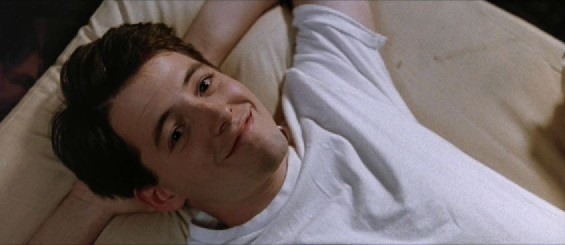
Matthew Broderick in Ferris Bueller's Day Off
Matthew Broderick in Ferris Bueller’s Day Off


*  Mind you, I’m not trying to force a thousand words on a nightly basis, because it depends on the project.  I’m working on Walk in Silence but not logging any new words because most of the work has been what I call ‘framing’ the flow of the book.  My sort-of daily 750 Words have been consistently over 750 and flowing quickly, so I can safely say I’m counting the words where they really do count.

On Writing: Where Do I Begin?

Begin at the beginning.

Select an idea, any old idea, and riff on it.

Let the idea sit there and marinate for a while; let it solidify into something worth writing about.

Outline, outline, outline!

Let it bleed out of you; don’t stop to fix it, revise it later.

I’ve heard all kinds of suggestions on how and where to begin a new project, and in the back of my mind I’ve been thinking about how and where I’ll be starting up the next Mendaihu Universe story.  I’m still working Walk in Silence as my main project right now.  I’m also creating a story out of my daily words (currently called The Lidwells Story), so it’s not as if I’m hemming and hawing and not getting any work done.  The new MU story isn’t exactly top priority at the moment, but it’s in the back of my mind, poking me like a five year old every now and again, begging for a scrap of attention.

The trouble is that I’m really not sure where to start with it.  I have a few very vague ideas of characters and plot points, but nothing solid.  It’s not severe trouble, though…I have to remember that The Phoenix Effect started out almost completely from scratch as well, and I had maybe five or six scenes tops in my head.  I have to remember that I had two plans when I began it: 1) write a new novel, and 2) use the idea of human spirits coming from somewhere else.  That’s it.  Nearly all of the scenes, plots and subplots, and character evolution I wrote in that book I came up with while writing it.

So really–the trouble is not where to start the story, but where (and when) to begin writing it.  That is: prioritize projects. Don’t worry about the new MU story just yet–don’t worry about the plot or the characters, or even the theme at this point.  Finish WiS and the Blogging the Beatles projects, and continue submitting the Bridgetown trilogy.

It’ll come in time.  I’ll know when I’m ready for it.

On Writing: Reference Books

I’ll admit, I have a lot of writing reference books that have a nice sheen of dust on them.  It’s an embarrassing admittance, but I have to put it out there.  I’d like to think I have a pretty decent grasp of grammar and style in my writing, even if my blog entries and novel first drafts leave William Strunk and EB White twitching in their graves at times.  I’ve cracked a few book spines here and there when need be (usually my copy of Webster’s Collegiate or the ever-helpful Flip Dictionary), but I think it’s high time I started utilizing them more.  Here’s a few that I find helpful, and you might too.

Ray Bradbury, Zen in the Art of Writing.  I picked this one up right about the time the first seeds of the Mendaihu Universe were sown in 1993.  I’d always been a big Bradbury fan (Dandelion Wine is one of my top favorite books ever), and always resonated with his style and method of writing.  His essays on writing inspired me to get out there and do it instead of just talking about it.  I reread this every other year or so, just to bring things into perspective again.

University of Chicago Press, The Chicago Manual of Style.  Seriously, I don’t know why I ignored these kinds of books for so long.  I may have a decent grasp of style and grammar, but I’m pretty sure I screw up the nitpicky stuff more than I wish to admit.  Everyone should have at least one manual of style kicking around, even if it is just to check if the period should go inside or outside the quotation mark at the end of a sentence.

Barbara Ann Kipfer, Flip Dictionary.  A. has often been at the receiving end of that writer’s question, “What’s the word for…?” when I’m having a brainfart, and this one’s great for fixing that.  It’s a reverse-lookup dictionary for the most part, but it also has short sections of related “type of” words (one being a list of hairstyle descriptions and their names afterwards).

Angela Ackerman & Becca Puglisi, The Positive Trait Thesaurus, The Negative Trait Thesaurus, and The Emotion Thesaurus.  Someone on Twitter suggested these to me at some point (I forgot who and when), but I picked them up soon after, and they get a lot more use than I expected.  I do tend to overuse certain expressions without thinking — a rough draft of The Persistence of Memories had nearly all the characters sighing in frustration at some point — and these books give me excellent alternatives.

Robert Lee Brewer, 2014 Guide to Self-Publishing. I’m excited that publishing is now at the point where DIY is viable and not frowned upon nearly as much anymore.  I’m even more fascinated by the fact that WD Books has finally released a self-pub version of their annual Writer’s Market book.  It’s set up pretty much the same way, giving a section to editorial services, writers’ conferences to look for, and other items of interest.  There are also quite a few interesting essays in there as well regarding the business of self-publishing that are worth a look.

Joel Friedlander & Betty Kelly Sargent, The Self-Publisher’s Ultimate Resource Guide.  This one popped out at the end of the year and is a nice and lean ebook on par with Brewer’s Guide.  Quite slim at 141 pages, it dispenses with any essays, how-to’s and so on, and instead just offers the online listings of a number of companies, artists and aggregators that can help you get your self-published book out and noticed.  If you know exactly what you need…say, an editing service to fix your typos, a specific image for your cover, and an aggregator to get the book out to multiple platforms?  This is a list of possible candidates for you, without the distraction of everything else you don’t need.  [Okay, I freely admit this one was a shameless plug, as I got a free ARC out of it if I gave it a review on my blog.  Still, I found it exactly what I need for my recent possible self-pubbing endeavors.  Plus, Joel is an excellent resource on the self-pub business, and Betty writes some great self-pub articles in Publisher’s Weekly that are worth searching out.]

Publisher’s Weekly.  I wouldn’t suggest this magazine for the beginner writers (I’d suggest The Writer, Poets & Writers and Writer’s Digest instead), but if you’re a professional writer or just about getting there, this one’s well worth the price.  It gives you weekly news on what’s going on in the publishing world, book and conference info, weekly sales charts, and quite the extensive (and very diverse!) review section that’s contributed to my TBR pile.  This magazine focuses on the non-writing end of things–what goes on once your book is out in the wild.  It’s eye-opening, and definitely puts things into perspective.


What are some of your favorite reference books?  Come and share!

On Writing: A Room of One’s Own

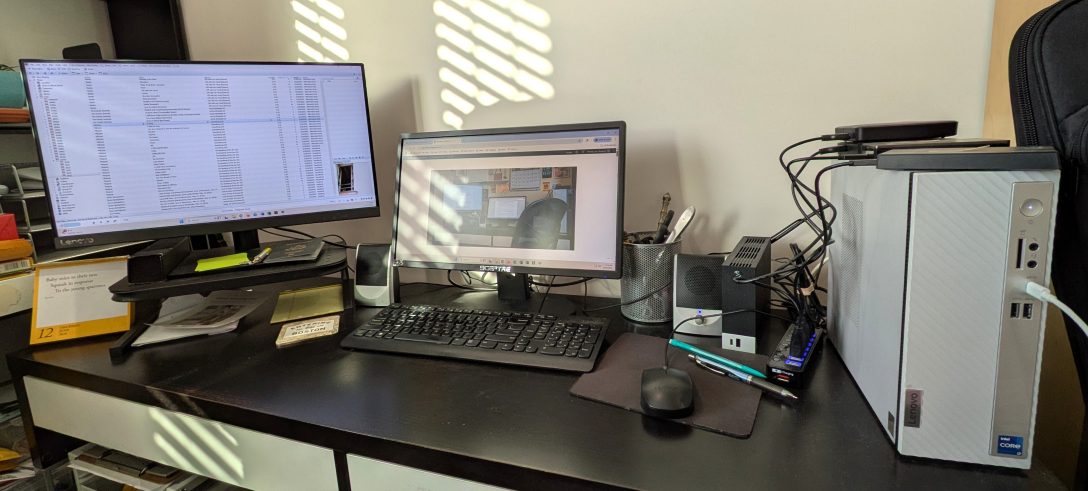
20150111_161009a

When we moved out here to the Richmond District of San Francisco, we ended up with a second bedroom, which has since been turned into an all purpose room: it’s my day job/writing office, our hardcover and trade fiction library, my music studio, and A’s knitting and canning stashery.  It’s a mite bit crowded in here, but I’m not complaining.  I’ve got my computer for my writing and my mp3 collection to entertain me.

Today was a day for cleaning and rearranging.  I’d just recently bought a new printer–specifically, a three-in-one printer-scanner-copier–and was in need of putting it somewhere central where A. could get at it if necessary.  Which meant getting rid of the old trusty printer I’d had since our last apartment (and still working fine, though the power button’s a bit wonky) and the scanner that for some reason no longer worked.  Which also meant finding a new spot for this new one, because it’s much bigger.  Which means I have to find something stable to put it on.  Which means a filing cabinet.  Which means getting rid of the filing boxes currently on the floor (or repurposing them for other things elsewhere). And the filing cabinet needs to mobile or at least on legs so the heater it’ll partially be blocking will have some place to push the heat directly without blockage.

And so on and so forth.  I had to think about five to ten steps ahead while planning out how to move everything around without cluttering up the room.  This is what happens when you have a finite amount of space to work with.  As you can see above, there’s a lot going in a small area.  A. pointed out last night that a goodly amount of the stuff in this room is indeed mine, and that, sadly, is the truth.  But from past experience I’m quite adept at getting maximum use out of minimum space.

The desk is a long and narrow one acquired from Ikea.  The left side is my home PC and other bits and bots, and the phone and laptop to the right is my Day Job stuff.  This works out perfectly as I get to focus on my job during the day but still get to listen to my music and take an internet break every once in a while.  And in the evening, my focus is on the left side of the desk, where I do all my writing.  And off to the far right of the picture, you can see the new cabinet and printer.  I still need to refile a number of things and move those file boxes in front of the bookshelf, but other than that I’m happy how it looks.  It took a good number of days and a lot of cleaning, but it worked out well, and no extra floor space was taken up.

It’s a small room, but it gets the job done.

On Worldbuilding: Down the Rabbit Hole Willingly

It’s often said that the downside to worldbuilding is that sometimes we writers get caught up in it, to the detriment of the actual writing.  I’ll freely admit that creating a fictitious world is a never-ending source of fun.  The Mendaihu Universe has grown and evolved over the course of two decades, and even as the Bridgetown trilogy enters Submission Phase this year, I’m still coming up with new avenues, new details for it.  Just yesterday I started playing around with another MU story set on Mannaka, an outpost world mentioned on the periphery in the BTown trilogy.  For the love of my own sanity, why am I doing this?

Short and most obvious reason?  More stories!  Ever since the aborted True Faith novel, I’ve always planned on setting a number of books in the same universe.  Not always in the same fixed spot in the timeline, of course…the timeline for yesterday’s brainstorming is up to question, but it would be a few millennia either before or after the BTown events.  This was partially inspired by Anne McCaffrey’s Pern universe–I liked the idea of writing multiple stories in my own created universe.  Each story would stand on its own, but there would always be a reminder somewhere (either up front or in the periphery) of the spiritual evolution story that’s central to the Mendaihu Universe.

And I spent a lot of time between 1994 and 1997, the years before I started The Phoenix Effect, just playing around with the universe, coming up with various story ideas and plot points in the timeline.  I remember a lot of slow afternoons in the ticket booth at the theater (and later at the radio station) where I’d lay the ground rules for my universe, such as major world events, evolutionary steps, and so on.  Just enough to give me anchors for future projects.

I can understand when worldbuilding can be a writer’s downfall, of course; spending too much time on the minutiae and not enough on the prose, focusing too much on the history and not enough on the present.  Or worse, giving into the joy of worldbuilding so completely that doing the actual writing becomes less than exciting.  It becomes like Charles Foster Kane, focusing on building the empire and home, changing it and morphing it as time and whim permits, but never quite finishing it.

The trick is to balance it out…I can have a lush background history, but I have to do something with it.  I can create a sprawling city-province like Bridgetown, but I have to have something happen there in particular.  I can create various characters to act out my story, but I have to have them do something inherently them in the process.   And after all of that, while I’m writing the story, I have a background I can work with–I can put these characters through a historical event that will affect them in one way or another, which will in turn cause them to evolve somehow.

I learned this when I realized I could no longer get away with ‘making it up as I go along’.  I learned it with The Phoenix Effect, when I realized that there were way too many divergent plot points and “I’ll revise it later” moments caused by immediate worldbuilding, all of which caused the story to be full of holes and inconsistencies.  When I restarted with A Division of Souls I forced myself to focus on the created history I had, and if new points of reference came up I would make a concerted effort to ensure they made sense in the overall story.  [A great example of this is in Chapter 2, when Assistant Director Dylan Farraway states “…this certainly isn’t a Second Coming…” to which Alec Poe responds with an offhanded “Ninth, sir.”  It was a complete throwaway line at the time I wrote it, but as I continued writing, the Ninth Coming of the One of All Sacred became the most important plot point of the entire trilogy.]

Working with your worldbuilding is definitely a tricky business.  You have to make copious notes.  You have to have a very sharp memory of what you’ve written.  You have to make sure you don’t get lost in it.  But once you’ve found a way to successfully manage it and make your way through it, it’s quite possibly the most enjoyable part of the writing process.

On Writing: Determination and Distraction

Some of you may have seen my Twitter pic or my LiveJournal post last night regarding “the Return of the Whiteboard Writing Schedule.”  A few years back I bought one of those erasable whiteboards that has a calendar grid on it and stuck it on the wall, eye-level, in front of my desk.  I used to have one of these in the Belfry years ago as well, which I used as a way to remind me of due dates and deadlines.  It worked out pretty well then, and figured it would be good to have again.

When I first put it up, I came up with the idea of giving myself a strict writing schedule.  Two reasons for this: my writing time is not as concrete as it used to be, and I find that I’m more productive when I give myself a specific schedule in which to do things.  This was proven during the Belfry years when I consistently hit a high word count working in the early evenings every day.  I also had one project going at the time–the Bridgetown Trilogy–so as long as I stayed true to it, I was fine.

I’ve used this schedule since around 2011.  I’ve changed it up a few times, moved things around, dropped a few projects, but for the most part it’s worked.  I chose to drop it for a time earlier this year, but for a good reason: I was doing a major revision of the Trilogy and wanted to devote all my writing time solely to that.  Now that that’s done and that I’ve anchored myself to a new writing project, it’s time to return.  I reused the January 2013 schedule I’d come up with that had served me well; the new project takes up the weekday, with Walk in Silence taking up the weekends.  I’ve also peppered in some offline/personal projects such as poetry, art, and music practice.  I’m also returning to my morning 750 Words, which I’ll sneak in during my work hours alongside my daily journaling. 

It’s a lot, but I like having a lot to work on.  It keeps the creative blood flowing.  It also makes me a better writer in the process.  Furthermore, they’re not strict deadlines but guidelines.  This isn’t homework, something I must do, but something to aim for on a weekly basis.


So…what’s this about distraction, then?

Well, that would be the forays over to YouTube, the refreshing of the Twitter feed, my longterm project of music cataloging, among other things.  Mostly done during the work day, when things are slow.  All well and good in moderation.  I can allow myself to let the time pass.  Hell, my old timewaster at work when I didn’t have internet access was doing word search games.  It’s a way to relax and keep oneself occupied.

On the other hand, when there’s nothing better to do and no immediate directive involved, it’s easy to fall into the trap of distraction.  Popping onto a website to see the latest posts, read the latest news, keep up-to-the-minute tabs on friends and acquaintances.  We still get fascinated by immediate gratification, and that’s what the internet is all about.  It’s what movies, radio, and TV were all about.  Which means that it’s up to our own selves to know when to turn it off, because no one else will do it for us.

It took me awhile to learn that.  I’ll fully admit that I get easily distracted.  Playing around with my mp3 collection, falling down the Wikipedia or YouTube rabbit holes, playing FreeCell or Solitaire, you know how it is.  I’d stop myself after twenty minutes or so, basically when my conscience would gently prod me and say “Dude, look at the time.  You’re wasting most of it right now.  You’d better get cracking if you want to get anything done tonight.”  And as timing would have it, my wife would walk in about five minutes before that moment and mock me for dicking around so much.  I’d eventually get things done, but later than usual.

This is another reason for the return of the Whiteboard Writing Schedule:  so I’m too busy doing things I enjoy, such as writing, drawing, or playing my guitar, to be distracted by timewasting things such as cat memes and silly gifs.

So.  How to avoid distraction?  Any specific steps?  Any tricks?

Not really.  Just the one step: Be aware that you’re distracting yourself, and do something about it.  Especially when you notice it and not doing anything about it.  You want to be a writer, yes?  Fine.  You want to get some writing done tonight?  Fine–then stop not writing.  You’re well aware of the distractions–it’s up to you to be procative and cut down on them.  Replace them with distractions you enjoy–reading, painting, hiking, what have you.  They may not exactly make you more productive or prolific, but they’re an outlet that inspires you.  And in the process, they may even change your mood so you’re even more creative once you start writing.

On Writing, Revision, and Recording Music

[Note: I posted this at my LJ back in September 2013, and thought it would be worth reposting here.  Enjoy!]

A short time ago I tweeted something that came to me about the writing and revising processes, and partly how I was finally able to understand what I needed to improve my writing, and also made me understand just how to write and record a song correctly. This came to me while I was doing my Blogging the Beatles posts a few weekends ago, and I’d like to expand on it a bit here.

In short, it occurred to me that revision, for the most part, is very much like how many rock bands record their music. The listener–and with books, the reader–are only given the finished piece: the end result of a long process of composing, noodling, demoing, recording, overdubbing, and final mixing. What the public often does not hear/see is all that work as it unfolds. You don’t hear/see the alternate words, the alternate melodies/plots, the mistakes and the other bits and bobs. And if all this is done correctly, you hardly notice all the tiny flourishes as separate entities of the whole, because you’re not supposed to; they’re supposed to be part of the entire, much larger experience.

For the longest time–probably up until the last two years or so–my writing process has been extremely slipshod and make-it-up-as-I-go-along, and giving myself subconscious reminders for things that would need revising later. I’m lucky in that I’ve been able to remember the story arcs and the random plot twists that I would need to expand on later on in the story, and I’ve made copious notes on the esoterica of my created world. I may have crowed about outlines in the past, but I’ve used them, or at least planned out the plot a few chapters ahead of where I was at that time. Still, after all these years, I’ve come to the realization that while this process may work, it’s time consuming and unorganized.

In the last few years, I’ve been working primarily on the revision of the Bridgetown Trilogy, rarely writing anything completely new. That’s not to say I’m not writing anything at all; there are several passages in this revision project that are either total rewrites of older scenes, or are brand new scenes that replace old ones that don’t work. I’ve been writing a few other things here and there, outtakes for Walk in Silence, posts for Blogging the Beatles, and making notes for both new and old ideas. It may look like I’m getting nothing done, but trust me–I’m doing all the background work right now.

Again–it’s like recording a song.

Over the course of the Blogging the Beatles posts, I’ve done a lot of reading of Mark Lewisohn’s book The Beatles Recording Sessions, which goes into fascinating detail as to when, how, and where their songs were recorded. I’ve read this book countless times in the past, but in the context of my blog series I’ve begun appreciating the crafting of the music, listening to the songs and trying to understand exactly what they did to make it sound that way. In the end it’s also made me think more about my own creative processes, both in writing and music.

The beginning always starts with an idea. It might be something obtuse: John Lennon came up with the vocal melody for “I Am the Walrus” from the up-down tones of police sirens as they passed by his home. It might be something coming from out of nowhere: Paul McCartney was convinced he’d copped the melody to “Yesterday” from somewhere, but it was his own creation. It might be inspired by life: George Harrison wrote “Savoy Truffle” about Eric Clapton’s addiction to sweets. The point being: this is where the idea takes hold. I’ve mentioned in the past that my trilogy came from watching the Gall Force animes.

The next step is the rough draft, the demo. Here’s where a band gets together at someone’s house and hashes out a few ideas that have been brewing over the last few weeks. The Beatles did this in early 1968 when they came back from India, gathering at George’s house for a few days and hammering out a few rough drafts of songs that would eventually show up on The Beatles (aka The White Album), as well as Abbey Road. In writing, this is where you’re writing longhand, maybe doing a bit of outlining and/or plotting, drawing maps, putting up that wall of Post-Its. In essence: here’s where you sit down and riff it, build on that one idea (or multiple ideas) and see what unfolds.

Next is the first draft, Take 1. It’s going to be rough, there are going to be dozens of mistakes and wrong notes and flubbed lyrics. If the demo contains enough ideas that you can continue fleshing out, this is where you start adding a few things here and there, perhaps fleshing out a melody or two that you found captivating. You may even find that a bit that worked in the demo sounds horribly out of place here, and you drop that. Now, unless you’ve been practicing and rehearsing that one demo for quite a long time, you have to remember that this first take is going to sound like crap, no matter what you may think. Rarely does one get a complete finished song at this point. In writing? Same exact points. You’ve got the idea, now it’s time to start molding and shaping it into something better.

Next is the following drafts, the continuous takes. However long it takes to get that one passage right, to fix that lyric or bum note that’s been bugging you all this time. You may even resort to outside influence–your bandmates/your writing group–and ask them to take a listen/read and see if they find something you’ve overlooked. This is the longest and the most frustrating part, because you’re focusing mostly on building the song/plot. You may even drop it for a time and work on something else so you can return to it later, listen/read it with a clear mind.

Eventually, you’ll hit that last draft, that last take of the song. There will be a point, if you’re paying attention, where everything will just click. The song might not be the most perfect one in existence, but it’s exactly how you want it to sound. You’ve fixed those bum notes, you’ve cleaned up the lyrics. You’re at a point where you’re happy with it, maybe even a bit proud of it. In writing, this is where you’ve pretty much tied up all the loose ends of the plots, fixed the grammar and spelling mistakes, gotten it to the point where it looks clean.

This, of course, is not the final result. Not yet. And this is where, for years, I’d stop. I thought I’d be done with the book and send it out to agents and publishers, thinking I had a good shot at getting accepted. This is where I’d also get rejected, of course. There are many and countless reasons for that, which I won’t go into at this time. The point is, it’s not quite finished yet.

This is where the overdubs, the final mixing, and the running order come in. There’s that one point in the middle-eight that sounds just a bit too sparse, so you decide to throw a bit of horns or a solo in there. The vocals are weak here, so you overdub yourself to punch up the strength of the sound. This song sounds quite out of place as the third track on the album, but would sound so much better as the second-to-last track. Translated: this is the final read-through, the point where you pick up the novel as a whole, read it as you would a potential reader instead of its author. This is where you pay attention to how you react to the story. This is where you notice that one character needs more description or action. Where you notice that this subplot leads nowhere. Where you feel that Chapter 5 would make so much more sense chronologically as Chapter 8 instead. Where you threw a deus ex machina or something in there out of laziness, or as an “I’ll fix it later” and promptly forgot about it.

THIS is the final draft: this is where you make the song sound seamless, like you and the band recorded it in one go, without a single blemish. This is where your audience will not see the work you put into it, but only the end result.

Once you hit that point, then it’s time to send it out to the agent and/or publisher.