The Persistence of Memoiries is NOW AVAILABLE!

We interrupt our A to Z Challenge Meme with some important news:

tpom 032316 take 2
The Persistence of Memories
is now available!!

Here are some fine online establishments where you can purchase the ebook:

Amazon

Barnes & Noble

Kobo

Smashwords

Don’t forget to support your local bookstore!  If they sell e-books, go ahead and download from their website!  Here are a few of my favorite local bookstores where you can buy it:

Copperfield’s Books

Green Apple Books

Books Inc


Thank you for your support! 🙂


***

A DIVISION OF SOULS is also STILL FREE!  Want to get caught up first before jumping in?  Head over to B&N, Kobo or Smashwords (or hey, even NoiseTrade) and download the first book, and your reading list is good to go!

#atozchallenge: L is for Lightwalking

wenders_end_dream_1
Still from Wim Wenders’ Until the End of the World

Lightwalking is usually one of the first things most recently awakened Mendaihu and Shenaihu learn.  It is the process of moving from one fixed point to another by ‘stepping into Light’ — the term for allowing one’s spirit to take hold and control the movements of the physical body.  The spirit will transport itself and the body to the desired location and both will step back out of the Light again.  As the spirit is not bound by physical restraint, this travel method is much faster than even FTL.  In essence one is stepping into an advanced level of reality.

The same theory applies to commercial travel on a grander scale.  Each province has its own Nullport, where shuttles will send travelers up to a geosynchronous orbital satellite (in the case of Bridgetown, this would be Tigua Bay Station), where they would then enter nullflight ships.  These ships will slingshot a safe distance from Earth and then enter Light on a much larger scale, sending the ship to its intended destination.

The large-scale Light-travel is called nullflight, due to the early First Contacters misunderstanding the term for the Meraladian technology used in Light-Travel, called ajyinul [ah-ZHYEE-nool], thinking it referred to ‘null’, or an idea that this kind of travel took place in non-space.  The term stuck, and is still used to this day.

One’s vision while moving in Light can cause concern and confusion, depending on what you’re doing within it.  If you’re in a fixed place and not moving too much, everything you see will be in incredibly sharp focus, regardless of how near or far it is from you.  This can be rather discomforting for first-timers, but one eventually gets used to it.  The trick is to focus only on the person or thing you need to focus on and filter out everything else.  On the other hand, if you’re in motion, your surroundings will still be sharp but discolored and sometimes stretched out.  [The above still from Until the End of the World is pretty much the closest to what it looks like.]


I’d come up with this kind of travel early on, basing it on various things such as astral travel, as I wanted the characters to be able to visit other worlds such as Trisanda (and in effect, Meraladh and other CNF planets) in a relatively quick amount of time.  It went through quite a number of different terms over the years, but once I figured out my science behind it, relating it to all the other Light events in the Mendaihu Universe, it all fell into place.

There are, of course, a number of rules whenever I use Lightwalking.  First, exit and reentry will always cause a ‘snap’ of air and sometimes even a brief white flash.  There is no chance of reentry into an already occupied position; the movement of the spirit and its ability to sense other beings and objects makes this possible.  [However, if one isn’t quite used to Lightwalking, one may reenter at the wrong altitude and reappear a few feet up in the air.  It’s a common rookie mistake.]  A Lightwalker can take one or two people along with them with little problem, though the distance is usually shorter than intended.

And most importantly, Lightwalking is the only way to reach Trisanda at this time.

#atozchallenge: k is for kiralla

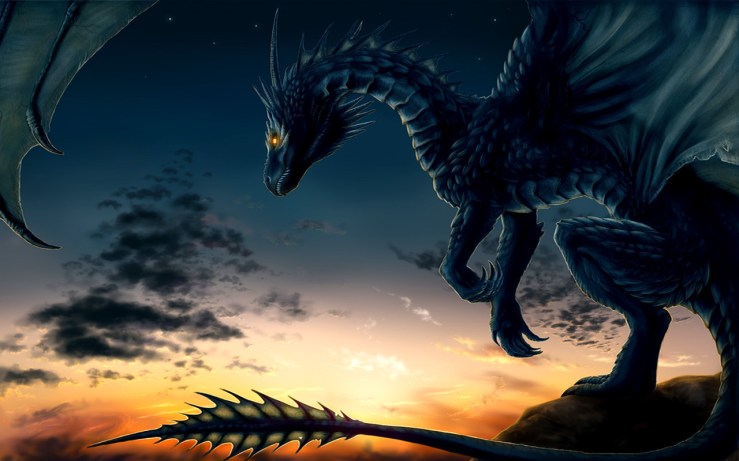
Dragon-Wallpaper-dragons-13975575-1280-800
Creator unknown, borrowed from fanpop.com

The kiralla was the answer to the question:  what does someone’s soul look like?

Or more to the point, what is the aspect of someone whose soul has achieved a divine level and balance of both Mendaihu and Shenaihu spirit?  The ultimate ascension, where they are able to control both sides of themselves without inner turmoil.  In the context of the Mendaihu Universe, the kiralla aspect is in ancestral memory: it’s what the purest Trisandi spirit looks like.  So in essence, if one is kiralla, either naturally or awakened through ritual, then they are considered to have truly returned to their spiritual roots.

[Yeah, I know, pretty heavy stuff there.]

The idea of the kiralla came to me during the 1995-6 season of me reading all kinds of New Age books.  I’d borrowed the idea of reptilians in fantasy and conspiracy (thank you David Icke) and the Pleiadians (thank you Barbara Marciniak) and played around with it for a while.  What if aliens were a normal and integral part of human reality?  I’d chosen dragons as the physical embodiment, aware of their mythical and mystical history.  I took out the conspiracy and the trope of aliens-as-villains (as well as its overused cousin, aliens-as-overlords-because-us-humans-are-ignorant-and-weak-insects) and re-introduced them as our long-forgotten ancestral kin.

Which ultimately means that we humans are also able to ascend enough to become kiralla as well.  This fact alone makes up quite an important part of the Bridgetown Trilogy and the Mendaihu Universe.

The strength of the kiralla is as fearsome as their presence.  Generally they are about thirty feet long from snout to tail tip, about ten to fifteen feet tall.  Their wingspan is about thirty to forty feet.  Their coloring, shape and physical attributes vary and are related to the Trisandi clan they come from.  They are social creatures, but they are just as fine being on their own for extended periods of time.  Their psionic abilities are unrivaled and immeasurable.  They are able to Lightwalk very long distances in a very short amount of time, either in kiralla or in human form.  The feel their highest responsibility is in keeping an unending, protective (yet rarely interactive) watch over humans and other spiritual kin.

And yes, we will be seeing a lot more of them in The Persistence of Memories and The Balance of Light!

* * * * * *

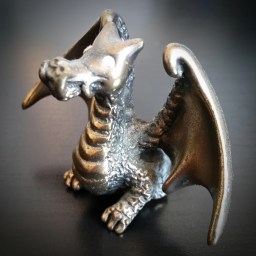
2016-04-13 13.08.44
Dragon by Honeck Sculpture

This little youngster here was my mascot for most of the writing of the trilogy, which I picked up at one of the Readercons I went to.  It was made by Honeck Sculpture. They make excellent statues of all sizes and are definitely worth checking out.

I named it after a character you’ll meet in The Persistence of Memories.

#atozchallenge: J is for Madeleine Jakes

Kathleen Turner

Q: What is Madeleine Jakes’ origin?

A: Even though I had Caren and Denni essentially living on their own, I still wanted to provide them some kind of an elder presence, someone who’s not taking care of them 24/7 but is there as someone to lean on when times get tough.  Originally I didn’t plan to have her in that many scenes, relegating her to a tertiary character, but like Christine Gorecki, she evolved into someone who kept popping up at the most interesting and unexpected moments.  She’ll show up in a number of important scenes in The Persistence of Memories and The Balance of Light.

Q: How is she related to Caren and Denni Johnson?

A: She’s a family friend from quite a long time back.  She’s a retired Data Research Library archivist and now writes freelance.  She lives next door to Caren and Denni, frequently checks in on them, and occasionally keeps their place clean, especially when Caren’s stuck on a particularly hard case.

Q: That’s Kathleen Turner in that picture.  Is that who Madeleine is based on?

A: Actually, Madeleine’s a character I without a real-life inspiration…I originally created her as a typical older relative.  But the more she showed up, the more I realized that she was someone who might be older in age, but still embraces life as if she was 30.  She’s someone who rarely holds back her words and thoughts, and despite her disability (she lost a leg soon after the events of the Eighth Embodiment and has a cybernetic replacement), she sure as hell isn’t going to let life pass her by.  I can totally see Kathleen Turner pulling that off, throwing shade and putting people in their place.

Q: What is her connection to the Mendaihu?

A: [Shhh — don’t tell anyone, but she’s a Mendaihu Elder.  Nobody, not even any of the main characters, knows this!]

Q: Anything else?

A: She’s got an amazingly sharp memory, which is why she chose to work as an archivist.  She’s a mid-level certificated soulhealer and occasionally performs healings upon request.  She’s also adept at Lightwalking, but she hasn’t done that in at least a decade and a half, for very personal reasons.  She never married and rarely dated.  Caren will sometimes think Madeleine shouldn’t be so overly active because of her age, but she will remind her otherwise right quick, much to Caren’s embarrassment.  Denni absolutely adores her and thinks of her as an aunt, and will visit her apartment all the time.  She will never reveal this to Caren or Denni: she made a promise to Aram and Celine, two days before they died, that she would look over their daughters if they did not survive the case they were currently working on.

#atozchallenge: H is for Hallera and other CNF planets

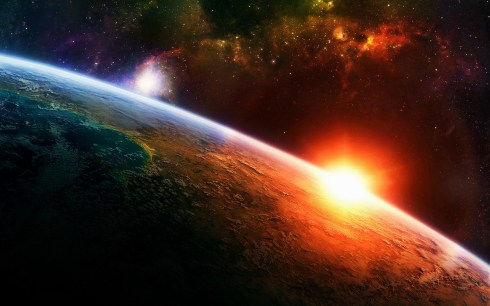
Planet-Earth-planet-earth-21056677-1920-1200

Back when I first started planning out the Mendaihu Universe — or more correctly, the Vigil Universe, as I’d envisioned it then — I’d thought of creating a multiplanetary federation in which these stories could take place.  On the same day I’d spent in that overheated laundromat on Charles Street in Boston coming up with the Bridgetown setting, I made some cursory notes on this federation, but thanks to overthinking the physics of space travel as well as realizing I was overreaching a bit, I scaled back so the story would remain on a future Earth.  I’d keep this federation idea in pocket for future ideas.

Crimson-Null Foundation was a name I came up with before I even had an idea.  Originally it was ‘Crimson Nine’ as I was going to have nine planets involved.  I knew “Crimson” was going to reference Earth, but it took me quite sometime to build something around the rest of the name.
It wasn’t until writing The Phoenix Effect that I came up with the idea of Null, which was my own personal answer to bending the laws of physics for space travel.  It was partly inspired by the New Age books I’d been reading, specifically the subjects of remote viewing and astral travel.  I let the idea simmer for a few weeks, doing some deep thinking about the ground rules before I even wrote about it.  The shortest, oversimplified version I came up with: while in reality the body carries the soul in travel, in Null travel it’s the opposite: the soul travels and pulls the body along with it.  It’s a LOT more complicated than that, of course, but that’s the elevator pitch for it.
The use of the word “Null” soon changed to “Light” as the idea expanded, but I felt Null should remain when it’s referred to commercially: the Nullport, for instance.  This is also the reason I kept the “Foundation” part of it, to hint that it this planetary group is centered around commerce as well as peace treaties, but less so about the spiritual end of things.

Trisanda is not part of the CNF, even though it’s the ancestral homeworld of everyone involved; they are not part of the commercial ventures, only spiritual ones.

The first-in-line planet on the CNF board is of course Meraladh [mey-rah-LADH, slight lisp on the dh], the current physical homeworld of the aliens in this universe.  It’s an Earthlike planet that has five major continents and numerous satellite islands.  It’s the first planet that the Trisandi colonized after starting their spacefaring age, and has become a major travel destination for both business and pleasure.  In the trilogy, we meet numerous characters who are full or half-Meraladhza.

The second planet is Mannaka [mahn-NAH-kah], which many call the Midway between Meraladh and Earth.  It started out as a colony planet during the Trisandi spacefaring age, and was originally to be closed down once they traveled to Earth.  However, many of the families that had taken root there during this age did not want to abandon it.  It’s got a much smaller population than Meraladh or Earth, but it’s one of the most important transportation hubs in the CNF.  The Mannaki are an incredibly friendly and sociable people, and are also fiercely protective of their own.  They’re the leaders in transportation and communication technologies.  Councilor Mancka Udéma, a member of the Provincial Governor’s Council, who we meet in the latter half of A Division of Souls, is Mannaki.

Earth/Gharra is the third-important planet in terms of the CNF, and was the main destination of the Trisandi spacefarers.  Eons later the Meraladians reestablished contact with Earth to strengthen their connection; both planets created the Foundation soon after to solidify the commercial and spiritual connections of all planets inhabited fully or partly by Meraladians.
Gharra [GAH-rrah, very slight glottal fricative on the rr] is the original name given by the Trisandi to the planet.  Whenever the planet is talked about in spiritual terms, both the Mendaihu and Shenaihu will always refer to it as Gharra.

Fourth is Hallera [HAH-leh-rah], a purely Meraladian-made satellite world in which its inhabitants all live within the planet, not outside of it.  It’s another midway planet and is mainly a transportation hub, both for Null travel and for shipping purposes.  There are also some minor technological and industrial companies based here as well.  [Later on when I started working second shift at a warehouse in late 2000, I came up with an MU-related story about dock workers on Hallera.  I’m yet to write it, but I’m sure I’ll be doing so soon enough.]
Hallera does have a significant population, mostly those who live and work there, such as dock workers, transportation, security, and so on.  CNF representative Jack Priestley, who we meet early on in A Division of Souls, grew up here.

Fifth is Runeia [roo-NAY-ah], a planet not too far from Hallera.  It unfortunately has gotten a bit of a bad reputation, as technically it’s a prison planet; this is where many of the worst criminals would be sent to for rehabilitation.  The world itself is actually quite beautiful and lovingly curated by its inhabitants.  It’s extremely distant from most of the other planets, which adds to its unfair reputation as a bad place to be.  [This one’s a Tuckerized name:  It’s named after the final track, “Runeii”, of Talk Talk’s 1991 album Laughing Stock.  That song title is also the inspiration of using the extra ‘i’ at the end of some clan names.]

There are other planets involved, but I have yet to sketch them out. 🙂

#atozchallenge: G is for Christine Gorecki

Q: What’s Christine’s origin?

A: Christine is one of my favorite characters I’ve ever come up with, and she wasn’t even planned as a main character.  She originally started as a passing reference between Caren and Poe up on the Crest in a scene in A Division of Souls, but she soon took on a life of her own when I needed her later in a scene at the Moulding Warehouse.  From there she took on a life of her own and ended up part of the main cast.  Her name is two Tuckerizations: her first name is one of my cousins and her last name is that Lamb song I posted under Caren’s entry the other day.
I like to describe Christine as one of those characters that doesn’t quite fit into the story’s universe — or as my wife says of such characters, “She’s in a completely different movie.”  Someone who’s unlike everyone else, just that little bit peculiar.  And yet she’s an integral part of the story’s universe, for many and varied reasons.  She serves as the ‘alternate viewpoint’, as it were, to what’s going on.  Someone who’s far enough away from the situation and can provide a needed clarity.

Q: What is her history in the Mendaihu Universe?

A: She was a longtime agent of the Alien Relations Unit, joining a year or so before Caren and Poe.  She’s extremely dedicated in whatever work she does, sometimes to her detriment; it’s because of this (well, and a few other things that aren’t revealed until a bit later in the trilogy) that she’s taken an extended leave of absence from the ARU.  In the meantime she’s been freelancing as a private investigator as well as a certified soulhealer.  She’s still close friends with her former ARU teammates, and they fully understand that she had to take some personal time off and distance herself from everyone for a while.

Q: Is she Mendaihu as well?

A: [REDACTED]

Q: Oookay then.  What about a description?  I don’t see a picture here.  Is she not based on anyone famous?

A: She’s a mix of various people.  She has long curly blond hair that she often keeps loosely tied back.  She’s incredibly fit (she exercises regularly and goes on occasional runs, a holdover from her ARU days).  She’s about the same height as Caren, maybe a slight bit taller.

Q: She has a close relationship with Alec Poe.  What’s the background on that?

A: There isn’t much to explain, really.  They’re just longtime friends that have grown very fond of each other.  There’s nothing romantic or sexual there, nor is it familial…it’s just another example of two spirits who happen to connect and interweave with each other easily and naturally.  They learned this quite early on while they were starting out at the ARU and would often work on cases together because of it.  This is why she was the first person Poe thought of when they were trying to calm the Rain of Light in A Division of Souls.

Q: Anything else?

A: She owns the building that she works and lives in; she has a storefront office on the ground floor, three floors of apartments that she rents out (she lives in the front apartment on the top floor), and has a spiritwork shed set up on the roof.  She’s somewhat introverted when it comes to nonwork socializing; she’d rather be the one sitting back and listening to everyone else than be the center of attention.  She really loves (and misses) hanging out with her former ARU teammates, and is planning some get-togethers after the current Season of Embodiment is over.  She never seems to be able to sit still for more than a few minutes.  She used to smoke ‘socially’ — she’d only light up if anyone else (like Poe for instance) was doing the same.  Otherwise she doesn’t smoke as a habit.  [Yes, she’s well aware of how smoking kind of defeats the purpose of her exercising, but embraces that personality conflict as just a part of who she is.]  She has a lovely singing voice, but never sings in front of anyone.  She’s a bit of a foodie, but loves Meraladian cuisine in particular.
She doesn’t have a theme song, but her character tends to lean towards moody atmospheric instrumentals along the lines of Boards of Canada or Sigur Rós.

#atozchallenge: F is for Flora and Fauna

New-England-in-Autumn-Road-Trip-Holiday-SS
Photo courtesy of The American Road Trip Company — yes, rural New England really does look like this!

When it came time to describe Trisanda, first in The Phoenix Effect and then in the Bridgetown Trilogy, I already knew what it would look like:  New England in the autumn.  Specifically, the area of central and western Massachusetts, where I’d grown up and lived for so many years.  Far from most of the big cities, where going somewhere requires a thirty-mile drive which you don’t mind at all, because that means you get to see the foliage and listen to some tunes.  There are a hell of a lot more trees and animals than there are people in some of these towns.

I worked for my town’s Public Works back in the summers of 1989 and 1990, which meant spending the entire day pushing a lawn mower up and down and around the gravestones of the dozen or so cemeteries around the town (our town was incorporated in 1762, so there are quite a few generations buried there), or working on the sides of quiet back roads, cleaning overgrowth and collecting litter.  Each day I’d be neck deep in nature, watching the seasons and the colors change.  Years later, when I’d have to drive those thirty-plus miles to my day job, I’d drive the back roads on purpose just so I could enjoy the views.

Come 1997, I already knew that Trisanda was going to embrace that natural setting, the miles of trees and grassy fields, old farms and whatnot.  I wanted a somewhat pristine planet; one that evolved organically and with little outside influence (returning to the theme of emotional/intellectual influence there).

There are towns and cities on Trisanda, of course…the trilogy just doesn’t focus on them.  It focuses more on the outpost towns, in particular one named Bann Dassah (pronunciation: bahn DAH-sah), where one particular character, Eprysia Kaalen (aka Ampryss) lives out her life as a Watcher of Earth/Gharra.  We’ll see more of Bann Dassah in The Persistence of Memories and especially in The Balance of Light.

When I wrote the scene where Natianos Lehanna and Janoss Miradesi visit Trisanda — the first scene on Trisanda that didn’t involve the Landing Field or the Gathering Table — I wanted to show a world that would be familiar yet somehow alien.  The forest would be similar to the above photo; a mix of pines, ashes, maples, birches, and so on to give it color.  [I gave names to only a few, however…the pine-like kriosi (kree-OH-see) and the fir-like skrihad (skree-HAHD)…but you get the picture.]

And what does one see in the woods of New England, sometimes to our frustration?  Wild animals like deer, wildcats and dogs.  Similar creatures would most likely hang out in the wilds of Trisanda as well as part of the ecology.  So in comes the wolflike gundaevi (goon-DAY-vee) and the feline jenha (JENN-hah) as background elements to the above scene.  There are others that are heard or their shadows seen, but I don’t go into detail.


So is that all there is to worldbuilding?  Heh, if only!  It really does depend on the situation.  Since 90% of the trilogy takes place in Bridgetown, I came up with all kinds of details: communities, neighborhoods, maps, population, and so on.  The 10% that takes place on Trisanda is mostly in the woods or in three or four specific places, so I didn’t need to go into too much detail, and focused more on minor details to fill out description.  I’m sure if/when Trisanda pops up in future Mendaihu Universe stories, I’ll be more elaborate,  depending on the plot.

#atozchallenge: E is for Edwin-Akandia Sensory Device

I’ll admit, this one was totally inspired by Neon Genesis Evangelion, AKIRA and Ghost in the Shell.

While I was building up the background of the Alien Relations Unit, I was struck by the idea: is there a system or program that is able to take spirit readings, so to speak, on the same level of humans and Meraladians with the same psionic abilities?  Sure, nearly all of the ARU agents have some kind of ability they’re able to use in their job.  There are even special agents that are hired for their specific strengths; some have an exceptionally strong clairsentience (soulsensing by touch), clairaudience (strong use of innerspeak), maybe even claircognizance (reality seers).  Caren Johnson, for instance, reads at a high level of clairsentience, and has used it multiple times in A Division of Souls.

But what about those agents in the ARU and the B-Town Police Department and elsewhere?  How else would an agent like Nick Slater, who has little to no psionic ability at all, be a functioning part of this system?

That’s where the joint human/Meraladian techware company Edwin-Akandia comes in.  Working with the Provincial Governor’s Council, the Crimson-Null Foundation and Bridgetown itself, the company created a device that is able to read and process the energy waves of all sentient beings.  [Think of it along the lines of scientists that are able to read and measure the energies that are kicked out from the Sun and even distant stars.  Same theory, just enhanced and narrowed down to human level.]  The EASD scans the subject and then compares the readings to a vast database and provides a list of possible actions that subject may take, and reports their current location.

Its center of operations is in the Mirades Tower, and the system itself is in a geoscyhronous orbital satellite (Tigua Bay Station) above Bridgetown.  The operations are set up so that it cannot be controlled by a single unit; for example, the Alien Relations Unit has the clearance to use it only within its jurisdiction.  Any changes to the EASD system must go through the Provincial Governor’s Council as well as the Crimson-Null Foundation.

It’s not 100% perfect, but it’s quite reliable.  Some feel that Bridgetown’s community agencies rely on it far more than necessary.  There are also those who feel the use of the EASD is an invasion of privacy, though it has never successfully been proven.  There is no actual personal information in EASD’s database, and it is heavily regulated by the PGC and the CNF.


[Note: for those playing along, ‘Edwin’ is indeed a Tuckerization.  It’s named after Colin Edwin, bass player for Porcupine Tree, whose Stupid DreamLightbulb SunStars Die: the Delerium Years and In Absentia albums were on endless repeat during my writing sessions.]

#atozchallenge: D is for Denni Johnson

Denni Johnson - Jena MaloneQ: Denni’s got quite the role in this trilogy as the One of All Sacred.  What’s her origin?

A: She was a relatively new character alongside Caren and Poe, but she didn’t really have much of a role until about a quarter of the way into The Phoenix Effect.  A proto-Denni popped up in True Faith in a similar role but with vastly different motives and personality.  Both versions were pre-teens.  When writing the trilogy it made more sense for her to be a teenager and a little closer in age to Caren.

Q: Why the One of All Sacred, anyway?  Where did that idea come from?

A: In a way that came from a subplot in TF.  I was fascinated by the idea of Chosen One plotlines at the time, especially ones with mundane origins that ascend to deity level, either by a ritual or by outside forces.  It was still a subplot in TPE, but by the time of the trilogy reboot it became a major plot point — so much so that her awakening is Chapter 1 of A Division of Souls.  She’s one of the major drivers of the plot of the trilogy.  [More about the One of All Sacred on 4/18 when we hit ‘O’ on the A to Z Challenge!]

Q: Like her sister, she’s got a Mendaihu name as well.  An extended version of it is given in A Division of Souls.  What’s the story behind that?

A: She gives her Mendaihu name as Denysia Shalei si Emmadha si Dhumélis.  In Anjshé, the ‘si’ is a conjunction — in this sense she’s merely giving multiple clan names that her Trisandi soul is tied to.  [Pronunciation: shah-LEYey-MADH-ah, and dhoo-MEY-lees.  The ‘dh’ is a ‘d’ sound with a very slight lisp.]  All three clans are highly regarded on Trisanda as strong in both spirit and in deed.  She purposely gave all three names at the Moulding Warehouse to prove a single point: she wasn’t going to take her role as the One of All Sacred lightly, not if she claimed to be from such an honored lineage.
And yes, this is a lineage for her entire family.  Caren almost never claims all three names as she rarely sees need for it.

Q: That’s Jena Malone in that picture.  Is she the basis for Denni?

A: Yes, she is.  I wrote TPE around the same time the movie Contact, where she played the young Ellie Arroway.  Spunky, smart and self-reliant, yet still relies on the connection of others.  The trilogy version has her somewhat older (maybe her role in Donnie Darko, which was out about the same time I started ADoS).

Q: For a fifteen-year-old girl, she certainly has a hell of a lot of responsibility, doesn’t she?

A: Well, sure, why not?  She shares much the same daily responsibilities as her older sister Caren, especially since they’re living on their own.  Her parents made sure she was self-reliant, as both they and Caren were ARU agents, and they didn’t want her to completely depend on the help of others.  But they also taught her that there’s no fault in asking for it, either.  Whenever she’s performing her duties as the One of All Sacred, she always has that in the back of her mind, and that’s why she nearly always encourages community but also reminds her followers to think for themselves instead of following her blindly.
That’s not to say that she immediately becomes a Magical Girl and her real life is conveniently forgotten whenever she’s doing her magic as the One.  Now that she’s known as the One by pretty much everyone on Earth, she of course feels a bit self-conscious, not to mention feeling a bit weird about still needing to attend school.  She wants to do her best as the One, but she also wants to continue being teenaged Denni.  I actually touch on this theme in The Persistence of Memories as well as The Balance of Light.
In short: she’s willing to take all the responsibility that comes with being a deity, but she refuses to let it go to her head.

Q: What is her relationship with Amna Ehramanis?

A: She’s her best bud, they’ve known each other since they were five.  Like all lifelong friends, they’ve gone through all kinds of ups and downs, scrapes and japes, and they’re still BFFs.  Denni always plays the straight character to Amna’s wackiness.  As to why Amna becomes her devoted Protector once she’s fully awakened, well…there are a few reasons for that, which are revealed in TPoM and TBoL.  😉

Q: Anything else?

A: Like Caren, she’s a music fiend and constantly streams stuff from her sister’s collection.  She’s a voracious reader.  She’s a decent student and gets excellent marks, but she’ll admit she doesn’t see the point in trying to be top student.  She loves hanging out with Caren’s fellow agents at the ARU, and thinks of them as an extended family.  In particular she looks upon Alec Poe as a big brother.  She’s had a few school crushes here and there, but nothing serious, and she’s okay with that.  There’s a fifteen-year difference between Caren and Denni, which might lead some to think she was an unplanned pregnancy, but she’s actually not.  Aram and Celine deliberately chose to have another child after the previous Season of Embodiment.  (As to whether they knew her fate at that time is not known.)

And yes, she too has a theme song, Lamb’s “Small”. This is what she thinks about when she’s up in her nonspace.
#atozchallenge: C is for Caren Johnson

Caren Johnson - Kristen ClokeQ:  What is Caren’s origin?

A:  Caren is actually the first new character I created for the trilogy back in 1997 when I started The Phoenix Effect.  I came up with her (as well as Alec Poe) on that first day of writing.  I’ll admit there was a slight inspiration from The X-Files which I was a fan of at the time, as I was looking for two investigators who were put into a situation they weren’t exactly comfortable with.

Q: She’s got a Mendaihu name as well.  Why is that?

A: Her Mendaihu name is Karinna Shalei.  [First name pronounced ka-RINN-nah].  She was given it by her parents, Aram and Celine Johnson, who were high-level Mendaihu adepts as well as agents for the Alien Relations Unit.  The Mendaihu blood runs extremely strong in her entire family.  She takes this name very seriously, and never uses it frivolously.  The same with her sister Denni; she will not call her ‘Denysia’ unless it is warranted.
The giving of Trisandi clan names to those from Earth is not considered appropriation by the Meraladians; they actually consider it a form of incredibly deep respect, as they feel these people are willing to completely embrace their ancient physical and spiritual connections with Trisanda.

Q: That’s Kristen Cloke up there.  Is that who Caren is based on, physically?

A: Yes!  In fact, she was inspired by Kristen’s role as Captain Shane Vansen in Space: Above and Beyond (of which I was a HUGE fan).  Someone who isn’t entirely happy with the role she’s been given, but that won’t stop her from performing it to the best of her ability.  Like Vansen, Caren is also someone who takes her responsibilities very seriously, especially when it comes to those she works with or mentors.  Caren connects personally and spiritually with everyone she meets.
I can even tell you the scene where it dawned on me that she’s definitely Caren: it’s a rare and very personal conversation between her and 1st Lt. Cooper Hawkes in the episode ‘Hostile Visit’, which takes place just before they’re about to head out on a dangerous mission.  This is definitely a conversation she’d have with Alec Poe.

Q: Her relationship with Anando Shalei seems to be somewhat unique.  Has she always questioned her relationships, romantic and otherwise?

A: No, not always.  The death of her parents really took a lot out of her emotionally, and because of that she keeps a specific distance from others, for fear of getting too close and then losing them as well.  She’s fully aware of this decision, and has never let it completely get to her, knowing full well that she has to move past that.
Caren’s connection with others is definitely unique; it was partly based on a few friendships and relationships I’d had where I simply clicked with the person on a deep level in a very short amount of time.  It’s not merely a romantic or sexual attraction she has with Anando, but a spiritual one.  And because of that, Caren is nervous at first, wondering how it could possibly work.  The longer they’re together, however, the more they learn to rely on each other for comfort, affection, and a firm base of spirit.
Her last serious relationship before Anando was with Agent Sheila Kennedy, though they both decided to end it due to their work situation and remain close friends.  They still flirt with each other now and again, mostly for the humor of it.
As for friendships, she is extremely loyal, and will always have your back.  She also has a very thin filter, so she’ll often say what’s on her mind, even if it bothers you.  She takes every kind of relationship seriously.  Especially the one with her sister.

Q: Anything else?

A: She often has trouble falling asleep at night, as she often lets her thoughts run rampant near the end of the day.  She’s been trying her best to fix that.  She has a scar on her thigh from a bullet grazing it during an investigation.  She has exceptionally strong night vision.  She can be very impulsive and impatient sometimes, which has gotten her in trouble now and again.  She’s got a very snarky sense of humor.  She won’t admit it to Poe (who will surely never let her hear the end of it), but she really does enjoy dressing up fancy now and again.  She’s an avid music fan and has quite a large collection; her tastes depend on mood and situation, but she has a soft spot for meditative music, especially when she’s had a taxing day at work.  She’ll always say her happiest moments are when she’s hanging out with Denni.

And yes, she has a theme song:  Lamb’s “Gorecki”.  It’s exactly how she feels about Anando, even if she has trouble articulating it to him or anyone else.

Lamb ‘Gorecki’ from Luke Copeland on Vimeo.