#atozchallenge: R is for Anton Rieflin

Q: What’s the Governor’s origin?

A: Provincial Governor Anton Rieflin originally started out in The Phoenix Effect as more of an obstacle for Caren and Alec, as he’d originally been slated to be the token ‘guy in charge who obviously doesn’t know what’s really going on.’  That kind of character frustrated me, however, because it could be so predictable.  His character expanded significantly when I started A Division of Souls, when I decided he’d be a lot smarter than he let on.  I also gave him his own subplot, having to deal with the frustrations of city politics while something completely non-political was affecting his city.

Q: How is he connected to the Mendaihu Universe?

A: As soon as Nehalé Usarai’s mas awakening ritual calmed down, I started to think: the governor’s not going to like this.  This kind of ties in with things I notice with this kind of story: something huge happens that affects thousands of people…and either the government is nonexistent, or they’re the stubborn wrench in the works that keeps our heroes from getting things done.  I chose to play it a little more realistically:  the government is well aware of what just happened and want to do something about it.  Rieflin’s conflict is that his councilors have stalemated: half want to follow the Mendaihu request of remaining hands-off for now, but the other half want to get involved and stop it by force if they have to.
As far as he knows, he’s neither Mendaihu nor Shenaihu, so he has the added conflict of not exactly understanding what’s going on in the spiritual realm…but he’s open minded and willing to learn.

Q: Is he based on anyone in particular?

A: No, just someone who makes an impression on you partly because of his size (he’s quite tall at nearly seven feet, and is often mistaken for being Meraladian, which he’s not), and partly because of his personality.  He honestly does have the best of intentions, and is well aware of the intentions of the citizens he governs.  He’s just an all around nice guy, even despite what the naysayers and the cynics say.  His name is a Tuckerization of two drummers:  Anton Fig (David Letterman’s house band) and Bill Rieflin (Ministry, KMFDM, etc).  In my head, his last name is pronounced RYE-flinn.

Q: Even though he’s the province’s leader, he defers quite often to Nandahya Mirades, his Meraladian second in command.  Is that regular protocol?

A: Yes, it is.  The Provincial Governor’s Council is set up with a certain amount of balance: each councilor represents a specific department, and there is also a corresponding councilor for a related department.  For instance, we have Commissioner Allen Tatreaux of the Alien Relations Unit balancing out General Stephen Phillips of the Special Forces Guard.  Nandahya Mirades [Nahn-DAH-yah MEE-rah-dees] is considered Rieflin’s balance, so whenever a deciding vote is needed from the leader, it must come from both of them.

Q: Anything else?

A: As Provincial Governor, he has living quarters in the Mirades Tower, not far from his offices, but he also owns a house on Sachers Island.  He’s single and has no children at this time, but his parents and siblings live across the river in the suburbs.  He’s a very intelligent and curious person; he holds degrees in business, political theory and history, all acquired at Bridgetown University.  He’s well aware that some citizens view him as a puppet and/or an idiot, and he likes to use that to his advantage…that way he will often surprise them by doing exactly the right thing at the right time.  He likes to be able to trust those he works with, without needing to constantly monitor them or question their motives.  He has a very low tolerance level for bullshit and will call people on it without holding back.  He has a very high appreciation for art, and isn’t so bad an artist himself.  Among the few paintings he has hung in his Tower office, he also has a framed painting he did himself, of Bridgetown as seen from the Crest at Breed’s Hill.
#atozchallenge: Q is for LGBTQ in the Mendaihu Universe

It took me a bit to think about this particular entry.  I wanted to do it justice, and I definitely didn’t want to make it sound like I was saying Hey, I have [certain kind of person] in my books!  Ain’t I progressive?  Where’s my gold star?

I try to give my characters some kind of depth when I’m creating them.  Some of them pan out, some of them don’t*, but most of the time I’d like to think I give them some kind of unique personality.  Someone I’d run into on a random day, have a conversation with, get to know as a coworker, and so on.  I’m fascinated by the quirks and habits of people, their strengths and their weaknesses, and how they use those bits of their personality throughout their life.

I didn’t set out to include any token characters when I started writing A Division of Souls.  In fact, I was doing my best NOT to do that.  Almost from the beginning my game plan was “Nah, that’s a trope/stereotype, it’s an easy out.  How do I take that one extra step to make it different?”  It’s kind of funny, really; each time I did try to write a stereotypical character, I completely failed at it.  I’d get a ways down the road in the story and get completely bored by this flat-minded idiot I’d created.  It’s the nonconformist in me, I guess…heh.

Anyway, when it came time to write the Bridgetown Trilogy, I wanted to create the most realistic characters I could, so I decided to pick up on various personality traits of people around me.  I was working at the candle warehouse by the time I started A Division of Souls, and it was quite the large warehouse, so I met and worked with a LOT of people of different stripes.  No character is based on a specific person from that time; it was just various traits I borrowed from quite a few people.

Did I plan on Caren and Sheila having a short romantic relationship?  I don’t believe I did…it was just a background thing that I’d come up with when I wrote the Questioning Room scenes in ADoS.  Caren was there to calm her friend down, and I knew they had a long and very close friendship, but it wasn’t until I wrote that scene that it just seemed right; it felt right to have them be very close physically and emotionally just then.  I thought about it for a few moments: what were their sexual preferences?  Sheila’s loud and free-spirited, and would probably be open-minded on that subject, so I felt she should at least be bisexual.  As for Caren…she’s more tense, more reserved, but she’s also quite open and honest with her emotions, so she might not have been truly bi, maybe just curious.  They never show any romantic feelings towards each other in public, but the reader can tell there’s still a deep connection there, even after the relationship is over.

As for Saone and Kryssyna…that was a little more deliberate.  I wanted Saone to be someone who did not fit in at all.  She’s intelligent, but not as smart as her sisters.  She’s Shenaihu, but she doesn’t measure up to her father’s high expectations.  She’s resourceful, but no one bothers to ask her for help.  She has all this great potential, but it seems everyone she’s supposed to impress won’t give her the time of day.  The only person who sees her for who she really is, is Kryssyna.  But why?  Because Kryss is honest, both with herself and with others.  She’s an ARU agent who has no time for judging others by their status.  She sees past Saone’s rank and place, and sees that potential.  This relationship, then, was going to be less about any sexual attraction than it was a personal one.  Kryss loves Saone for her drive and determination, especially when it’s to do the right thing.  And Saone loves Kryss because she’s always there to take care of her; she inspires her to keep going.  I knew then that was going to be a very strong, very long-lasting relationship.

I have no idea how other writers decide how to build their characters, to tell the truth.  I just know how I do it to my satisfaction.  There are a few other LGBTQ characters in the Trilogy, because it just made sense to put them there.  I won’t set out to write a specific type most of the time, I’ll just choose one at random and roll with it.  I’ll admit there is a bit of self-conscious selection: I may deliberately want to have a character be gay or lesbian, but I’m not going to shoehorn that trait in if it’s not true to the character.  Nearly all the characters in the Bridgetown Trilogy came to me at the inception of the scene, really.  I just choose to keep a very long and extremely varied list of possible traits to choose from and go with what seems to fit.  And that seems to work out just fine.


* – My trunked novel Love Like Blood was a good example of flat characters.  I had some neat ideas in that story, but it was my attempt at completely commercial fiction.  Most of the characters ended up all flash and no depth.  It was definitely not one of my best works.

#atozchallenge: P is for Alec Poe

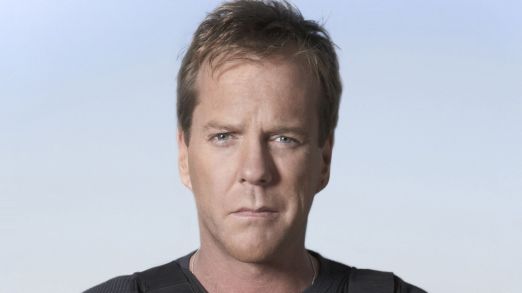
Alec Poe - Keifer Sutherland

Q: What’s Alec’s origin?

A: Alec arrived the same day as Caren, on that very first day I started writing The Phoenix Effect.  I always make sure he and Caren are always standing on equal ground in whatever they do.  I based their work relationship a bit on Mulder and Scully from The X-Files, but more of it came from Kusanagi and Batou from Ghost in the Shell, as well as Deunan and Briareos from Appleseed.  They work extremely well together and are very close, and yet their personalities are quite different.
As for his name, I wanted one that sounded slightly out of fashion from everyone else’s.  He’s almost always referred to as “Poe” by Caren and his fellow agents.

Q: He’s got a Mendaihu name as well.  What’s that origin?

A: Alix Eiyashné [ey-YASH-ney] is not just a Mendaihu name, it’s his given birth name.  Alec was given up for adoption almost immediately after he was born.  His adoptive parents, Angela and Daniel Poe, are both academics and gave him a very robust education growing up.  He chose not to follow up with his birth parents and never met them, though his adoptive parents did keep in loose touch with them, if just to trade information on health issues and whatnot.  He finds out more about them, and himself, in The Persistence of Memories, much of it quite unexpected.
He very rarely uses his Mendaihu name, for very personal reasons.

Q: That’s Kiefer Sutherland in that picture.  Is Alec based on him?

A: Almost from the start, I envisioned him playing the role.  Strong but soft-spoken, good-looking but weathered by life.  Out of all the characters, Alec is the one that’s changed the least physically throughout the various drafts.  Whenever I wrote a scene with him, I pictured Sutherland acting it out so I’d be able to get the mannerisms down correctly.

Q: He certainly does seem to smoke a lot, doesn’t he?  People still smoke in the far future?

A: I’ll totally cop to the fact that I wrote most of Poe’s scenes for the first two books while I was a smoker back in the late 90s-early 00s.  I needed to give him a nervous twitch, and that was the first thing that came to mind.  He’s extremely aware of his habit and how it may bother some characters, so he’ll only light up if others around him don’t mind.  Caren isn’t the biggest fan of it, but she lets him do it anyway because it’s a release for him.

And yes, that’s a very good question!  You don’t see smokers as much as you did fifteen or so years ago, thanks to state laws forbidding it in certain public places, but back when I first wrote many of these scenes, it was rarely frowned upon.  It’s a habit/pastime that has evolved over the centuries but never quite went away.  Even now, vaping already has fans and detractors.  I chose to keep it in the Mendaihu Universe, having it still a thing.  It’s still not that healthy, but it’s not a taboo either.  It just is.

Q: He has a unique relationship with Akaina Shalei, the Mendaihu agent.  What’s with that?

A: This was a relationship that took me some time to figure out.  At first I was worried that I was forcing a match on him (after all, I’d put Caren and Anando together not that long before), but there was something about his first meeting with her that stuck with me, so I chose to play it out.  He’s quite the moody guy, and I wanted someone other than Caren to give him some kind of mental/spiritual stability and balance.  Kai is full of patience and positivity, and she immediately noticed Poe’s startling lack of it.  She willingly opened herself to him almost from the start, and he wasn’t used to that, at least not outside his immediate friends, which intrigued him and attracted him to her.  In the process, Kai learns calm her sometimes overexcitable spirit by learning to slow herself down when he’s around.  Poe changes the most in the trilogy, mainly because of Kai.

Q: Anything else?

A: He still lives in the same apartment that he grew up in with his adoptive family; he bought it from them when they moved north to New Boston Province.  His demeanor can be off-putting sometimes, especially when he’s distracted by his thoughts.  [His habit of not finishing a sentence is totally me, which drives my wife nuts!]  Like Christine Gorecki, he feels more comfortable being on the periphery than being the center of attention.  He’s a voracious reader, thanks to his adoptive parents.  He has an older brother in that family, David; he also had a blood-relation sister from his birth family but she died during the last Embodiment.  He’s quite the cook at home, when he has the time for it.  He might be a smokestack, but he rarely touches alcohol.  He loves both Caren and Denni like family, and will do anything for them.  Despite his gruff outer shell, he’s a big ol’ softy.

#atozchallenge: O is for the One of All Sacred

Writing a character trope such as a Chosen One can be tricky, because there are so many ways you can fall into the trap of being predictable.  Too often they end up as the reluctant hero (Neo in The Matrix, Katniss in The Hunger Games) or the easily distracted and imperfect person who needs to learn how to ascend in status (Daniel in The Karate Kid, Karou in Daughter of Smoke and Bone).  But they sell, and readers love them, so I won’t say it’s necessarily a bad thing.

With Denni Johnson, I wanted her to be all of that — a reluctant hero, easily distracted and imperfect.  But I also wanted her to be aware that she was being put into that situation as well.  That’s part of her role as the One of All Sacred: she’s aware.  Which ups the ante with internal and external conflict, doesn’t it?  How do you play the role of deity without being pigeonholed into the role of savior or superhero?  That was one of Denni’s first pronouncements, even as she was entering Moulding Warehouse for the first time: she was a deity, but she was a human, just like everyone else there.  Don’t expect miracles.

The role of the One of All Sacred within the Mendaihu Universe is that of overseer, really.  They don’t necessarily have to change the world or make it a better place…their role is really just to make sure its problems don’t spiral out of control.  The spirit of the One is resurrected every twenty to twenty-five years (roughly once a generation or so) to keep an eye on things, gauge where we are in our evolution, and make a few changes or tweaks if necessary.

Denni Johnson is the Ninth Embodiment on Earth.  [There were many embodiments prior to Earth’s, both on Mannaka and Meraladh, but that’s another storyline entirely.]  Right away she’d decided that instead of trying to play the expected role, she’d change it to something that made more sense to her.  That in turn changed the expectations of all the parties involved.  Her personal choices affected everyone else in the process.  Instead of turning off Nehalé Usarai’s awakening ritual, she kept it going.  She saw it as a way to start with a bit of a clean slate; no one was prepared for this move, so everyone’s on the same page and fumbling a bit, including her.

Giving her the awareness of her situation was quite the trick; in essence, she’s in a constant state of paying attention to what’s going on and having the ability to change events if necessary.  She needed to be able to think on the fly, accept that she may make mistakes, and know when to let nature and/or fate take its course instead.

On a more spiritual level, I had to make sure that she wasn’t exactly seen as The Goddess That Is (an analog to the main gods and goddesses of current religions, and who pretty much runs — not rulesthe known universes).  The One is more of an Earth Goddess, the one in charge of the planet.  The position has been held by all kinds of people; young, old, man, woman, Meraladian, Earther, and so on.  Each Embodiment had their own strengths and weaknesses, successes and failures.  What makes Denni different?  Well…you’ll need to read the books to find out!


And then there’s Saisshalé.

As I’d said previously, there’s a yin-yang to everything in the Mendaihu Universe.  Yes, even the Dearest One has an opposing force, one who embraces chaos just as the One of All Sacred embraces order.  More about him on Friday.

#atozchallenge: N is for Nick Slater & Sheila Kennedy – Team Two

Q: Why a Team Two?  What’s their origin?

A: When I came up with the Alien Relations Unit, I already had a plan that they would work very much like an extended family of sorts, very much like how a police station or a fire house would.  I saw them as similar to the units from animes such as Patlabor, Ghost in the Shell (Chief Inspector Dylan Farraway was based on Chief Aramaki early on before I decided to make him a bit younger), and Bubblegum Crisis.

I also wanted a few characters who were involved in the story, but not as deeply as Caren and Alec.  They would be a part of any investigations, they would react to situations very much the same way, but they were able to give everyone else a clearer point of view, thanks to their distance.

Q: Are they based on anyone in particular?

A: Not really; I really wanted to give them unique personalities separate from most of the other characters in the trilogy.  Sheila is that one person in your circle of friends who’s loud and boisterous and fun and most likely the first to get into a scrap; Nick is the outsider who’s just recently joined the group and is still trying to figure out how to fit in.  Both last names are Tuckerizations of 90s memories of mine: Kennedy is the former MTV veejay, and Slater is Christian Slater.

Q: What’s their background?

A: Sheila is from quite a large family, of which she’s the second youngest; her parents were also ARU agents (they knew Caren’s parents well), her older siblings (two brothers, three sisters) are agents either in the police or fire forces.  Her little sister is training to be part of the Governor’s Special Forces Unit.  She’s extremely proud of her family’s dedication to the city and is glad to be a part of it.  She joined the Branden Hill ARU the same year that Caren did; they met during training and hit it off quickly.  She and Caren had a brief and slightly awkward romantic relationship before they broke it off for professional reasons.  They’re both still great friends.

Nick is an only child, and his parents live just south of Bridgetown at an outpost not that far from the outer B-Town hamlets across the Sachers River.  He chose to become a cadet for the B-Town Metro Police and was assigned a position in South City Sector.  He stayed there for about five years before requesting a transfer to the Branden Hill ARU.  The reason for the change in unit is unknown at this time; he never revealed it to anyone, other than stating that he wanted to work closer with the Mendaihu.  [Sheila seems to think it’s because he worked with them so often in South City that he’s created a tight connection.]

Q: Are either of them Mendaihu?

A: Sheila professes not to be, though she has very strong innerspeak and soulsensing abilities and could very easily be initiated if she so chose.  She does not want to, however.  She’s fine enough with being the ARU agent that she is.

Nick grew up with no psionic abilities whatsoever, and he doubts he’ll ever acquire them.  To make up for his shortcomings, he’s trained himself to be an incredibly resourceful and quick-thinking profiler for the Unit.

Q: Anything else?

A: Sheila is fiercely loyal to her coworkers, friends and family.  She always speaks her mind, and more than a few times she’s gotten written up by her superiors for her actions.  Despite that, she’s still highly respected by them.  She likes a physical connection, so will always be touching someone on the arm when talking to them.  She loves to listen to music and always has something playing in the background, even if it’s a contraband radio in the patrol car she’s driving.  She works out a few times a week and has a devastating right hook.

Nick is the only person who smokes as much as Alec does.  He’s also a coffee fiend.  He’s a few inches shorter than Sheila and she likes to tease him about that, as well as him being a Wilderlander (i.e., someone who grew up in the sticks).  He looks up to Caren and Alec as mentors, even if he never comments on it, and he always appreciates their help and direction.  He’s friendly with almost everyone he meets, but he’s also got a surprisingly short temper and a low tolerance for bullshit.  He tends to play the straight man to Sheila’s wildness, sometimes to comedic effect.

#atozchallenge: M is for Mendaihu and Shenaihu

Yin-yang.  That’s the theme of the stories within the Mendaihu Universe.

It’s about balance.  There is both evil and good within us.  We rarely like to admit it, but we are all full of conflicting morals and ethics.  We are driven both by our own emotions and thoughts, and what we are taught or expected to feel and think, and quite often they are all at loggerheads with each other.

I wanted to play around with this idea:  what, ultimately, is the right thing to do?

This question is posited throughout the Bridgetown trilogy.  Every character faces this same dilemma at some point in their arc.  Each character is given some kind of ascension in their spirit, some form of advanced knowledge, and they must choose how to utilize it.

They are also given an advanced awareness as well: they are now conscious of other spirits around them, whether they like it or not.  And ultimately this means that if they are to use their new knowledge, they are acutely aware of how it would affect not only themselves, but those around them.

The Mendaihu are the watchers, the protectors, the saviors.  And what of the Shenaihu?  They’re the keepers of the ethereal: the mind, the heart, and the soul.” — Matthew Davison, The Persistence of Memories

The Mendaihu are often seen as having the upper hand, as they are more physical in their presence.  They are the ones quietly doing their rounds, fully and completely aware of nearly everything and everyone around them, ensuring that every person out there is at peace.  They are the ones willing to lay down their lives for those around them, if necessary.  They may see the Shenaihu as troublemakers, the ones who are too quick to cause problems.

The Shenaihu are acutely aware of how the spiritual realm works.  They are the ones keeping to themselves, uncomfortably too aware of nearly everything and everyone around them.  They wish everyone could find their own peace, but are willing to assist if and when necessary.  They may see the Mendaihu as too quick to involve themselves in everyone else’s problems.

Both are liberal in their thoughts and actions; both are conservative in their thoughts and actions.  Both have faults, both have strengths.  They may be coming from completely opposite sides, but they both crave the same thing: peace of spirit.  Both are driven by the same goal: to do the right thing to achieve that peace.

The only answer, ultimately, is to find a perfect balance of both.  This is the cho-nyhndah [cho-NYEEN-dah] spirit.  Equally Mendaihu and Shenaihu in thought, heart, and deed.

Yin-yang.

The Persistence of Memoiries is NOW AVAILABLE!

We interrupt our A to Z Challenge Meme with some important news:

tpom 032316 take 2
The Persistence of Memories
is now available!!

Here are some fine online establishments where you can purchase the ebook:

Amazon

Barnes & Noble

Kobo

Smashwords

Don’t forget to support your local bookstore!  If they sell e-books, go ahead and download from their website!  Here are a few of my favorite local bookstores where you can buy it:

Copperfield’s Books

Green Apple Books

Books Inc


Thank you for your support! 🙂


***

A DIVISION OF SOULS is also STILL FREE!  Want to get caught up first before jumping in?  Head over to B&N, Kobo or Smashwords (or hey, even NoiseTrade) and download the first book, and your reading list is good to go!

#atozchallenge: L is for Lightwalking

wenders_end_dream_1
Still from Wim Wenders’ Until the End of the World

Lightwalking is usually one of the first things most recently awakened Mendaihu and Shenaihu learn.  It is the process of moving from one fixed point to another by ‘stepping into Light’ — the term for allowing one’s spirit to take hold and control the movements of the physical body.  The spirit will transport itself and the body to the desired location and both will step back out of the Light again.  As the spirit is not bound by physical restraint, this travel method is much faster than even FTL.  In essence one is stepping into an advanced level of reality.

The same theory applies to commercial travel on a grander scale.  Each province has its own Nullport, where shuttles will send travelers up to a geosynchronous orbital satellite (in the case of Bridgetown, this would be Tigua Bay Station), where they would then enter nullflight ships.  These ships will slingshot a safe distance from Earth and then enter Light on a much larger scale, sending the ship to its intended destination.

The large-scale Light-travel is called nullflight, due to the early First Contacters misunderstanding the term for the Meraladian technology used in Light-Travel, called ajyinul [ah-ZHYEE-nool], thinking it referred to ‘null’, or an idea that this kind of travel took place in non-space.  The term stuck, and is still used to this day.

One’s vision while moving in Light can cause concern and confusion, depending on what you’re doing within it.  If you’re in a fixed place and not moving too much, everything you see will be in incredibly sharp focus, regardless of how near or far it is from you.  This can be rather discomforting for first-timers, but one eventually gets used to it.  The trick is to focus only on the person or thing you need to focus on and filter out everything else.  On the other hand, if you’re in motion, your surroundings will still be sharp but discolored and sometimes stretched out.  [The above still from Until the End of the World is pretty much the closest to what it looks like.]


I’d come up with this kind of travel early on, basing it on various things such as astral travel, as I wanted the characters to be able to visit other worlds such as Trisanda (and in effect, Meraladh and other CNF planets) in a relatively quick amount of time.  It went through quite a number of different terms over the years, but once I figured out my science behind it, relating it to all the other Light events in the Mendaihu Universe, it all fell into place.

There are, of course, a number of rules whenever I use Lightwalking.  First, exit and reentry will always cause a ‘snap’ of air and sometimes even a brief white flash.  There is no chance of reentry into an already occupied position; the movement of the spirit and its ability to sense other beings and objects makes this possible.  [However, if one isn’t quite used to Lightwalking, one may reenter at the wrong altitude and reappear a few feet up in the air.  It’s a common rookie mistake.]  A Lightwalker can take one or two people along with them with little problem, though the distance is usually shorter than intended.

And most importantly, Lightwalking is the only way to reach Trisanda at this time.

#atozchallenge: k is for kiralla

Dragon-Wallpaper-dragons-13975575-1280-800
Creator unknown, borrowed from fanpop.com

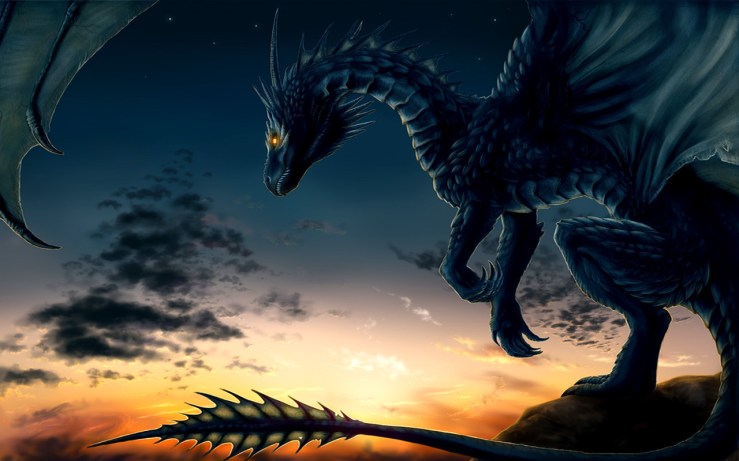
The kiralla was the answer to the question:  what does someone’s soul look like?

Or more to the point, what is the aspect of someone whose soul has achieved a divine level and balance of both Mendaihu and Shenaihu spirit?  The ultimate ascension, where they are able to control both sides of themselves without inner turmoil.  In the context of the Mendaihu Universe, the kiralla aspect is in ancestral memory: it’s what the purest Trisandi spirit looks like.  So in essence, if one is kiralla, either naturally or awakened through ritual, then they are considered to have truly returned to their spiritual roots.

[Yeah, I know, pretty heavy stuff there.]

The idea of the kiralla came to me during the 1995-6 season of me reading all kinds of New Age books.  I’d borrowed the idea of reptilians in fantasy and conspiracy (thank you David Icke) and the Pleiadians (thank you Barbara Marciniak) and played around with it for a while.  What if aliens were a normal and integral part of human reality?  I’d chosen dragons as the physical embodiment, aware of their mythical and mystical history.  I took out the conspiracy and the trope of aliens-as-villains (as well as its overused cousin, aliens-as-overlords-because-us-humans-are-ignorant-and-weak-insects) and re-introduced them as our long-forgotten ancestral kin.

Which ultimately means that we humans are also able to ascend enough to become kiralla as well.  This fact alone makes up quite an important part of the Bridgetown Trilogy and the Mendaihu Universe.

The strength of the kiralla is as fearsome as their presence.  Generally they are about thirty feet long from snout to tail tip, about ten to fifteen feet tall.  Their wingspan is about thirty to forty feet.  Their coloring, shape and physical attributes vary and are related to the Trisandi clan they come from.  They are social creatures, but they are just as fine being on their own for extended periods of time.  Their psionic abilities are unrivaled and immeasurable.  They are able to Lightwalk very long distances in a very short amount of time, either in kiralla or in human form.  The feel their highest responsibility is in keeping an unending, protective (yet rarely interactive) watch over humans and other spiritual kin.

And yes, we will be seeing a lot more of them in The Persistence of Memories and The Balance of Light!

* * * * * *

2016-04-13 13.08.44
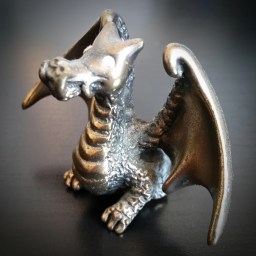
Dragon by Honeck Sculpture

This little youngster here was my mascot for most of the writing of the trilogy, which I picked up at one of the Readercons I went to.  It was made by Honeck Sculpture. They make excellent statues of all sizes and are definitely worth checking out.

I named it after a character you’ll meet in The Persistence of Memories.

#atozchallenge: J is for Madeleine Jakes

Kathleen Turner

Q: What is Madeleine Jakes’ origin?

A: Even though I had Caren and Denni essentially living on their own, I still wanted to provide them some kind of an elder presence, someone who’s not taking care of them 24/7 but is there as someone to lean on when times get tough.  Originally I didn’t plan to have her in that many scenes, relegating her to a tertiary character, but like Christine Gorecki, she evolved into someone who kept popping up at the most interesting and unexpected moments.  She’ll show up in a number of important scenes in The Persistence of Memories and The Balance of Light.

Q: How is she related to Caren and Denni Johnson?

A: She’s a family friend from quite a long time back.  She’s a retired Data Research Library archivist and now writes freelance.  She lives next door to Caren and Denni, frequently checks in on them, and occasionally keeps their place clean, especially when Caren’s stuck on a particularly hard case.

Q: That’s Kathleen Turner in that picture.  Is that who Madeleine is based on?

A: Actually, Madeleine’s a character I without a real-life inspiration…I originally created her as a typical older relative.  But the more she showed up, the more I realized that she was someone who might be older in age, but still embraces life as if she was 30.  She’s someone who rarely holds back her words and thoughts, and despite her disability (she lost a leg soon after the events of the Eighth Embodiment and has a cybernetic replacement), she sure as hell isn’t going to let life pass her by.  I can totally see Kathleen Turner pulling that off, throwing shade and putting people in their place.

Q: What is her connection to the Mendaihu?

A: [Shhh — don’t tell anyone, but she’s a Mendaihu Elder.  Nobody, not even any of the main characters, knows this!]

Q: Anything else?

A: She’s got an amazingly sharp memory, which is why she chose to work as an archivist.  She’s a mid-level certificated soulhealer and occasionally performs healings upon request.  She’s also adept at Lightwalking, but she hasn’t done that in at least a decade and a half, for very personal reasons.  She never married and rarely dated.  Caren will sometimes think Madeleine shouldn’t be so overly active because of her age, but she will remind her otherwise right quick, much to Caren’s embarrassment.  Denni absolutely adores her and thinks of her as an aunt, and will visit her apartment all the time.  She will never reveal this to Caren or Denni: she made a promise to Aram and Celine, two days before they died, that she would look over their daughters if they did not survive the case they were currently working on.